

India’s disappointing campaign at the AFC Women’s Asian Cup 2026 has sparked introspection within the setup, with assistant coach Crispin Chettri raising concerns over the timing of leadership changes ahead of the tournament.
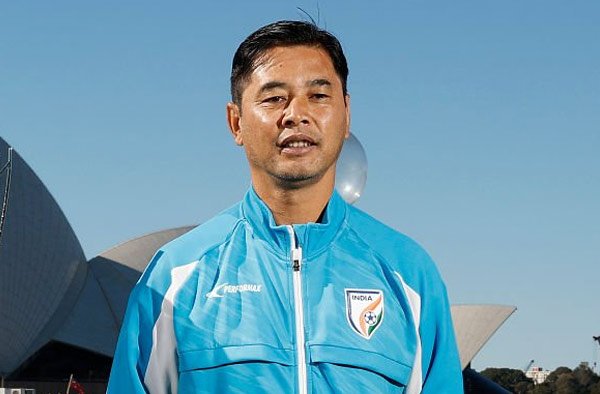
The India women’s national football team endured a difficult outing, crashing out in the group stage after suffering three defeats and conceding 16 goals. While the results fell short of expectations, Chettri pointed to structural and preparatory challenges that may have impacted the team’s performance.
“We had belief, but sometimes things are out of our control. But I was happy with the fact that the players gave their best. That’s the most important thing,” said India’s assistant coach Crispin Chettri. Chettri, who played a pivotal role in India’s qualification campaign, had initially taken charge in February 2025.
Under his guidance, India secured a historic qualification on merit, including a notable win over higher-ranked Thailand. However, due to the absence of a mandatory Pro License, he could not officially serve as head coach during the competition. Despite being instrumental in building the squad, Chettri was moved to an assistant role when Amelia Valverde was appointed head coach just six weeks before the tournament.
“It looked very unfair to my coaching staff and me. But, having said that, if the results had been like these under me, I would have regretted it too,” Crispin says.
“Then there would have been a perception that if we had somebody else (in charge), maybe the result could have been different. So, I think bringing her was right, but it could have been done a little bit earlier,” he adds.
Chettri highlighted how other teams in the competition benefited from stability in leadership. Nations like Japan and Vietnam had long-term coaching setups in place well before the tournament, allowing for continuity and deeper understanding of their squads.
“It’s very difficult for a coach to understand the players (in such a short time). Whatever information she needed from me, Priya PV or the staff had all been passed on. But maybe it was too short a period for her to arrive,” Crispin says. “Sometimes, when changes happen (too late), players get confused. Even we coaches took time to adapt,” he adds.
Another major setback for India was the late injury to Anju Tamang, a key figure in the squad and central to the team’s attacking plans. “We had the belief, but sometimes things are out of our control. I feel 50 per cent of the reason for our result was because of Anju’s late injury, because she was one of the fittest and senior-most players in the camp who could lead and communicate. We had built our attack around Anju only. So her being out also hampered everything,” he says.
India’s early exit also impacted their chances of qualifying for the upcoming Asian Games, where reaching at least the quarterfinals was a requirement. However, Chettri believes the team still deserves an opportunity through special consideration.
“The government should send the team because in the Asian Games, we will get good teams. Sometimes, you have to play with the best to become the best. Right now, we should not be thinking about losing, but playing against the best team,” he says.
Looking ahead, the focus appears to be on rebuilding with a younger core. Chettri revealed that a pool of emerging players has already been identified as part of a long-term vision.
“I was really happy when the federation sent the under-17 team for the under-19 SAFF Championship. That’s how we should move forward. We have to change our approach along these lines, and the federation has to start believing in the younger ones,” he notes.
With India set to participate in a four-nation tournament in Kenya next month and the SAFF Championship later in May, attention will now shift to the future. Chettri’s contract is nearing its end, while Valverde is expected to continue as head coach, with an extension reportedly under consideration.
“My contract is getting over by this March. I have already created a bubble of almost 50 players who are in the age group of 21 to 22. If we focus on them, then we will be ready for the future,” he says.
As the All-India Football Federation evaluates the lessons from this campaign, the timing of key decisions, particularly leadership changes could remain a crucial talking point heading into the next qualification cycle.
(Quotes sourced from Sportstar)

