

Dominance in women’s club football continues to have a familiar face, as FC Barcelona Femení once again asserted their supremacy in Spain with yet another historic league triumph. The Catalan giants secured their seventh consecutive title in the top tier of Spanish women’s football, reinforcing their status as one of the most formidable teams in the global game.
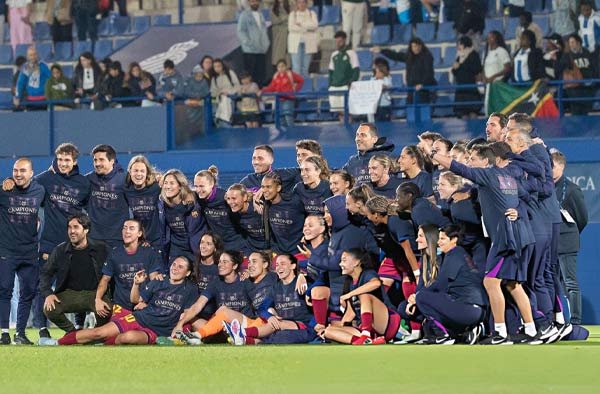
Barcelona sealed the championship in emphatic fashion with a 4-1 victory over local rivals RCD Espanyol Femení. The result confirmed an unassailable 16 point lead over second placed Real Madrid Femenino, ensuring that the title race was mathematically decided with games still to spare. This latest success marks the club’s 11th league crown overall, adding another chapter to an era defined by sustained excellence.
The numbers behind Barcelona’s campaign underline the scale of their dominance. Winning 25 of their 26 matches, the team has set a relentless pace that no other side has been able to match. Their only defeat came earlier in the season, a narrow 0-1 loss away to Real Sociedad Femenino. Beyond that solitary setback, Barcelona have been virtually flawless.
Under the guidance of head coach Pere Romeu, the team has combined tactical discipline with attacking brilliance. Barcelona’s style continues to be rooted in positional play, quick passing, and high pressing, principles that mirror the club’s broader footballing philosophy. This approach has not only delivered results but also set benchmarks for women’s football across Europe.
Central to their success has been a core group of world class players. Alexia Putellas, a multiple time Ballon d’Or winner, brings leadership and creativity in midfield. Alongside her, Aitana Bonmatí has emerged as one of the finest players in the world, known for her vision, control, and ability to dictate tempo. On the wings, Caroline Graham Hansen continues to provide width, pace, and consistent goal contributions.
Their attacking output this season has been remarkable. Barcelona have scored 116 goals while conceding just seven, resulting in a staggering goal difference of 109. In comparison, their closest challengers Real Madrid have a goal difference of 38, highlighting the gulf between the two sides.
The title clinching match itself reflected Barcelona’s attacking intent. Carla Juliá opened the scoring within the first two minutes, setting the tone early. Although Espanyol briefly responded through a penalty converted by Laia Ballesté in the 28th minute, Barcelona quickly regained control. Graham Hansen restored the lead before half time, and second half goals from Martine Fenger ensured a comfortable finish.
This latest triumph is part of a broader period of sustained success for Barcelona Femení. In recent years, the club has not only dominated domestically but also established itself as a powerhouse in European competitions, winning multiple UEFA Women’s Champions League titles. Their ability to blend academy talent with elite international players has created a squad that is both deep and dynamic.
Off the pitch, Barcelona’s commitment to women’s football has also been evident. Record breaking attendances at Camp Nou and increased investment in infrastructure and youth development have contributed to the team’s growth. The club has become a model for how institutional support can elevate the women’s game to new heights.
For Spanish football, Barcelona’s dominance presents both inspiration and challenge. While their success has raised the league’s global profile, it has also highlighted the need for greater competitiveness among other clubs. Teams like Real Madrid continue to invest and improve, but closing the gap remains a significant task.
As the season draws to a close, Barcelona’s focus will likely shift to maintaining their standards and pursuing further silverware. With a squad filled with world class talent and a system that consistently delivers results, their reign shows no immediate signs of slowing down.

