

At first glance, the challenge appears straightforward. Four years after finishing fourth on the medals table with an impressive haul of 61 medals in Birmingham, India heads to Glasgow hoping to continue its rise as one of the Commonwealth’s sporting powerhouses.
If India returns from the 2026 Commonwealth Games with fewer medals than it did in 2022, it should not automatically be viewed as a step backwards. Glasgow presents an entirely different challenge. The competition has been significantly downsized, the sporting programme has been reduced, and several disciplines that have traditionally fuelled India’s medal tally are no longer part of the Games.
For the first time in decades, success cannot simply be measured by the total number of medals won. Instead, the focus must shift towards quality of performances, dominance in remaining disciplines and how India’s athletes use Glasgow as a stepping stone towards the 2028 Los Angeles Olympics.
Birmingham 2022: One of India’s Strongest Commonwealth Campaigns
The Birmingham Commonwealth Games marked another milestone in India’s sporting journey.
The country finished fourth on the medal table with 61 medals, including 22 gold, 16 silver and 23 bronze, once again establishing itself among the leading sporting nations in the Commonwealth. Only Australia, England and Canada finished above India. According to the official Commonwealth Sport records, India maintained its position among the top-performing nations despite the absence of shooting, one of its traditional medal-rich sports.
Wrestling once again proved to be India’s biggest strength, accounting for 12 medals, including six gold medals. Weightlifting followed closely with 10 medals, while athletics delivered one of its finest Commonwealth performances with eight medals.
India’s medal tally in Birmingham was spread across multiple sports:
Discipline (Medals)
Wrestling (12)
Weightlifting (10)
Athletics (8)
Boxing (7)
Badminton (6)
Table Tennis (5)
Judo (3)
Lawn Bowls (2)
Para Table Tennis (2)
Hockey (2)
Squash (2)
Cricket (1)
Para Powerlifting (1)
Several performances became defining moments of the Games.
Olympic silver medallist Mirabai Chanu comfortably defended her Commonwealth title to win gold in the women’s 49kg category. Sanket Sargar opened India’s medal account with silver in weightlifting. Achanta Sharath Kamal inspired Indian table tennis once again, while Nikhat Zareen, Nitu Ghanghas and Amit Panghal underlined India’s growing dominance in boxing.
Perhaps the most memorable breakthrough came from the Indian women’s lawn bowls team, which created history by winning the country’s first-ever Commonwealth Games gold in the sport.
Glasgow 2026 Is a Very Different Commonwealth Games
Comparing Glasgow directly with Birmingham would be unfair because the Games themselves have changed dramatically. Following Victoria’s withdrawal as host due to rising costs, Glasgow stepped in to organise a leaner edition of the Commonwealth Games. The result is a significantly reduced programme featuring only 10 sports and six integrated Para sports, compared to the much larger schedule seen in Birmingham.
For India, this change is particularly significant. Several sports that contributed heavily to the country’s medal tally in 2022 will not feature this year. Wrestling, badminton, table tennis, hockey, cricket and squash have all been removed from the programme. Together, those disciplines accounted for 28 of India’s 61 medals in Birmingham. That means nearly half of India’s previous medal opportunities no longer exist.
It also explains why expecting another 60-plus medal haul would ignore the reality of this edition.
Despite the reduced schedule, India remains one of the strongest contenders in several disciplines. Athletics will field India’s largest contingent, led by Olympic champion Neeraj Chopra, alongside Murali Sreeshankar, Praveen Chithravel, Sarvesh Kushare, Gulveer Singh and Parul Chaudhary.
Weightlifting once again looks like one of India’s richest medal sources. Mirabai Chanu returns as one of the favourites to win a third Commonwealth Games gold, while Gyaneshwari Yadav and Raja Muthupandi will also target podium finishes.
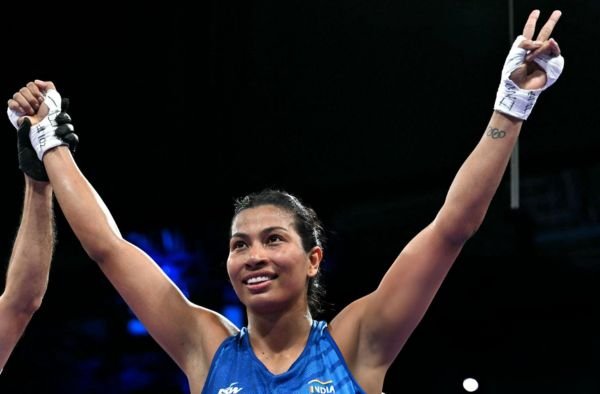
Boxing continues to be another major strength. Led by Olympic bronze medallist Lovlina Borgohain and world champion Jaismine Lamboria, India has fielded a full-strength squad capable of challenging for medals across multiple weight categories.
Judo and Para athletics could also contribute significantly to India’s overall tally, with Tulika Mann, Asmita Dey, Soman Rana and several emerging athletes entering the Games with realistic medal ambitions. Perhaps the biggest difference between Birmingham and Glasgow is not the number of sports.
It is the way India now prepares for international competition. Over the past decade, the country’s investment in elite sport has increased substantially through programmes such as the Target Olympic Podium Scheme (TOPS), international training camps, sports science support and overseas competition exposure.
Ahead of Glasgow, Indian athletes trained in countries including the United States, Switzerland, Turkey and South Africa to adapt to international conditions well before the Games. The emphasis today is no longer simply on participating or winning Commonwealth medals. The larger objective is preparing athletes to consistently challenge for Olympic and World Championship success.
There will inevitably be comparisons with Birmingham once Glasgow concludes. Some will ask whether India improved. Others will point to the final medal tally. Yet the more meaningful question is whether India’s athletes perform to their potential against the competition that remains.
If Neeraj Chopra reclaims Commonwealth gold, Mirabai Chanu continues her dominance, India’s boxers maintain their consistency and a new generation announces itself on the international stage, Glasgow will have served its purpose. The Commonwealth Games have always celebrated sporting excellence, but this edition offers something more.
It is a reminder that success is not always measured by bigger numbers. Sometimes, it is measured by adapting to change, making the most of fewer opportunities and continuing to build towards an even greater goal.
For India, Glasgow 2026 is not simply about matching Birmingham’s achievements. It is about proving that the country’s sporting rise is strong enough to continue, even when the playing field itself has changed.

