

When the All England Lawn Tennis Club, the custodian of Wimbledon, joined hands with Delhi’s 120-year-old Kuremal Mohanlal Kulfi Wale to create a limited-edition Strawberries and Cream Kulfi, it was more than a seasonal product launch. It was a meeting of two institutions that have spent over a century preserving tradition while quietly evolving with changing generations.
For a tournament that prides itself on heritage and ritual, inviting one of Old Delhi’s oldest dessert makers into its story reflects how global sport is increasingly embracing local culture. It also signals India’s growing importance as a sporting market, where fan engagement is no longer limited to television screens but extends to food, experiences and cultural collaborations.
Wimbledon is synonymous with tradition. From the all-white dress code and meticulously maintained grass courts to the Royal Box and strawberries and cream, the Championships have carefully protected their identity since the first tournament was staged in 1877. Among these customs, strawberries and cream have become perhaps the most recognisable symbol of the British summer sporting calendar.
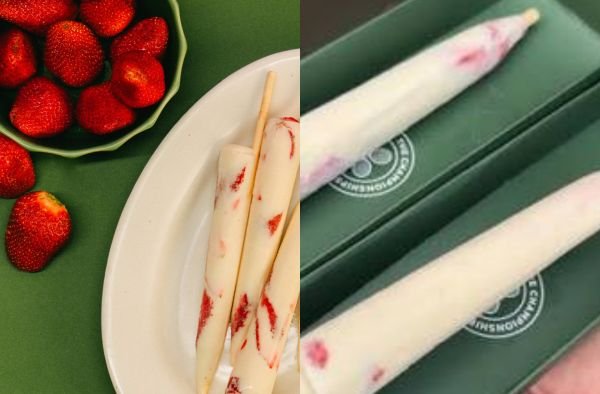
This year, however, that tradition found a distinctly Indian interpretation. The All England Lawn Tennis Club partnered with Kuremal Mohanlal Kulfi Wale, one of Delhi’s oldest and most celebrated dessert brands, to introduce a limited-edition Strawberries and Cream Kulfi. The collaboration formed part of Wimbledon’s efforts to connect with its rapidly growing Indian audience by giving one of its most iconic traditions a local flavour.
The choice of partner was no coincidence. Founded in 1906, Kuremal Mohanlal Kulfi Wale has become an institution in Old Delhi. Its story began when Kirorimal, affectionately known as Kuremal, sold handmade kulfis from an earthen matka in the bustling lanes of Chawri Bazaar as a seasonal summer business. By 1940, the family had established its first permanent shop, a landmark that continues to serve customers today.
Across four generations, the business has remained rooted in traditional craftsmanship while continuously innovating its offerings. Unlike conventional fruit-flavoured ice creams, Kuremal became famous for its signature stuffed fruit kulfis. Real mangoes, oranges, pomegranates and other fruits are carefully hollowed out, filled with rich kulfi made from slow-cooked milk, frozen and then sliced into thick rounds before serving. The preparation requires patience, precision and an understanding of flavour that has been passed down through generations.
Today, what began as a modest family enterprise has expanded far beyond the narrow streets of Old Delhi. Kuremal caters to weddings, corporate events and international celebrations, serving customers across the UAE, Italy, Germany, South Africa and Thailand while continuing to preserve its artisanal methods.
Ironically, the collaboration almost never materialised.
Co-owner Vishal Sharma revealed that when the email from Wimbledon first arrived around three to four months before the tournament, the family believed it was fraudulent. The proposal seemed too extraordinary to be genuine. Only after multiple rounds of discussions, verification procedures and the completion of a security deposit did they realise the opportunity was authentic. Once convinced, the family dedicated more than a week to developing a recipe that could faithfully reinterpret one of Britain’s most iconic desserts without losing the identity of traditional kulfi.
The result was a Strawberries and Cream Kulfi built around Kuremal’s signature slow-cooked rabri, blended with premium strawberries to recreate the flavour profile that has become inseparable from Wimbledon.
The inspiration itself carries remarkable history.
Strawberries and cream have been associated with Wimbledon since the inaugural Championships in 1877. The tournament coincides with the peak of England’s strawberry season, which runs from late May through July, making the fruit a natural culinary companion to the event. Over the decades, the simple dessert has evolved into one of the tournament’s defining symbols, with more than 140,000 portions of strawberries and cream served during the two-week Championships each year. According to Wimbledon, approximately 38.4 tonnes of strawberries and around 10,000 litres of cream are consumed annually by spectators, underscoring the scale of the tradition.
By transforming this classic pairing into a kulfi, Kuremal retained the essence of the original while making it instantly familiar to Indian consumers. The limited-edition dessert was made available throughout the tournament across Kuremal’s outlets in Chandni Chowk, Connaught Place, Bengali Market and Hauz Khas, allowing customers to experience a British sporting ritual through one of India’s most beloved frozen desserts.
Beyond the novelty, the collaboration highlights a broader shift in the way global sporting properties engage with international audiences.
India has emerged as one of the world’s fastest-growing sports markets, with increasing interest across tennis, football, Formula One and Olympic sports alongside cricket. While television rights and digital streaming remain central to this growth, sporting organisations are increasingly recognising that cultural relevance often creates deeper emotional connections than conventional marketing campaigns.
Rather than simply broadcasting Wimbledon to Indian audiences, the Championships found a way to become part of India’s culinary landscape, even if only for a limited period. It is an example of experiential storytelling, where heritage is communicated not through advertisements but through shared traditions and everyday experiences.
The collaboration also reflects changing consumer expectations. Modern audiences value authenticity, craftsmanship and heritage. They are drawn to stories that celebrate local identity while connecting with global culture. Few Indian brands embody those qualities better than Kuremal, whose legacy mirrors Wimbledon’s own commitment to preserving tradition without resisting thoughtful innovation.
For heritage businesses, collaborations of this nature also demonstrate that longevity remains commercially valuable. In an era dominated by viral trends and rapidly changing consumer tastes, institutions built on authenticity continue to command trust. Both Wimbledon and Kuremal have survived for well over a century by understanding that tradition is not about standing still. It is about evolving without abandoning the values that define a brand.
Ultimately, the Strawberries and Cream Kulfi represents more than a dessert. It is a symbol of cultural exchange, where two institutions separated by geography but united by history discovered common ground through craftsmanship.
One has spent nearly 150 years serving strawberries and cream on pristine grass courts in southwest London. The other has spent more than 120 years serving handcrafted kulfi in the bustling lanes of Old Delhi.
Together, they proved that some traditions do not lose their identity when they travel. Sometimes, they simply find a delicious new way to tell their story.

