

For decades, Indian boxing has celebrated individual champions. Mary Kom inspired a generation. Lovlina Borgohain carried the torch onto the Olympic podium. Nikhat Zareen elevated India’s standing on the world stage. But what unfolded at the 2026 Commonwealth Games in Glasgow suggests something far more significant than the success of a few extraordinary athletes. Indian women’s boxing is no longer built around one icon. It is becoming a movement.
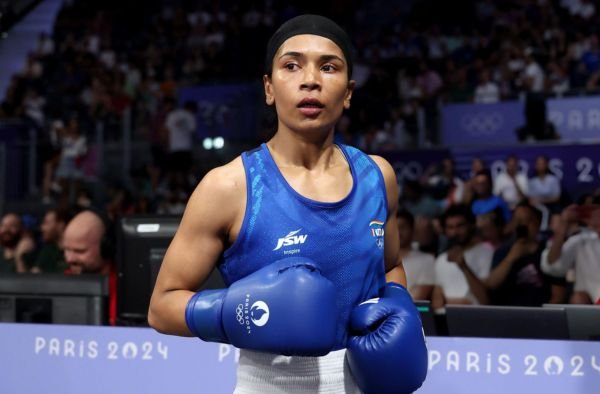
On Friday, six Indian women secured places in the Commonwealth Games boxing finals, leading a remarkable clean sweep that saw all ten Indian semifinalists, women and men combined, progress to the gold medal bouts. The numbers are impressive, but the story behind them is even more compelling. This is not simply a successful day inside the ring. It is evidence of a system that is finally producing depth, consistency and fearless competitors across multiple weight categories.
Leading the charge was Preeti Pawar in the women’s 54kg division. The reigning Asian champion delivered another commanding performance, winning by unanimous decision to become the first Indian boxer of the day to confirm her place in the final. Her run has been built on technical precision, relentless work rate and remarkable discipline, qualities that have made her one of India’s brightest medal prospects. Before the Games, Pawar acknowledged the pressure of competing on one of the biggest stages of her young career, saying, “It’s really an honour for me to represent my country here. It is a really big stage and this is my first Commonwealth Games, so I’m very well prepared and I’ll give my best.” She has lived up to every word.
The day’s performances reflected the different ways champions are made. Jaismine Lamboria continued to demonstrate why she is among the world’s elite in the featherweight division. Arundhati Choudhary produced one of the performances of the tournament by defeating the defending champion to enter the final, reinforcing her reputation as one of the most technically gifted boxers in international competition. Sakshi Chaudhary made light work of Canada’s Amber-Jane Wall, while Olympic bronze medallist Lovlina Borgohain marched into yet another major final with the calm assurance that has become her trademark.
Yet perhaps the defining performance belonged to Priya Ghanghas in the women’s 60kg category. After taking the opening round against England’s Lucy Kings-Wheatly, Ghanghas watched her opponent level the contest in the second. Many boxers would have retreated into caution. Instead, she fought with greater conviction in the decisive round, reclaiming control and earning a unanimous verdict. In a sport where momentum can shift in seconds, resilience often matters as much as skill. Ghanghas reminded everyone that champions are not only measured by dominance, but by how they respond when victory begins to slip away.
The broader significance of these results extends beyond Glasgow. The 2026 Commonwealth Games are the first in history to feature equal men’s and women’s boxing weight categories, with seven medal events for each gender. It is a milestone that reflects the sport’s growing commitment to gender parity. India has responded by fielding one of its strongest-ever women’s teams, and the results have justified every expectation.
This success has not emerged overnight. It is the outcome of years of investment in grassroots competitions, national camps, sports science, exposure tours and the growing influence of women who have already broken barriers. Mary Kom transformed perceptions. Lovlina Borgohain proved Olympic medals were attainable. Nikhat Zareen showed that Indian women could consistently dominate at the World Championships. The next generation has inherited belief rather than burden.
What makes this group especially exciting is its diversity. These finalists come from different parts of the country, different coaching systems and different personal journeys. Together, they represent the widening reach of women’s boxing in India. Success is no longer concentrated around one academy or one state. Talent is emerging from every corner of the nation.
The women also arrive in the finals carrying significant momentum. In the weeks leading up to Glasgow, Indian boxers enjoyed an outstanding campaign at the Grand Prix Usti nad Labem in Czechia, where the women’s contingent claimed four gold medals and one silver. That consistency across international competitions suggests Glasgow is not an isolated success but part of a broader upward trend.
The men deserve equal credit for completing India’s perfect semifinal record, with Jadumani Singh, Sachin Siwach, Ankush Panghal and Narender Berwal also advancing to their respective finals. However, the defining image of India’s boxing campaign remains its women standing shoulder to shoulder, six finalists carrying the country’s hopes into championship bouts.
Gold medals are still to be won. Finals can produce heartbreak as easily as triumph. But regardless of what unfolds next, Indian women’s boxing has already achieved something invaluable. It has shifted the conversation from celebrating exceptional individuals to recognising an exceptional generation.

