

Championships are rarely won in a single day. But there are days that redefine an entire campaign. Saturday at the 2026 Commonwealth Games in Glasgow has all the ingredients to become one of those occasions for India.
The medal table often tells a simple story of numbers. Yet behind every tally lies a larger narrative of preparation, investment and the evolution of a sporting ecosystem. India enters Saturday with 23 medals, five gold, 12 silver and six bronze, but by the end of the day that number could swell dramatically. With medal opportunities spread across boxing, athletics, para athletics, judo, cycling and lawn bowls, India has a realistic chance of adding as many as 25 medals to its official tally, making it arguably the most significant day of the Games for the Indian contingent.
What makes this prospect particularly remarkable is the context. Unlike previous Commonwealth Games, Glasgow 2026 features a significantly reduced sporting programme. Wrestling, badminton, table tennis, hockey, cricket and shooting, disciplines that have traditionally delivered a substantial portion of India’s medals, are absent. Together, wrestling, badminton, table tennis and hockey alone contributed 25 of India’s 61 medals at Birmingham 2022. Shooting, historically India’s single biggest medal-producing sport at the Commonwealth Games, has also remained off the programme since Gold Coast 2018. In many ways, Glasgow was expected to be India’s toughest Commonwealth challenge in years. Instead, it is becoming a showcase of the country’s growing versatility.
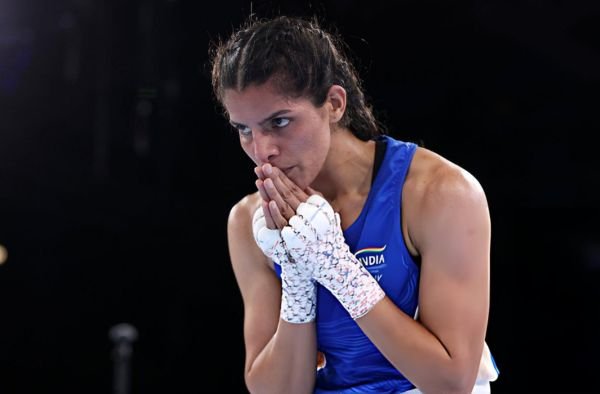
India is already guaranteed 10 medals after every one of its semifinalists progressed to the finals, an extraordinary achievement that reflects both quality and depth. The gold medal bouts will feature Preeti Pawar, Sakshi Chaudhary, Jaismine Lamboria, Priya Ghanghas, Arundhati Choudhary, Lovlina Borgohain, Jadumani Singh, Sachin Siwach, Ankush Panghal and Narender Berwal.
For the women, this could become a defining statement. Olympic medallist Lovlina Borgohain once again carries expectations, but she is no longer fighting alone. Jaismine Lamboria has consistently established herself among the world’s leading featherweights. Preeti Pawar continues to emerge as one of India’s brightest young stars. Sakshi Chaudhary and Priya Ghanghas have demonstrated resilience throughout the tournament, while Arundhati Choudhary has produced some of the most impressive performances of the competition.
If India converts even a majority of these finals into victories, boxing could become the country’s biggest contributor to the medal tally, an extraordinary achievement considering the discipline has traditionally shared the spotlight with wrestling and shooting.
India will compete across multiple medal events, highlighting the country’s expanding presence beyond field disciplines that have long relied on Neeraj Chopra’s brilliance. Gulveer Singh lines up in the men’s 5000m final after establishing himself as one of Asia’s premier long-distance runners. In the men’s triple jump, Praveen Chithravel and Selva Prabhu Thirumaran provide India with two genuine podium contenders.
The women’s endurance events also deserve attention. Priyanka Goswami, an Olympian and one of India’s most accomplished race walkers, returns in the women’s 10,000m race walk alongside Ravina Gayakwad. Pole vaulters Dev Kumar Meena and Kuldeep Kumar will seek podium finishes, while the mixed 4x400m relay team continues India’s growing strength in relay events after consistent performances over the past Olympic cycle.
Para athletics has quietly become one of India’s fastest-growing success stories on the international stage. Shot putters Soman Rana and Shubham Juyal enter the F57 final with medal ambitions, while Ramesh Shanmugam will compete in the men’s 1500m T54 event. India’s performances in para sport have steadily improved across Paralympic, Asian Para Games and Commonwealth competitions, reflecting increased investment and stronger support systems for para athletes.
Judo, meanwhile, has made history. Before Glasgow, India had never won a Commonwealth Games gold medal in judo. That changed spectacularly when Asmita Dey became the nation’s first-ever Commonwealth judo champion by winning the women’s 48kg title. Moments later, Harsh Singh added another gold in the men’s 60kg category, completing a historic double that few predicted. Yamini Mourya’s silver ensured India’s most successful Commonwealth judo campaign ever.
Saturday presents another opportunity to build on that breakthrough. Unnati Sharma, Karanjit Singh Maan, Harsh Tokas and Inunganbi Takhellambam all remain in contention as India looks to establish judo as a genuine medal-producing discipline rather than an occasional success.
The significance of this potential medal rush extends beyond Glasgow. India arrived at the Games with a contingent of 122 athletes competing across eight able-bodied sports and five integrated para disciplines. It is a smaller delegation than previous editions, yet one that reflects a strategic shift towards events where the country believes it can compete consistently at the highest level.
Historically, India has accumulated 564 Commonwealth Games medals across 18 appearances, making it the fourth-most successful nation behind Australia, England and Canada. The country’s greatest campaign remains New Delhi 2010, where the hosts won 101 medals and finished second overall. Birmingham 2022 produced 61 medals and a fourth-place finish.
Matching either of those totals in Glasgow was always going to be unrealistic because of the reduced programme. Yet success should not be measured solely through comparisons with previous editions. Instead, Glasgow offers a glimpse into India’s changing sporting identity.
For decades, the nation’s medal hopes depended heavily on a handful of established disciplines. Today, athletics, boxing, para sport and judo are collectively carrying those expectations. Women’s boxing has emerged as a powerhouse. Para athletes continue to redefine excellence. Young track and field competitors are consistently reaching international finals. Even sports that once lay outside India’s traditional strengths are beginning to deliver historic results.
That evolution matters more than a single day’s medal count. If Saturday unfolds as anticipated, India may add as many as 25 medals to its tally. The numbers will dominate headlines. Golds will shape the standings. Celebrations will fill the arenas.
But perhaps the biggest victory will be the evidence that Indian sport is becoming broader, deeper and less dependent on a select few disciplines. Glasgow 2026 may not produce India’s largest Commonwealth medal haul.

