

For years, bilateral cricket was often criticised for existing in a vacuum. Teams would play a series, celebrate victories or lament defeats and then move on to the next assignment with little connection between one tour and another. Modern international cricket is driven by long-term planning, with every bilateral series serving a larger purpose. Cricket South Africa’s decision to add three T20 Internationals to India’s multi-format tour in December perfectly illustrates this changing mindset. Rather than simply hosting India for a one-off Test and three One Day Internationals, South Africa has reshaped the tour into a comprehensive preparation camp ahead of the inaugural ICC Women’s Champions Trophy, scheduled to be played in Sri Lanka in February 2027.
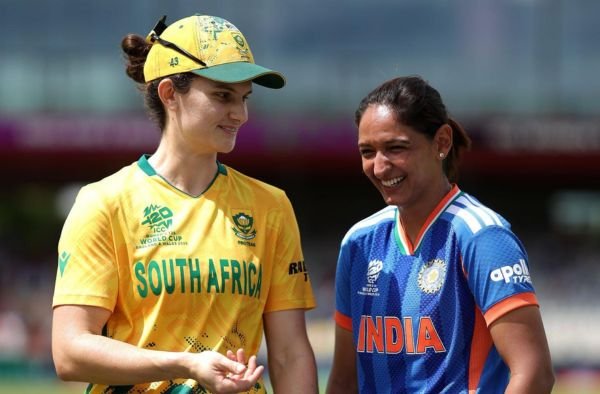
It is a move that benefits both sides. “We are delighted to confirm the revised schedule for India’s tour of South Africa, with the addition of the T20 International series over the festive period, ensuring our Proteas Women have the best possible preparation ahead of the inaugural ICC Women’s Champions Trophy in Sri Lanka early next year,” Cricket South Africa CEO Pholetsi Moseki said. “India remain one of the strongest teams in world cricket, and the opportunity to compete against them across all three formats will provide invaluable competition as we continue building towards another major ICC event,” he added.
International calendars are increasingly being designed around major ICC tournaments. Just as men’s teams schedule specific bilateral series before World Cups or Champions Trophy campaigns, women’s cricket has entered an era where preparation is becoming more scientific, more strategic and considerably more competitive.
The revised South Africa tour reflects exactly that. Instead of beginning with the ODI series, India will now open the tour with a one-off Test in Gqeberha from December 12 before shifting to the three-match ODI series in Paarl, Cape Town and Bloemfontein. The tour will conclude with three T20Is on December 26, 29 and 30, giving both teams valuable match practice immediately before attention turns towards the Champions Trophy.
For South Africa, the reasons are obvious. The Proteas have established themselves as one of the strongest T20 teams in the women’s game over the last four years. They reached the finals of the 2023 and 2024 ICC Women’s T20 World Cups and continued their rise by making the knockout stages of the 2026 edition before falling to England in the semi-finals. Their aggressive batting philosophy and athletic fielding have made them genuine contenders at every ICC event.
India, meanwhile, represents exactly the kind of opposition South Africa wants before another global tournament. Although India endured a disappointing exit in the group stage of the 2026 Women’s T20 World Cup after defeats to South Africa and Australia, they remain among the strongest all-format sides in world cricket. Their ODI World Cup triumph in 2025 transformed expectations around the team, while players such as Harmanpreet Kaur, Smriti Mandhana, Jemimah Rodrigues, Deepti Sharma and Richa Ghosh continue to provide one of the most balanced squads in international cricket.
Yet the additional T20Is may prove even more valuable for India than for South Africa. Earlier this year, India toured South Africa for a five-match T20I series and suffered a humbling 4-1 defeat. The series exposed several familiar concerns, particularly India’s inconsistency in adapting to pace-friendly conditions, their inability to consistently accelerate during the middle overs and recurring issues with death bowling.
Those weaknesses resurfaced during the T20 World Cup, where South Africa once again defeated India before Harmanpreet Kaur’s side exited in the group stage. Facing the same opposition in similar conditions gives India a rare chance to measure how much progress has been made within a matter of months. More importantly, it allows the coaching staff to experiment with combinations without the immediate pressure of an ICC tournament.
Women’s cricket has entered an era where tactical adaptability often separates champions from contenders. Teams are no longer selecting fixed XIs months in advance. Instead, they are developing larger squads capable of adapting to varying conditions, opposition matchups and tournament demands.
The Champions Trophy, scheduled in Sri Lanka, is likely to demand precisely that approach. Sri Lankan pitches traditionally favour spin while also rewarding batters capable of rotating strike rather than relying solely on boundary hitting. Although South African conditions are vastly different, competitive T20 cricket against one of the world’s strongest teams provides invaluable opportunities to refine roles, identify finishing options and strengthen bowling combinations before arriving in Colombo.
At a time when franchise leagues dominate global calendars, bilateral series featuring Tests, ODIs and T20Is have become increasingly rare. India’s tour preserves that balance by ensuring every format remains relevant. The one-off Test offers valuable red-ball experience, the ODIs contribute to long-term squad development, while the added T20Is align preparations with the immediate demands of the international calendar. Rather than viewing bilateral cricket as separate competitions, administrators are beginning to treat every series as part of a larger performance cycle. The addition of three matches is therefore not merely about increasing broadcast inventory or ticket sales. It reflects smarter planning and greater investment in the women’s game.
For India, however, the message is even clearer. The disappointment of the recent T20 World Cup cannot be erased, but it can become the foundation for improvement. The extra matches offer another opportunity to test combinations, rebuild confidence and sharpen tactical execution before another ICC event arrives.
Championships are rarely won through talent alone. They are won through preparation, repetition and learning from previous failures. In that context, the three newly added T20Is may ultimately become far more significant than they first appear. By the time the inaugural Women’s Champions Trophy begins in Sri Lanka, the results in South Africa may not be remembered.

