

The Women’s T20 Asia Cup has reached a point where India can no longer assume that the trophy will return home with them. What began with India establishing itself as the tournament’s dominant force has gradually evolved into one of the most competitive stages in Asian women’s cricket, with Bangladesh breaking through in 2018 and Sri Lanka ending India’s reign in 2024.
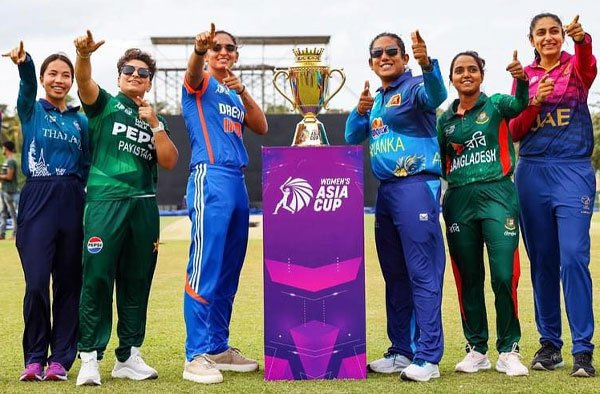
Now, as the sixth T20 edition approaches in the UAE, the tournament carries a different weight. India remain the most successful side in the competition, but Sri Lanka arrive as defending champions, Bangladesh remain capable of upsetting the established order, and the expanding field reflects the growing strength of women’s cricket across the continent. The 2026 edition will be played in Dubai from August 28 to September 13, with eight teams divided into two groups. India, Pakistan, Thailand and Hong Kong, China form Group A, while defending champions Sri Lanka, Bangladesh, Indonesia and hosts United Arab Emirates make up Group B. The top two teams from each group will progress to the semi-finals.
India’s Early Dominance (2012–2016)
For India, the tournament is also an opportunity to reclaim the trophy after their defeat to Sri Lanka in the 2024 final.
India’s relationship with the Women’s Asia Cup began with immediate success. The inaugural T20 edition was held in China in 2012, where India defeated Pakistan in the final to become champions. The tournament featured eight teams split into two groups, with India emerging as the strongest side before completing the campaign with victory in the final.
Four years later, India repeated the achievement in Thailand. The 2016 tournament featured six teams, and India once again finished at the top of the league standings before defeating Pakistan in the final. Those victories established a pattern. India possessed greater experience, a deeper player pool and a growing familiarity with the demands of T20 cricket. The Women’s Asia Cup quickly became another competition in which India were expected to go deep. The ACC’s historical records list India as champions in both 2012 and 2016, followed by Bangladesh in 2018 and India again in 2022.
Bangladesh’s Breakthrough (2018)
The biggest disruption to India’s early dominance arrived in 2018. Hosted by Malaysia, the third T20 edition produced one of the most significant results in the tournament’s history. Bangladesh defeated India by three wickets in the final to claim their maiden Women’s T20 Asia Cup title.
It was more than an isolated upset. Bangladesh had already demonstrated that they were becoming increasingly competitive against the region’s established sides, and the victory offered evidence that the women’s game in Asia was beginning to develop beyond the traditional India-Pakistan rivalry. For India, meanwhile, the defeat was a reminder that dominance could no longer be taken for granted.
India Reclaims the Trophy (2022)
India regained the title in 2022 when the tournament was hosted by Bangladesh. This time, India were led by Harmanpreet Kaur and produced a strong league-stage campaign before meeting Sri Lanka in the final at Sylhet. India won by eight wickets to reclaim the trophy and secure their third T20 Asia Cup title. The victory restored India to the top after Bangladesh’s breakthrough in 2018 and reinforced their status as the benchmark team in Asian women’s cricket. But the signs of a changing landscape were already visible. Sri Lanka had emerged as a serious challenger, while Bangladesh had demonstrated that they could defeat India when the pressure was highest.
Sri Lanka’s Rise (2024)
If Bangladesh’s 2018 victory changed the balance of power, Sri Lanka’s triumph in 2024 confirmed that the tournament had entered a new era. Playing at home in Dambulla, Sri Lanka defeated India by eight wickets in the final to win their first Women’s T20 Asia Cup title. Chamari Athapaththu led the response with a commanding 61 from 43 balls, while Harshitha Samarawickrama remained unbeaten on 69 from 51. Sri Lanka chased down India’s target in the 19th over, completing a landmark victory. The ICC described the result as Sri Lanka’s maiden Women’s Asia Cup title.
The result was particularly significant because it came against India, the competition’s most successful team. It also reflected Sri Lanka’s wider rise in women’s cricket. Athapaththu’s side had increasingly become capable of competing with the strongest teams in the region, and the Asia Cup triumph provided tangible evidence of that progress. The 2026 tournament now presents a different challenge for all the established sides.
The 2026 Women’s Asia Cup in Dubai
Sri Lanka will enter as defending champions, while India will be determined to recover the trophy. Bangladesh, meanwhile, remain the only other former T20 champion apart from the two finalists from 2024. The tournament has also expanded to eight teams, with Indonesia and the UAE joining the field alongside India, Pakistan, Sri Lanka, Bangladesh, Thailand and Hong Kong, China. All 15 matches will be played at the Dubai International Cricket Stadium. India’s group-stage campaign begins against Thailand on August 30, followed by Hong Kong, China on September 2 and Pakistan on September 5.
That India-Pakistan fixture is likely to be the most closely watched group-stage contest, but the tournament’s larger story will be about whether the gap between the traditional heavyweights and the emerging teams continues to narrow. Sri Lanka’s squad, meanwhile, will be led by Athapaththu as they attempt to defend the title they won two years ago. Their campaign begins against hosts UAE on August 29 before meetings with Indonesia and Bangladesh.
The evolution of the Women’s T20 Asia Cup mirrors the wider growth of women’s cricket in Asia. India’s titles in 2012, 2016 and 2022 established a dynasty. Bangladesh’s 2018 victory showed that dynasty could be challenged. Sri Lanka’s 2024 triumph demonstrated that the challenge could become sustained.
Now, with eight teams competing in Dubai, the tournament has an opportunity to become an even stronger platform for emerging players and developing cricket nations.

