

For decades, India’s Olympic story has largely been about making the most of a handful of opportunities. A medal here, a breakthrough there, a sporting hero emerging from a system that often discovered talent almost by accident. On its 80th Independence Day, Prime Minister Narendra Modi offered a different vision: India should not merely arrive at the Olympics with a few medal hopes. It should arrive with athletes across the breadth of the programme, backed by a talent pipeline built years in advance.
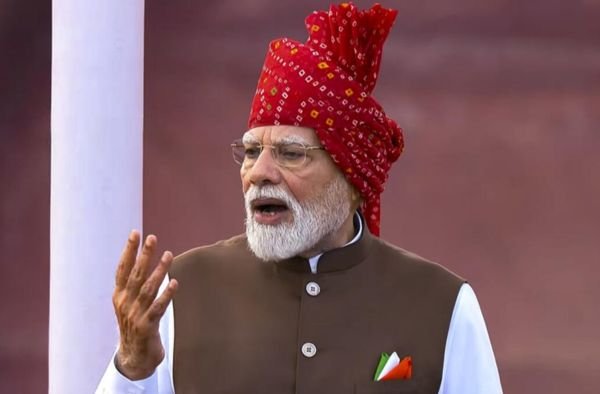
Addressing the nation from the Red Fort on Saturday, Modi said India is a strong contender to host the 2036 Olympics and announced a nationwide talent hunt for children between five and 15 years of age. The objective is bigger than identifying the next champion. It is an attempt to widen the country’s sporting base and address one of India’s most persistent Olympic weaknesses: participation across disciplines.
“India is making space for itself in the world of sports. We hear our national anthem frequently and see our tri-colour going up very often. TOPS has achieved great success. Whether it is Khelo India Games, University Games, Beach Games, Winter Games, or sports training, sports medicine, sports nutrition, India is moving ahead at great pace,” he said. The statement reflects a sporting ecosystem that has undeniably expanded over the past decade. The Target Olympic Podium Scheme, launched in 2014, has become an important part of India’s elite athlete support structure, while Khelo India has sought to push sporting participation and talent identification deeper into schools, districts and communities.
The scale of the existing grassroots network is significant. The official Khelo India dashboard currently lists 1,067 notified Khelo India Centres across all 36 States and Union Territories, covering 768 districts, with more than 28,000 athletes training at these centres. The programme also covers 41 sporting disciplines.
But infrastructure and participation are only the starting point. India’s larger challenge is finding athletes for sports in which the country has historically had little Olympic presence. “It is sad that we don’t compete in at least two third of these events because we are not even able to qualify. We have decided that in 2036, we should have participation in at least three fourth events. We are launching a nationwide talent hunt for children aged 5 to 15 to identify prospects in every corner of the country. They will get special training to become world class athletes,” he added.
That target could force a fundamental rethink of India’s sporting priorities. Aquatics, cycling, rowing and gymnastics are among the areas where the country has enormous room to grow. Swimming alone offers dozens of Olympic medal opportunities, while cycling and rowing provide further medal pools in which India has traditionally struggled to qualify athletes consistently.
The significance of identifying children as young as five is therefore not simply about producing Olympic athletes. It is about discovering physical abilities before sporting choices are shaped by convention. A child with exceptional endurance, coordination, strength or speed may not necessarily gravitate towards the sport best suited to those attributes. A nationwide testing system, particularly one incorporating technology and data, could help bridge that gap.
“Not every school-going kid would know his sporting capabilities or take to sport naturally. But if we are able to take our talent hunt nationwide through basic tests to understand individual capabilities, we might find kids who are good at sport but don’t yet know about it,” a government source had told stated in January. The proposed approach reportedly envisages Artificial Intelligence being used alongside fitness battery tests measuring qualities such as cardiovascular endurance, muscular strength, speed, agility, flexibility and balance. If implemented properly, such a system could make talent identification less dependent on geography, family background or access to established sporting academies.
Yet the real test will come after identification. India has never lacked talented children. What it has often lacked is the continuity required to turn raw ability into international performance. Talent must be followed by coaching, nutrition, sports science, medical support, competition exposure and financial security. The distance between a promising 12-year-old and an Olympic athlete is measured not only in years, but in the quality of the system surrounding that athlete.
The 2030 Commonwealth Games could provide an important staging ground. Ahmedabad was formally confirmed as host of the Centenary Commonwealth Games in 2030, giving India a major international multi-sport event four years before the proposed Olympic edition. Commonwealth Sport says the Games will feature 15 to 17 sports, while discussions around the wider programme include disciplines such as cycling, diving, hockey, shooting, squash, wrestling and triathlon.
That timeline matters. Hosting the Commonwealth Games can test India’s venues, logistics, athlete services and organisational capabilities. More importantly, it can create a competitive environment in which the next generation of Indian athletes can be measured against international standards. “Duniya ke sports events Bharat mein kyu na hon? (Why should global events not be held in India),” Modi asked. The question captures the larger ambition. India is no longer looking only to participate in global sport. It increasingly wants to host it, shape it and compete across it.
But hosting the Olympics and performing at them are two separate challenges. India’s 2036 Olympic bid is still part of the International Olympic Committee’s host selection process, with the final decision expected later in the decade. India has already expressed its intent and entered the IOC’s Continuous Dialogue phase.
That means 2036 remains a possibility, not a certainty. The more immediate certainty is the work required to make India a deeper sporting nation. The most important part of the Independence Day announcement, therefore, may not be the promise of hosting the Olympics. It may be the decision to look beyond today’s champions and search for tomorrow’s athletes in every corner of the country.
An Olympic bid can build stadiums and a sporting nation builds athletes. If India’s 2036 ambition is to mean something beyond a hosting proposal, the talent hunt announced from the Red Fort will have to become the beginning of a sustained national sporting pipeline. The children identified today would be teenagers, young adults and potentially elite competitors by 2036. Their journey, rather than the spectacle of the Games themselves, will ultimately determine whether India’s Olympic dream becomes a medal ambition or merely another grand promise.

