

India’s World Cup campaign began with a statement of resilience rather than a statement of dominance. Against a China side that had beaten them in each of their previous four meetings, the Indian women’s hockey team twice took the lead before being pegged back, settling for a 2-2 draw in their opening Pool D encounter at the Wagener Hockey Stadium in Amstelveen.
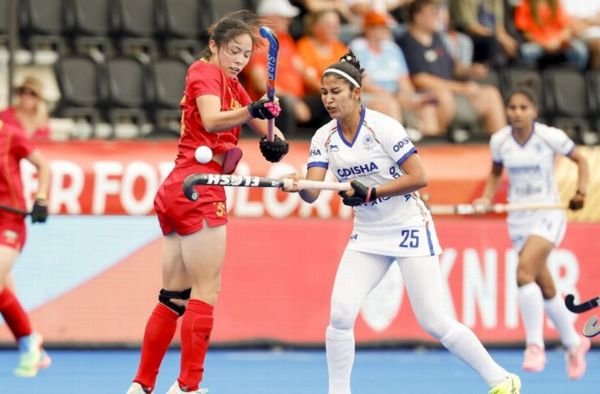
The result was significant precisely because of the history between the two sides. Before the World Cup, China held a narrow 12-11 advantage over India in their 27 previous meetings, underlining just how little has separated the Asian rivals over the years. But recent results had tilted heavily in China’s favour, making India’s performance in the Netherlands an important test of whether the side could reverse that trend on the biggest stage.
India did not wait long to make its intentions clear. Navneet Kaur put India ahead before China responded, while Deepika restored the Indian advantage. China, however, found an equaliser again and gradually increased the pressure as the match progressed. India were forced to defend for long periods in the second half, but held firm to secure a point against the Olympic silver medallists.
The draw also offers a sharp contrast to the two teams’ most recent meetings. China had defeated India 4-1 in the final of the 2025 Women’s Asia Cup, after also beating them 4-1 earlier in the Super 4s. China had subsequently secured World Cup qualification by winning the continental title, finishing the tournament unbeaten and producing a formidable defensive record in the early stages.
India’s previous meeting with China before the Asia Cup defeats had been a 1-0 victory in the final of the Asian Champions Trophy in November 2024. That win had provided evidence that India could match China’s intensity, but the four defeats that followed had changed the complexion of the rivalry. The opening World Cup encounter therefore became less about historical statistics and more about India’s ability to remain composed when China applied sustained pressure. The answer, at least in the first game, was encouraging.
The Indian side arrived in the Netherlands carrying considerable momentum from the FIH Nations Cup, where it lifted the title after an unbeaten campaign. Hockey India had also highlighted the team’s journey from the disappointment of missing direct qualification at the 2025 Asia Cup to securing its World Cup place through the qualifiers and then winning the Nations Cup.
Captain Salima Tete is leading India at a World Cup for the first time, with the squad combining experienced campaigners such as Savita and Navneet Kaur with younger players looking to establish themselves on the global stage. Coach Sjoerd Marijne has identified consistency and mental resilience as crucial areas for the team as it attempts to break into the world’s top eight. The draw leaves India with work still to do in Pool D. Their next assignment is against South Africa on August 18 before the group stage concludes with a meeting against England on August 20.
For a team seeking a deep World Cup run, one point from the opening game may not be the perfect beginning. But against a China side that had recently become India’s biggest obstacle in Asian hockey, holding on for 2-2 after twice taking the lead is a result that can carry weight. India have not erased the gap in this rivalry yet. But in Amstelveen, they showed they are ready to fight their way back into it.

