

Tanya Chaudhary’s latest gold medal in Panchkula may not have come with a national record or a spectacular personal best, but it carries significance because of where she stands in the hierarchy of Indian women’s hammer throw. At Indian Series 14, Chaudhary produced a best throw of 61.28m to finish ahead of national record holder Anushka Yadav, who managed 61.03m. The margin was only 25 centimetres, but in an event where a few centimetres can determine the difference between a medal, a qualification mark and another season of waiting, it was enough to put Chaudhary back in the spotlight.
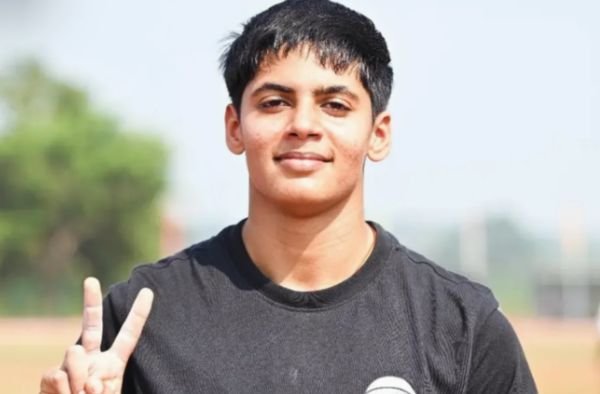
The victory also comes at an important stage in Chaudhary’s career. The 22-year-old Uttar Pradesh athlete is not an emerging name without an international résumé. She has already competed at the Asian Games, finishing seventh in the women’s hammer throw at Hangzhou in 2023, and has established herself as one of India’s more consistent performers in the event. World Athletics lists her official personal best at 63.91m, recorded in August 2025, while her performances this season have kept her in contention for major international competition.
Her latest performance in Panchkula also needs to be viewed alongside the remarkable rise of Anushka Yadav, who has rapidly become the biggest name in Indian women’s hammer throwing. Yadav broke the national record twice at the 2026 National Inter-State Championships before producing 67.02m, a mark that surpassed Sarita Singh’s previous national record of 65.25m and also secured the Asian Games qualification mark. Chaudhary finished second at that competition with 61.70m.
That result has changed the landscape of the event. For years, Indian women’s hammer throw revolved around a relatively small group of established athletes, but the emergence of Yadav has raised the standard considerably. Chaudhary, however, remains firmly within that conversation, and her consistency is particularly important as India prepares for the 2026 Asian Games in Aichi-Nagoya. The official Indian contingent announced this week includes both Chaudhary and Yadav in the women’s hammer throw event, giving India two athletes with the potential to challenge internationally.
Tanya Chaudhary’s story should not be reduced to finishing behind Anushka Yadav. Indian athletics is often quick to turn a field event into a one-athlete narrative when someone breaks a national record, but Chaudhary’s consistency shows why depth matters. If India wants to turn its growing strength in athletics into medals at major championships, it needs athletes who can repeatedly operate around the international qualification level, push one another and create genuine competition within the event.
Chaudhary’s role in that ecosystem could prove just as important as the headline-making record holder’s. There is another layer to Chaudhary’s recent trajectory that makes her latest victory worth examining. In January 2026, she produced a throw of 65.60m at the All-India Inter-University Championships in Mangaluru, a performance that was beyond Sarita Singh’s then-standing national record of 65.25m. However, the mark could not be ratified as a national record because the competition was not recognised by the Athletics Federation of India and the required in-competition anti-doping testing conditions for record ratification were not met. Her official national and World Athletics personal best therefore remains 63.91m.
That episode illustrates both the potential and the frustration surrounding Chaudhary’s career. A 65.60m throw would have placed her much closer to the upper end of the Indian event, but the circumstances meant the performance could not enter the official record books. It did, however, demonstrate that she possesses the physical capacity to throw significantly beyond her current recognised personal best.
Chaudhary has also shown that she can maintain a high level across different competitions rather than producing one isolated performance. At the 5th Indian Open Throws Competition earlier this year, she won the women’s hammer throw with 61.09m, comfortably ahead of the rest of the field. Earlier, at Indian Athletics Series 3, she produced 61.29m for another victory, with Manpreet Kaur and Divya Shandilya completing the podium. Her record at the National Inter-State Championships has similarly underlined that reliability.
At the 2026 edition, Chaudhary threw 61.70m to finish second behind Yadav’s national-record 67.02m. Crucially, the Athletics Federation of India lists 61.72m as the Asian Games qualification mark for the event, meaning Chaudhary missed that particular mark by just two centimetres. That two-centimetre gap became particularly relevant when India’s Asian Games squad was finalised. Despite missing the qualification mark at the Inter-State Championships, Chaudhary was included in the Indian contingent alongside Yadav. Her selection reflects the federation’s confidence in an athlete whose performances have consistently remained close to the required international level.
For Chaudhary, the upcoming Asian Games will therefore represent another opportunity to improve upon her seventh-place finish from Hangzhou. The challenge, however, will be considerably different this time. India’s national record now stands at 67.02m, and Yadav has already established herself as a genuine medal prospect. Chaudhary’s own task will be to close the gap between her regular 60 to 62-metre performances and the 64-metre-plus range that is likely to be required to compete seriously for major international medals.
That is precisely why the 61.28m throw in Panchkula matters. It is not an earth-shattering number by Chaudhary’s standards, nor is it close to the national record, but it is another indication that she remains competitive and capable of producing strong performances under pressure. Her victory over Yadav also provides an important psychological boost ahead of the Asian Games, even though the national record holder remains the obvious headline act in India’s hammer throw campaign.
At 22, Chaudhary still has time to turn her consistency into something more substantial. Her official personal best of 63.91m suggests there is already a higher ceiling, while the unrecognised 65.60m effort shows that the distance is not beyond her physical capabilities. The next step is to reproduce that level under conditions where every mark counts officially. The Indian women’s hammer throw story is therefore no longer about searching for a successor to the previous generation.
It is increasingly about managing a group of athletes capable of challenging each other and raising the standard together. Anushka Yadav may currently own the national record, but Tanya Chaudhary has something equally valuable: international experience, consistency and another major championship opportunity ahead of her.

