

Anahat Singh’s run at the London Squash Classic came to a sudden halt on Friday as Malaysia’s Sivasangari Subramaniam produced a clinical display to defeat the Indian 18-year-old 11-4, 11-4 in just 17 minutes and advance to the semifinals of the PSA Gold event.
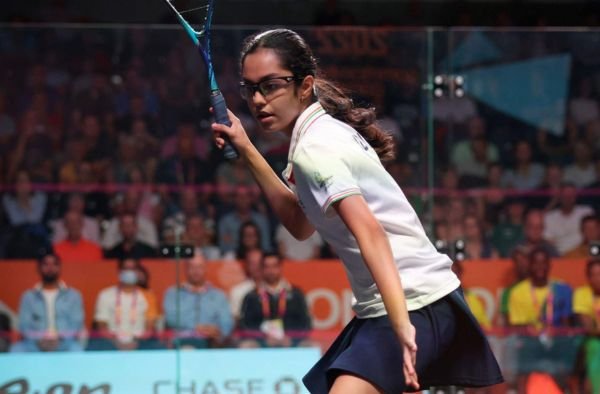
For Anahat, the result was a sharp reminder of the fine margins separating her from the very top of the women’s game. The Indian, ranked No. 20 in the world, had arrived in the quarterfinals with momentum after an impressive three-game victory over eighth seed Nele Gilis of Belgium. But against third-seeded Sivasangari, the match never developed into the contest Anahat would have hoped for.
The Malaysian, a former London Squash Classic champion and currently ranked No. 5 in the world, imposed herself from the opening exchanges. Her objective was clear: deny Anahat the time and space required to build her attacking game.
“I’m happy with how I played today, Anahat is a very talented player. She’s beaten some of the top players and challenged the majority of them,” Sivasangari told SquashTV. Sivasangari then explained the tactical adjustment that proved decisive against the Indian teenager.
“I put extra intensity in my hitting towards the back corners. Anahat is very dangerous when she has time, so I tried to take that away from her. Obviously, there are a lot of nerves coming into these matches with the best of three format, so I had to get my confidence and happy with how I dealt with things today.”
The numbers reflected her control. Sivasangari conceded only eight points across the two games and never allowed Anahat to establish the rhythm that had carried her past Gilis in the previous round.
For Anahat, however, the quarterfinal appearance remains another important step in a rapid rise. At only 18, she has already broken into the world’s top 20 and established herself as one of India’s most promising squash players. Her progress has also given India a genuine contender on the international women’s circuit at a time when the country is seeking to build greater depth behind its established stars.
The timing of this defeat makes it particularly significant. The Asian Games are approaching, and Sivasangari is likely to be one of Anahat’s most formidable opponents on the continental stage. The Malaysian is currently the highest-ranked Asian woman in the world, making this London meeting more than just another PSA quarterfinal. It offered both players an early look at the challenge that awaits them when medals are at stake.
The Asian Games will carry added significance because squash’s return to the Olympic programme for Los Angeles 2028 raises the importance of continental qualification pathways. The sport is scheduled to feature at LA28, making performances at major regional competitions increasingly important for players targeting Olympic qualification.
That makes Anahat’s development particularly intriguing. She has already shown that she can compete with experienced top-ranked opponents, but London demonstrated that surviving against elite opposition is different from controlling a match against it. Sivasangari’s victory also sets up a heavyweight semifinal against second seed and reigning world champion Amina Orfi, giving the Malaysian another opportunity to test herself against one of the strongest players on the PSA Tour.
For Anahat, the focus now shifts from disappointment to refinement. The loss was decisive, but it came against a player ranked 15 places higher and one who executed a very specific tactical plan almost perfectly.
The significance of this defeat should not be measured simply by the scoreline. Anahat has reached a stage where losses to the world’s best can become part of her education rather than setbacks to her progress. Sivasangari showed exactly what Anahat must solve next: how to create opportunities when an opponent refuses to give her time.
With the Asian Games looming, this defeat could prove valuable if it becomes a tactical lesson rather than merely a disappointing exit. The rivalry is only beginning, and London may have provided the first serious chapter.

