

India’s women produced the kind of performance that usually defines a final. Shafali Verma and Smriti Mandhana laid the foundation with aggressive half-centuries before the middle and lower order pushed India to 183/5. Sri Lanka never found the same rhythm in the chase, with India’s spin attack dismantling the defending champions and bowling them out for 111.
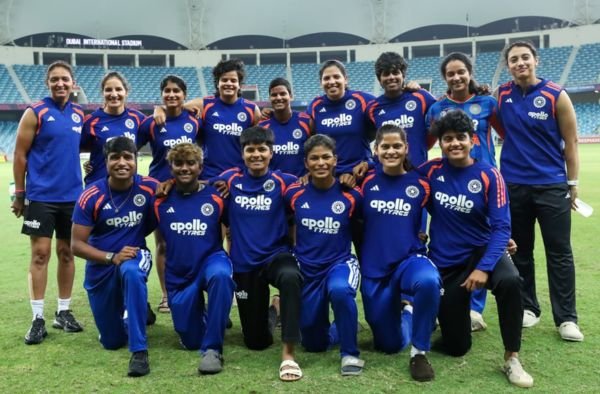
The 72-run victory gave India a record-extending eighth Women’s Asia Cup title and completed an unbeaten campaign. Shafali set the tone at the top with 68, while Mandhana contributed 59 as India took control of the final. Shafali finished the tournament with 236 runs from five innings and three half-centuries, underlining her importance to India’s campaign. Once the openers had provided the platform, G Kamalini supplied the late acceleration with a six that took India to 183/5.
The defence was even more emphatic. Sri Lanka made a promising start, but India’s spinners steadily turned the contest into a one-sided affair. Deepti Sharma removed Chamari Athapaththu and Vishmi Gunarathne in quick succession, while Sree Charani produced the decisive spell, claiming four wickets. By the time Deepti completed the victory by bowling Kaushini Nuthyangana, Sri Lanka had been dismissed for 111.
India had secured their eighth title and their 10th appearance in a Women’s Asia Cup final. But the celebrations were followed by an unusual trophy presentation. India did not come forward to receive the Asia Cup trophy from Naqvi, who is not only the ACC president but also Pakistan’s interior minister and chairman of the Pakistan Cricket Board. The decision immediately became one of the biggest talking points surrounding the final, with the presentation ceremony becoming almost as prominent as the match itself.
On Monday, BCCI vice-president Rajeev Shukla said the decision was not an individual call by the players but a collective decision taken by the Board and team. “We discussed the matter among ourselves and decided that we would not accept it (trophy) from him. It was our collective decision. He (Naqvi) also did not raise any objection to it,” Shukla told reporters after arriving at the Indira Gandhi International Airport with the team.
The decision continues a stance that became prominent during the men’s Asia Cup last year, when India also did not accept the trophy from Naqvi after winning the tournament. The backdrop to the strained sporting relationship between India and Pakistan includes the April 2025 Pahalgam terror attack, in which 26 people were killed. The political tensions have subsequently continued to spill into cricketing events.
Shukla said the Indian team had been informed about the Board’s position and that the ACC chief did not object to the decision. “We informed our team accordingly, and he presented it to whoever he had to and then left,” Shukla added. His comments echoed the earlier statement from BCCI secretary Devajit Saikia, who said the Board had taken the decision after considering the circumstances surrounding the tournament.
“We had taken a conscious decision considering all prevailing aspects, and our position had been communicated to the ACC in advance, that the Indian team would not participate in the trophy presentation under the circumstances,” Saikia had said earlier.
There was also attention on images that surfaced showing Saikia speaking to Naqvi during the final. With the trophy ceremony already under scrutiny, those images prompted questions about whether there had been any contradiction in the BCCI’s position.
Shukla, however, played down the interaction and described it as routine. “What Saikia ji said is absolutely correct. When you are at a match, everyone is present there and interacts in a professional capacity. Also, I do not think there should be so much criticism over that,” he said. The sequence meant India’s eighth Asia Cup title was accompanied by a second storyline that had little to do with the cricket itself. On the field, India had produced a near-perfect final. Off it, the trophy presentation became the defining image of the evening.
The result itself was significant. India had entered the final looking to reclaim the title after Sri Lanka defeated them in the 2024 summit clash, when Chamari Athapaththu and Harshitha Samarawickrama powered Sri Lanka to their maiden Women’s Asia Cup crown. This time, India left no opening for a repeat. The batting produced 183, the bowlers defended it comfortably, and the tournament ended with India unbeaten. For a team preparing for the next major challenge, the performance offered plenty of encouragement.
Shukla also looked beyond the Asia Cup, expressing confidence that the team can carry its momentum into the Asian Games in Japan. “We became Asia Cup champions. Our women have once again made us proud and we will continue to win in the future. The team is now heading to Japan and we are fully confident that we will secure a victory there as well,” he said.
The final therefore leaves two images behind. One is of India’s players celebrating an eighth continental crown after overwhelming Sri Lanka by 72 runs. The other is of an absent trophy presentation that ensured the political context around India-Pakistan cricket once again shared centre stage with the sport.
India’s victory deserved to be remembered for the cricket first. The most striking aspect of the final was not the trophy ceremony, but how comprehensively India controlled the match. Shafali and Mandhana gave the team the perfect start, while India’s spin unit turned 183 into an insurmountable target. Charani’s four-wicket burst and Deepti’s control completed a performance that left Sri Lanka 72 runs short.
Yet the trophy episode inevitably became the bigger story because cricket between India and Pakistan now exists within a much wider political context. The decision was clearly deliberate and had been communicated in advance, according to the BCCI. That does not diminish India’s achievement. If anything, it makes the sporting performance more important.
The players did what they travelled to Dubai to do: win the Asia Cup. The trophy may have dominated the photographs after the final, but the scorecard tells the clearest story. India 183/5. Sri Lanka 111. India won by 72 runs. Champions, for the eighth time.
