

For one of India’s most decorated singles shuttlers, the road through the Asian Games 2026 could briefly take an unfamiliar turn. PV Sindhu, synonymous with India’s biggest singles triumphs, is set to take on a doubles assignment if the women’s team quarterfinal against Japan goes down to the fifth and deciding match.
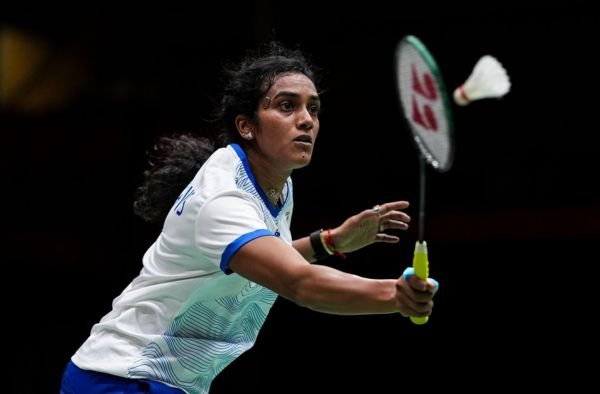
India will face Japan in the last-eight clash of the women’s team event on Tuesday, with Sindhu expected to open the tie against familiar opponent Akane Yamaguchi. But should the contest remain undecided after four matches, Sindhu is listed to return to court alongside Tanisha Crasto, with Japan’s Rin Uesaka and Kie Nakanishi named as the opposing pair.
It is a tactical option that immediately adds intrigue to the tie. Sindhu has spent virtually her entire elite career as a singles specialist, while Crasto has established herself as one of India’s prominent doubles players. The combination has, however, already been tested this year at the Uber Cup, giving the Indian camp some familiarity with the pairing.
According to the player records cited in the match build-up, Sindhu has played only four doubles matches in her senior career, all in team competitions rather than on the regular BWF World Tour. Her latest two came alongside Crasto at the Uber Cup, where the Indian pair won both their matches. One of those encounters ended after Denmark’s Alexandra Boje and Christine Busch retired, while Sindhu and Crasto defeated Ukraine’s Sofiia Lavrova and Mariia Stoliarenko 21-18, 21-15 in another tie.
Sindhu’s experience in doubles stretches further back. In 2018, she partnered N Sikki Reddy at the Badminton Asia Team Championships. The pair defeated Hong Kong’s Ng Tsz Yau and Yuen Sin Ying 21-15, 15-21, 21-14 to help India secure a 3-2 victory. Contemporary reports noted that Sindhu first won her singles rubber before returning to the court for the doubles match.
Six years later, Sindhu was again called upon to perform a doubles role at the 2024 Badminton Asia Team Championships, this time alongside Ashwini Ponnappa against Japan. India had already secured a historic first women’s medal at the event after defeating Hong Kong 3-0, with Ponnappa and Crasto winning the doubles rubber in the quarterfinal.
The prospect of Sindhu playing doubles in Nagoya therefore represents another example of the flexibility demanded by team badminton. Unlike an individual tournament, where a player is responsible for one discipline, a team tie requires combinations to be adjusted according to the situation and the opposition.
For Japan, Yamaguchi provides a formidable opening challenge. Sindhu enters the Asian Games after an important 2026 season, including a landmark Japan Open triumph in July. She became the first Indian player to win the Japan Open after defeating Yamaguchi 21-17, 21-17 in the final, adding another chapter to a long rivalry between the two former world No. 1s.
India’s badminton contingent at the Aichi-Nagoya Games includes 20 athletes, with Sindhu among the established names selected for the campaign. The interesting story here is not simply that Sindhu may play doubles. It is what that possibility says about the demands of team badminton.
Sindhu has built her legacy almost entirely through singles, but India’s depth in women’s badminton now allows the team management to consider unconventional combinations when the situation demands it. A deciding doubles rubber would test not just Sindhu’s technical adaptability, but also how effectively she and Crasto can adjust their movement, positioning and communication against a specialist Japanese pair.
For now, the equation is straightforward: Sindhu first has to deal with Yamaguchi in singles. But if the tie reaches its final act, India’s most celebrated women’s singles player could find herself in a very different role, chasing the decisive point from the doubles court.

