

Aryna Sabalenka returns to the WTA Tour in Beijing carrying something unfamiliar: a ranking position other than No. 1. But after a demanding stretch of the season and a painful US Open final defeat, the Belarusian says she arrives at the China Open feeling “fresh”, with her focus shifting from rankings to rediscovering the level of tennis that has made her one of the leading players in the women’s game.
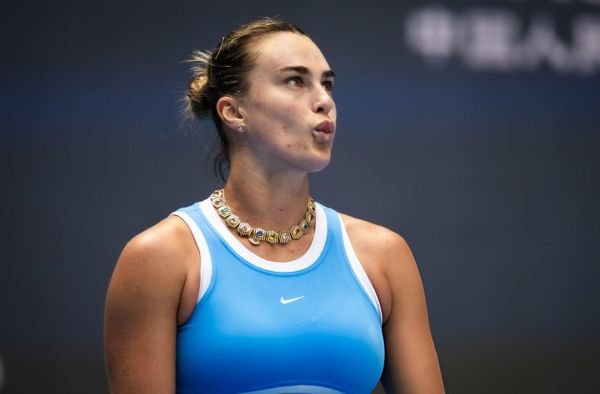
Sabalenka begins her China Open campaign on Wednesday as the second seed, behind new world No. 1 Elena Rybakina. The WTA 1000 tournament runs from September 30 to October 11 at the China National Tennis Center in Beijing. The change at the top of the rankings comes after Rybakina defeated Sabalenka in the US Open final earlier this month. The 6-4, 5-7, 6-2 victory not only gave Rybakina her third Grand Slam title but also ended Sabalenka’s 99-week reign as world No. 1.
Sabalenka looking beyond the ranking. The timing of Sabalenka’s return makes Beijing an intriguing next chapter. She has not played since the US Open, where she reached the final for a fourth consecutive year. Her run in New York included a straight-sets semifinal victory over Jessica Pegula, keeping alive her bid for a third successive US Open title before Rybakina ended that campaign in the final.
Sabalenka acknowledged that the middle portion of her season had been difficult, but said her performance in New York helped restore confidence in both her physical and mental state. “This time I feel like, because I didn’t play that many matches, I feel fresh,” the 28-year-old said ahead of the China Open.
The Belarusian added: “The middle part of the season… didn’t go that well. I struggled a little bit with different stuff. At the US Open I started to enjoy tennis again because of being healthy mentally and physically.” Those comments offer an important perspective heading into Beijing. Sabalenka is not returning simply to reclaim the ranking she held for 99 weeks. Her immediate task is to build on the feeling she rediscovered in New York.
A demanding China Open field. Sabalenka will have little room for an easy return. The Beijing tournament features a 96-player singles draw and includes 18 of the world’s top 20 players. Rybakina leads the field, with Sabalenka, Coco Gauff and Mirra Andreeva completing the top four seeds. As the No. 2 seed, Sabalenka receives a first-round bye. She will face the winner of the first-round contest between Hungary’s Anna Bondar and Mexico’s Renata Zarazua.
Rybakina, meanwhile, begins her campaign on the other side of the draw and enters Beijing as the newly crowned world No. 1 and reigning US Open champion. Their rivalry has become one of the defining stories of the 2026 season. Rybakina defeated Sabalenka in both hard-court Grand Slam finals this year, first at the Australian Open and then at the US Open.
The ranking has changed, but the challenge has not. Sabalenka’s Beijing campaign is less about getting her old ranking back and more about establishing what comes next. The loss of the No. 1 ranking closes one chapter of her career, but the numbers behind her 2026 season show that this has hardly been a lost campaign. Sabalenka has reached five finals this season, winning titles at Brisbane, Indian Wells and Miami.
She has also qualified for the WTA Finals for a sixth consecutive season, joining Rybakina as one of the first two players to secure qualification for the season-ending event. That consistency is significant as the season enters its final stretch. The China Open is also one of the biggest remaining opportunities on the WTA calendar. As a WTA 1000 tournament, it offers 1,000 ranking points and brings together one of the deepest fields of the season.
Sabalenka’s first tournament since surrendering the No. 1 ranking therefore comes with several questions. Can she turn the confidence of her US Open run into another deep tournament? For now, Sabalenka says she feels healthier, fresher and ready to compete again. Beijing will show what that renewed feeling can produce.

