
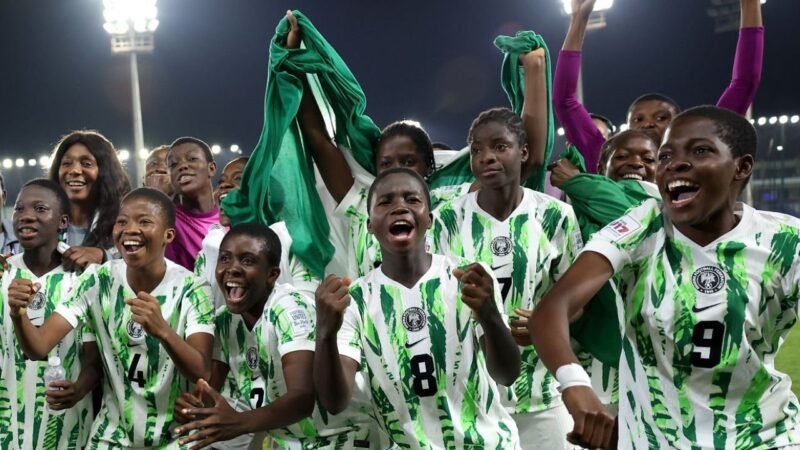

Nigeria’s Flamingos have rewritten the history of African women’s football, overcoming Japan 2-1 in the FIFA U-17 Women’s World Cup 2026 final to lift their maiden world title in Rabat, Morocco, on Saturday. In a contest that tested their attacking intent as much as their defensive resilience, the Nigerian youngsters delivered when it mattered, with Awawu Bashiru and Oluebube Umejiaku scoring on either side of half-time to secure a landmark victory.
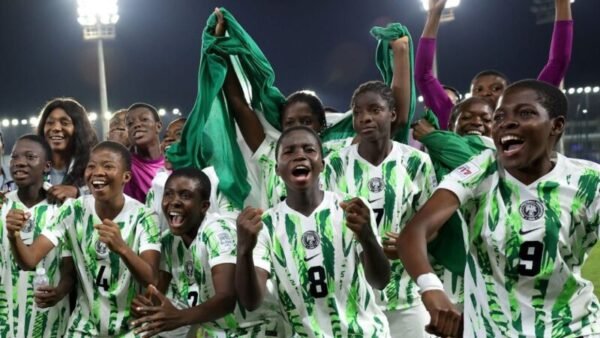
The triumph carries significance beyond Nigeria’s youth football programme. The Flamingos have become the first African nation to win the FIFA U-17 Women’s World Cup, while also delivering the continent its first FIFA Women’s World Cup title at any age level. Their victory over a technically accomplished Japanese side marks a breakthrough moment for African women’s football on the global stage. For Nigeria, the result also represents a remarkable progression from its previous best performance in the competition, a third-place finish in 2022 in India.
Four years after claiming bronze, the Flamingos have now gone one step further to become world champions. Nigeria began the final with attacking intent, looking to put Japan under pressure from the opening exchanges. Bashiru and Umejiaku both threatened the Japanese goal early, but the opposition defence initially managed to withstand the pressure. The breakthrough eventually arrived in the 39th minute. Mary Dunstan picked out Bashiru, who found the back of the net to give Nigeria a crucial 1-0 advantage heading into half-time.
Japan, the 2014 champions and four-time finalists, faced an uphill task after conceding just before the interval. However, the Flamingos wasted little time in extending their lead after the restart. Just two minutes into the second half, Esther Stephen initiated a move that resulted in Nigeria’s second goal. Umejiaku capitalised on the opportunity, producing a composed finish in the 47th minute to make it 2-0. The two-goal cushion gave Nigeria greater control of the contest and put Japan under pressure to find a response.
Umejiaku’s contribution proved particularly important, as she combined her attacking movement with the composure required to deliver on the biggest occasion of the tournament. She was subsequently named Player of the Match for her performance in the final. Despite trailing by two goals, Japan refused to surrender its hopes of a comeback.
The Asian side gradually increased its attacking pressure, looking to exploit openings in the Nigerian defensive structure. The persistence finally paid off in the 80th minute when Anri Ito set up Fuki Ito, who found the net to reduce the deficit to 2-1. The goal transformed the closing stages into a tense battle, with Japan pushing forward in search of an equaliser. Nigeria, meanwhile, were forced to defend their advantage against sustained pressure.
The Flamingos maintained their defensive organisation and remained disciplined through the final minutes, including stoppage time, to protect their lead and secure the historic victory. For Japan, the defeat ended its hopes of securing a second U-17 Women’s World Cup crown, having previously won the competition in 2014. Nigeria’s title-winning journey makes the achievement even more remarkable.
The Flamingos began their Morocco 2026 campaign with a 2-1 defeat against Poland, leaving their championship ambitions under early pressure. However, the team responded with a series of impressive performances, defeating Puerto Rico and defending champions DPR Korea in the group stage. Their momentum continued in the knockout rounds, where they overcame Mexico and Venezuela before producing a commanding 3-1 victory over Brazil in the semi-finals to secure their maiden appearance in the final.
Bashiru emerged as one of the standout performers during the closing stages, scoring twice against Brazil before opening the scoring against Japan. Umejiaku also enjoyed an impressive tournament, having initially started the competition on the bench. She finished with four goals and was awarded the Golden Ball as the tournament’s outstanding player. Nigeria’s triumph in Morocco is bigger than a maiden age-group world title.
It represents a defining moment for African women’s football and demonstrates the growing ability of the continent’s emerging talent to compete against established international programmes. The Flamingos’ journey is particularly noteworthy because they recovered from an opening defeat to win six consecutive matches and finish the tournament as champions. Their performances against defending champions DPR Korea, Brazil and Japan demonstrated their ability to compete across different styles of opposition.
The achievement also offers an important reminder of the value of investing in youth development and providing young female footballers with opportunities to compete on the international stage. For Nigeria, the victory establishes a new benchmark for its women’s football programme. For Africa, it opens the door to a new chapter in the global game. The Flamingos have not just won a trophy. They have created history, becoming the first African women’s team to lift a FIFA World Cup at any level.
