

Indian wrestling has entered a decisive phase in its pursuit of international dominance, as the Wrestling Federation of India (WFI) unveiled a revamped high-performance structure aimed at long-term success. With clear targets set for the 2026 Asian Games and the 2028 Olympic Games, the federation has brought in a team of experienced foreign coaches along with a High-Performance Director to elevate the national program.
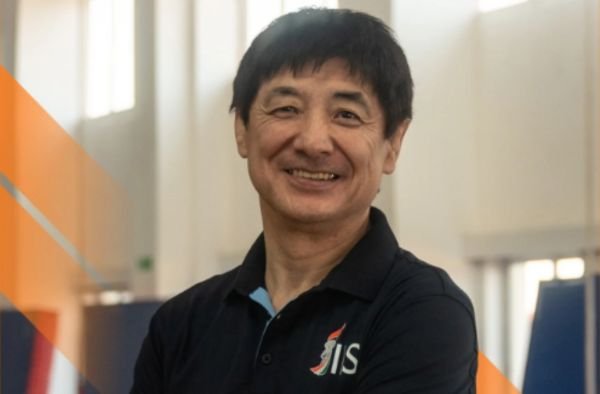
The appointments signal a strategic shift in Indian wrestling, focusing not just on immediate results but also on building a robust system that can consistently produce world-class athletes. The newly inducted coaching team features Georgia’s Emzarios Bentinidis for men’s freestyle, Japan’s Kosei Akaishi for women’s wrestling, Russia’s Gogi Koguashvili for men’s Greco-Roman, and American Ian Butler as the High-Performance Director. All four are expected to officially take charge next month and begin working closely with the national squad.
India’s wrestling program has been one of the country’s most reliable sources of medals on the global stage, delivering at least one Olympic medal in every edition since 2008. The recent performance at the Asian Wrestling Championships in Bishkek, where India secured 17 medals including two gold and six silver, further underlined the depth of talent within the system. However, the federation is now aiming to convert potential into sustained podium finishes at the highest level.
“”These appointments mark a significant milestone in Indian wrestling. By bringing in international expertise and establishing a dedicated high-performance leadership structure, we are building a system that supports our athletes at every level. Our goal is not only to win medals but to create a sustainable pathway for long-term excellence,” said WFI president Sanjay Singh.”
Each of the newly appointed experts brings with them a proven track record. Bentinidis, widely known as Shako, has previously worked with some of India’s top freestyle wrestlers and is familiar with the country’s competitive landscape. His experience is expected to strengthen India’s already competitive freestyle unit.
Koguashvili, a five-time world champion, arrives with an exceptional resume. During his tenure as head coach of Russia’s Greco-Roman team, he oversaw a period of dominance that yielded 62 world championship medals, including 18 gold between 2006 and 2025. His technical expertise and understanding of elite competition are expected to transform India’s Greco-Roman prospects. For the women’s program, the appointment of Akaishi is particularly significant.
Having served as both national coach and High-Performance Director for Japan, he played a key role in shaping one of the most successful wrestling systems in the world. Under his guidance, Japan secured four gold and two bronze medals at the Tokyo Olympics in 2020 and followed it up with an extraordinary performance at the Paris 2024 Games, winning eight gold, one silver, and two bronze medals. His presence is expected to provide Indian women wrestlers with a new tactical and technical edge.
Meanwhile, Ian Butler’s role as High-Performance Director will be central to integrating these coaching efforts into a cohesive system. He will oversee athlete development, training methodologies, and performance analysis while working closely with both coaching camps in Lucknow and New Delhi.
The men’s freestyle and Greco-Roman teams are currently training at the Sports Authority of India’s Regional Centre in Lucknow, while the women’s squad is based at the Indira Gandhi Stadium in New Delhi. The coaching team will operate across both locations, ensuring a unified approach as preparations intensify for the upcoming Asian Games in Aichi-Nagoya, Japan, scheduled for September 2026.
Historically, India has claimed 65 wrestling medals at the Asian Games, including 11 gold. At the previous edition in China, the contingent secured six medals, consisting of one silver and five bronze. While these results reflect consistent performance, the federation believes there is room for significant improvement. With the infusion of international expertise and a renewed focus on high-performance systems, WFI is confident of achieving double-digit medal finishes in future competitions. More importantly, the initiative represents a long-term vision to establish India as a global powerhouse in wrestling.
As the countdown to Aichi-Nagoya begins, Indian wrestling stands at a promising crossroads. With experienced guidance, emerging talent, and a structured approach, the path ahead is not just about medals, but about building a legacy of sustained excellence on the world stage.

