

The legal battle between Wrestling Federation of India (WFI) and Vinesh Phogat has intensified after the Delhi High Court sharply questioned the federation’s decision to bar the celebrated wrestler from domestic competitions following her maternity break. In a significant development, the court directed the Central Government to form an expert committee to assess her case and ensure that sporting interests are not harmed due to administrative disputes.
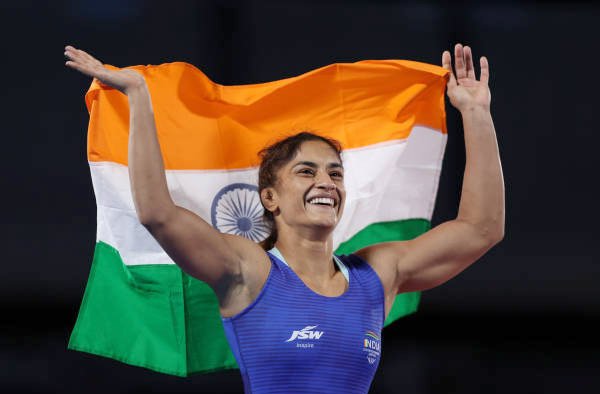
The matter came up during hearings on Phogat’s petition challenging her exclusion from the selection trials for the 2026 Asian Games. The trials are scheduled to take place later this month. A division bench led by Chief Justice D.K. Upadhyaya and Justice Tejas Karia raised concerns over the federation’s sudden change in eligibility norms and questioned whether the revised rules were specifically designed to keep Phogat out of competition.
The court strongly criticised the federation for deviating from its earlier approach, where reputed athletes were often granted opportunities to compete based on past achievements and international standing. During the proceedings, the bench observed that motherhood is respected and celebrated in India and should not become a reason to deny an athlete the opportunity to return to sport. The judges also remarked that sports administration should not function with a sense of “vendetta” and that the future of Indian wrestling must remain the priority.
The controversy began after WFI introduced fresh eligibility criteria for the Asian Games selection trials. According to the revised rules, only wrestlers who won medals in competitions during 2025 and 2026 would be allowed to participate in the trials. Since Phogat had not competed after the Paris Olympics 2024, the new rules automatically made her ineligible.
Phogat, one of India’s most accomplished wrestlers, had stepped away from competition after her heartbreaking disqualification from the Paris Olympics final in 2024, where she missed the weight limit by just 100 grams ahead of the gold medal bout. The incident had sparked emotional reactions across the country, with many athletes and fans rallying behind her. Despite announcing retirement after the Olympics, Phogat later decided to make a comeback with the aim of competing at the Los Angeles Olympics 2028.
Adding to the tensions, WFI issued a show-cause notice to Phogat earlier this month and declared her temporarily ineligible for domestic events until June 26, 2026. The federation alleged violations related to anti-doping return protocols, indiscipline and administrative irregularities. WFI also claimed that athletes returning after retirement are required to complete a mandatory six-month notice period under anti-doping regulations.
Phogat, however, rejected the allegations and maintained that she had informed the relevant anti-doping authorities about her return plans and had complied with the required procedures. She accused the federation of attempting to deliberately block her comeback after nearly two years away from the sport.
During the hearing, the High Court questioned whether the federation’s actions were serving the interests of Indian wrestling. The bench reportedly observed that “the sport should not suffer” because of ongoing disputes between athletes and administrators. The judges further instructed the government to allow experts to evaluate Phogat’s fitness and competitive readiness instead of excluding her outright.
The dispute also arrives against the backdrop of the long-running tensions between several wrestlers and the federation following the 2023 protests against former WFI chief Brij Bhushan Sharan Singh over allegations of sexual harassment. Phogat had been among the leading voices during the protests, which triggered a major debate on athlete safety and governance within Indian sports.
With the High Court now stepping in, the case is being viewed as a crucial moment not only for Phogat’s comeback but also for the broader conversation around athlete rights, motherhood in sports and transparency in sports administration in India.

