

Indian athletics has been dealt another setback after middle-distance runner K.M. Deeksha reportedly tested positive for a banned substance, placing her participation in next year’s Commonwealth Games in serious doubt. The development comes at a crucial stage of the season, with athletes across the country competing for qualification spots and preparing for major international events.
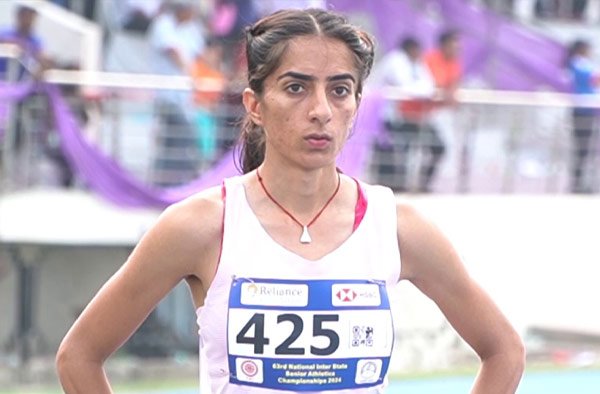
Deeksha, one of India’s leading middle-distance runners and the national record holder in the women’s 1500m, now faces the possibility of disciplinary proceedings that could sideline her from competition for an extended period. While official confirmation from anti-doping authorities is still awaited, sources indicate that the athlete has returned an adverse analytical finding during routine testing.
The 27-year-old runner has been among India’s most promising performers in recent years. Her breakthrough came in 2024 when she rewrote the national record in the women’s 1500m, clocking 4:04.78 at a meet in Los Angeles. The performance established her as one of the fastest Indian women in history over the distance and strengthened hopes of India becoming increasingly competitive in middle-distance events on the international stage.
Since then, Deeksha had continued to be viewed as a key prospect for major competitions, including the Commonwealth Games and the Asian Games cycle. However, her recent absence from important domestic competitions had already raised questions within athletics circles.
Her last competitive appearance came at the Indian Open Athletics Series in Jaipur on April 5, where she recorded a time of 4:25.74. The performance was significantly below her national record standard and was followed by her absence from the Federation Cup in Ranchi, one of the most important domestic competitions for athletes seeking selection and qualification opportunities for future international events.
The Federation Cup traditionally serves as a key benchmark event for national team selection, making Deeksha’s withdrawal particularly noticeable. At the time, no official explanation was provided regarding her absence, leading to speculation about her fitness and training situation.
Further developments emerged when her coach, S.K. Prasad, revealed that Deeksha had left the Madhya Pradesh Athletics Academy earlier this year. “She sought a ‘no objection certificate’ to represent Uttar Pradesh, perhaps with an aim to get a good job there. But we said if she wants to continue with the MPAA, then she must represent Madhya Pradesh,” Prasad stated.
The statement suggests that Deeksha’s departure from the academy may have been linked to administrative and career considerations rather than sporting reasons. However, it also highlights a period of transition in the athlete’s career shortly before the reported doping violation surfaced. The case has once again drawn attention to anti-doping efforts within Indian athletics. Over the past decade, India has faced repeated challenges regarding doping violations across multiple sports, prompting authorities to strengthen testing programs and athlete education initiatives.
According to reports from the National Anti-Doping Agency (NADA), India continues to conduct thousands of tests annually across a wide range of sports. Athletics remains one of the most frequently tested disciplines due to its high participation levels and international significance. Anti-doping regulations operate under the framework established by the World Anti-Doping Agency (WADA), which maintains a comprehensive list of prohibited substances and methods.
An athlete who tests positive is typically given the opportunity to request analysis of the B sample before any final determination is made. Depending on the nature of the substance involved and the circumstances surrounding the case, sanctions can range from warnings and reduced suspensions to multi-year bans.
The timing of Deeksha’s reported positive test is particularly unfortunate given India’s recent progress in middle-distance running. Indian athletes have steadily improved their performances in events traditionally dominated by runners from East Africa, Europe, and parts of Asia. Deeksha’s national record had been viewed as evidence that Indian women could challenge higher international standards in the years ahead.
Her case also arrives amid broader concerns about doping in Indian sport. Reports emerged recently that four weightlifters training in the national camp had also tested positive for prohibited substances, further intensifying scrutiny of anti-doping compliance across elite sports programs.
For now, uncertainty surrounds Deeksha’s future. Until the anti-doping process is completed and official findings are announced, the full implications of the case remain unclear. What is certain, however, is that one of India’s most accomplished middle-distance runners faces a potentially career-defining period at a time when she had been expected to play a major role in the country’s international athletics ambitions.
The coming weeks are likely to determine not only her eligibility for the Commonwealth Games but also the next chapter of a career that once appeared destined for even greater achievements on the global stage.

