

India’s future in women’s hockey appears to be in safe hands if the recent U-18 Women’s Asia Cup is any indication. A talented group of young players announced themselves on the continental stage in Japan, delivering an impressive campaign that culminated in a bronze medal and earned praise from one of Indian hockey’s greatest icons, Rani Rampal.
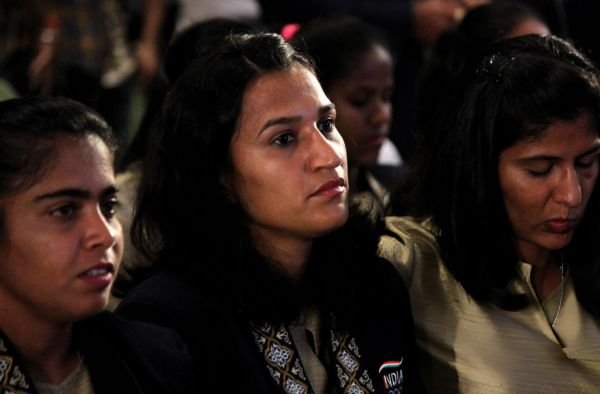
In her first major tournament as head coach, the former India captain oversaw a spirited performance from the young squad, which combined attacking flair, resilience and composure to finish on the podium. More importantly, the tournament offered a glimpse into the next generation of Indian hockey talent, with several players already being viewed as potential candidates for future senior national teams.
Rani believes the experience gained by the current batch could play a significant role in shaping India’s long term future, including its ambitions at the Olympic Games. “It was a very good tournament in terms of learning for the girls as well as for me as a coach. In this U-18 team, there were many players who were only 14 and 15 years old,” Rani told PTI after the team’s return from Japan.
The former striker, who captained India to numerous international successes and played a key role in the team’s historic fourth place finish at the Tokyo Olympics, highlighted the developmental importance of competing against stronger opposition at a young age.
“There is a huge difference between sub-junior and senior-level hockey in terms of maturity, physicality and strength. I am sure many from this core group will feature in the 2032 and 2036 Olympics. This exposure will help them grow. The more mistakes they make, the more they learn.”
India’s journey in the tournament showcased both dominance and determination. The team opened its campaign with a hard fought 2-1 victory over Malaysia before registering a convincing 3-1 win against South Korea.
The young Indian side then produced one of the most remarkable scorelines of the competition, thrashing Singapore 25-0 to finish on top of Pool A. Their unbeaten run ended in dramatic fashion in the semifinals against eventual champions China. After the teams were locked at 2-2 in regulation time, India narrowly lost 3-2 in the penalty shootout, missing out on a place in the gold medal match.
Despite the disappointment, the players responded admirably. India returned to the field with renewed determination and defeated South Korea 3-0 in the bronze medal match. Goals from Sandeepa Kumari, captain Sweety Kujur and leading scorer Nousheen Naz ensured the team returned home with a podium finish.
For Rani, one of the most encouraging aspects of the campaign was the mental toughness displayed by her players. “They got a huge opportunity to play big, high-pressure matches, including a semifinal. To make a comeback and then win a bronze medal wasn’t easy at all. I am impressed by the grit and resolve shown by the team.”
India’s attacking numbers throughout the tournament were particularly impressive. The team scored 36 goals in total, underlining its offensive strength and tactical versatility. Leading the charge was striker Nousheen Naz, who finished as the tournament’s highest scorer with 12 goals in just five matches. Asked about standout performers, Rani singled out Nousheen for special praise but stressed that the team’s success was built on collective effort.
“We have a champion scorer in Nousheen Naz. She has the quality and game intelligence that a striker should have. But a striker can score only when the team creates opportunities. Other players gave her very good passes. We have talented defenders, midfielders and strikers who can become very good players in the future.”
Geethasri Nammi also enjoyed a productive tournament with six goals, while captain Sweety Kujur contributed five goals and provided leadership both on and off the field.
The tournament also marked an important milestone in Rani’s own journey. Widely regarded as one of the most influential figures in Indian women’s hockey, she has now begun transitioning into coaching, hoping to pass on her experience to the next generation.
“I have just started my coaching journey. I am taking one tournament at a time and not thinking too much about the future. As a player, I could not fulfil my dream of winning an Olympic medal. My wish is to see India on the podium one day as a coach, or in whatever capacity I am associated with the team.”
While the bronze medal represented a commendable achievement, captain Sweety Kujur admitted the team was still reflecting on a missed opportunity to compete for gold.
“It pains more than any happy feeling. We were a gold medal-winning team but unfortunately lost in the semifinals. This bronze is a consolation prize, though I am happy we brought home a medal. In the semifinal, after taking the lead, we came under pressure while defending it and eventually lost. What we learnt is that we should not become defensive when we are ahead. We need to think and play positively.”
The captain also acknowledged the role Rani played throughout the tournament. “Rani ma’am played a huge role in shaping this team. She was always available for us, took extra care and worked very hard with us. I believe this group will progress from the sub-junior level to junior and then senior hockey. We are a very good team.”
Top scorer Nousheen echoed those sentiments and expressed gratitude for the opportunity to represent the country.
“We practised well, and that helped us perform well and win. For my success, I thank Rani ma’am for all her support and motivation. I never imagined I would represent India and win a bronze medal. My next target is to win medals at the junior and senior levels. I will now focus on preparing for the junior camps.”
As India continues investing in youth development and strengthening its hockey pathway, the performances in Japan offer plenty of optimism. With talented players already gaining international exposure and learning under a legend like Rani Rampal, Indian women’s hockey may well have discovered the foundation of its future Olympic ambitions.

