

India’s preparations for the 2026 Asian Games have been overshadowed by controversy after star table tennis player Manika Batra publicly questioned the selection process adopted by the Table Tennis Federation of India (TTFI). The three-time Olympian, who was named only as a reserve in the Indian squad for the Aichi-Nagoya Asian Games, alleged that the federation failed to follow its own Constitution while constituting the selection committee.
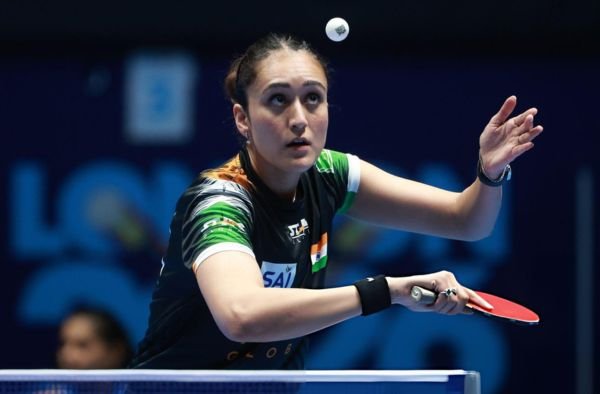
Despite voicing serious concerns over the process, Batra has indicated that she will not pursue the matter further, saying the prolonged dispute has taken a toll on her mentally. Instead, the 30-year-old has decided to turn her attention towards international competition, with her immediate focus shifting to the United States Smash in Los Angeles.
Batra, currently ranked World No. 51 in the WTT Women’s Singles rankings, is India’s second-highest-ranked female singles player behind Sreeja Akula, who occupies the 44th position. However, she was not included in the main five-member women’s squad for the Asian Games and has instead been placed among the reserves.
The development has surprised many within Indian table tennis, considering Batra’s stature as one of the country’s most successful players. Over the past decade, she has been instrumental in elevating Indian table tennis on the global stage, becoming the first Indian woman to win a singles gold medal at the Commonwealth Games in 2018. She also guided India to a historic women’s team gold at the Gold Coast Games and has represented the country at three Olympic Games, cementing her legacy as one of India’s finest paddlers.
In a detailed statement shared on social media on Friday, Batra questioned the legitimacy of the committee that selected the national team. According to her, the federation constituted a nine-member selection panel despite provisions in its Constitution restricting the size of sub-committees. Her objection centres around Article 24(C)(j) of the TTFI Constitution, which states that no sub-committee of the federation should comprise more than seven members. Batra alleged that this rule was ignored during the Asian Games selection process.
“A nine-member committee decided my fate, yet I am being told that the process was fully compliant with the Constitution and the rules,” Manika wrote in her statement on social media.
The veteran paddler further claimed that documents in her possession contradicted the federation’s assertion that the selection exercise had been conducted strictly in accordance with its Constitution.
The issue has once again highlighted the ongoing debates surrounding transparency and governance in Indian sports administration, particularly in team selection for major international events. Athlete selection often involves balancing international rankings, domestic performances and the discretion of selectors, making such decisions highly scrutinised.
Under the TTFI’s approved selection policy, players are assessed using a points-based formula. National rankings account for 50 per cent of the selection criteria, world rankings contribute 40 per cent and the remaining 10 per cent is left to the discretion of the selection committee.
Although Batra enjoys a superior international ranking compared to several players selected in the squad, her absence from multiple domestic ranking tournaments affected her standing in the national rankings. Since domestic performances carry the highest weightage under the current policy, the reduced national ranking significantly impacted her chances of automatic selection.
The TTFI has defended its decision, maintaining that the squad was chosen strictly in accordance with the federation’s approved guidelines. Federation officials have reiterated that the selection criteria were made public well in advance and applied uniformly to all eligible players.
While expressing disappointment over the process, Batra made it clear that she no longer wishes to continue the dispute. “I am mentally exhausted with this fight and for now, I am putting my sword down,” she said. The statement reflects the emotional strain that prolonged administrative disagreements can place on elite athletes, particularly in the lead-up to major international competitions.
Instead of engaging in a legal or administrative battle, Batra has chosen to prioritise her performance on the international circuit. She is currently preparing to compete at the United States Smash in Los Angeles, one of the premier events on the World Table Tennis calendar. Strong performances there could boost her world ranking further as she continues to chase qualification for future international tournaments.
India’s women’s squad for the 2026 Asian Games will be led by World No. 44 Sreeja Akula and also includes Yashaswini Ghorpade, Diya Chitale, Sutirtha Mukherjee and Syndrela Das. Batra has been named as a reserve despite remaining one of India’s highest-ranked players internationally.
The controversy comes at a time when Indian table tennis has been making steady progress on the global stage. The country has produced several players capable of competing with the world’s best, while performances at the Commonwealth Games, Asian competitions and the Olympics have significantly raised the sport’s profile in India.
For now, however, Batra has chosen to leave the selection debate behind and concentrate on what she does best: competing on the international stage. Whether her performances at upcoming WTT events influence future national selections remains to be seen, but one thing is certain. One of India’s most accomplished table tennis players remains determined to let her paddle do the talking.

