

Champions are often defined not by the matches they dominate, but by the contests that push them to their absolute limits. At the 22nd Commonwealth Table Tennis Championships in New Delhi, Sreeja Akula found herself in exactly that situation. Faced with a relentless challenge from compatriot and doubles partner Syndrela Das, India’s top-ranked women’s paddler dug deep to survive a gripping seven-game semifinal, eventually prevailing 4-3 to secure her place in the women’s singles final.
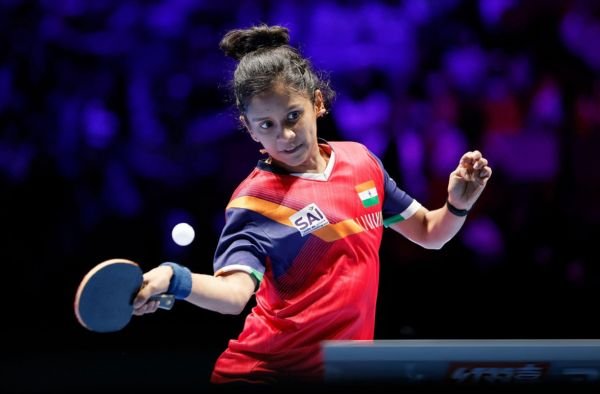
The match was everything a semifinal should be. It was intense, unpredictable and packed with momentum shifts, as two of India’s finest players showcased the remarkable depth that now defines the country’s women’s table tennis programme. While only one could progress to the championship match, both players left the table having underlined why India continues to dominate the Commonwealth circuit.
Coming into the contest, Sreeja carried the weight of expectation. The Commonwealth Games medallist and one of India’s highest-ranked players had already enjoyed success earlier in the tournament, adding another gold medal to her growing collection. Syndrela, meanwhile, entered with nothing to lose and everything to prove. The aggressive paddler had quietly worked her way through the draw and arrived in the semifinal determined to upset the favourite.
The opening exchanges suggested that an upset could well be on the cards. Syndrela settled quickly into the contest, attacking confidently and refusing to allow Sreeja to dictate rallies. Her positive approach paid immediate dividends as she edged a closely fought first game 11-9, drawing loud cheers from the home crowd and placing early pressure on the tournament favourite. Sreeja, however, has built her career on resilience. Rather than panic, she adjusted her rhythm, tightened her defence and responded with greater consistency. Those changes were evident in the second game as she claimed an 11-8 victory to level the semifinal at one game apiece.
Neither player was prepared to surrender momentum. The third game became one of the most entertaining passages of the contest, with both athletes trading spectacular rallies and forcing repeated deuce points. Syndrela once again displayed remarkable composure under pressure, edging the marathon game 13-11 to regain the advantage. As the contest gathered intensity, Sreeja once again demonstrated why she has become India’s most dependable performer on the international stage. Mixing patient defensive exchanges with timely attacking winners, she captured the fourth game 11-7 to restore parity at 2-2.
The fifth game proved to be the first decisive turning point. For the first time in the match, Sreeja managed to string together consecutive periods of dominance. She found greater accuracy with her returns, forced Syndrela into uncharacteristic errors and closed out the game 11-6 to move within one game of the final.
With the finish line in sight, many expected the experienced Akula to close out the contest. Instead, Syndrela produced one final response. Displaying tremendous fighting spirit, she refused to let the match slip away. Playing with renewed aggression, she controlled the tempo throughout the sixth game and secured an impressive 11-8 victory, forcing the semifinal into a winner-takes-all deciding game. The atmosphere inside the venue reflected the occasion.
Every point carried enormous significance as spectators watched two Indian teammates battle for a place in the final. The deciding game lived up to expectations. Both players attacked from the outset, looking to establish an early advantage. Syndrela repeatedly closed the gap whenever Sreeja threatened to pull away, ensuring the outcome remained uncertain until the closing exchanges.
But when the pressure reached its highest point, Sreeja’s experience proved decisive. Holding her composure through the decisive rallies, she edged ahead at exactly the right moment before sealing the seventh game 11-9 to complete a dramatic 4-3 victory and book her place in the women’s singles final. While Sreeja celebrated reaching another major final, the match also highlighted the remarkable progress of Indian women’s table tennis. Syndrela matched one of the country’s leading players point for point across seven fiercely contested games, reinforcing the growing depth within the national setup.
Indian women’s table tennis has evolved significantly over the past decade, driven by stronger domestic competitions, improved coaching structures and consistent exposure on the international circuit. That development has produced multiple players capable of challenging for major honours rather than relying on a single standout performer. The quality displayed by both Sreeja and Syndrela served as further evidence of that transformation.
For Sreeja, the victory represented another important step in an already successful campaign. Having earlier secured gold in the doubles competition alongside Syndrela Das, she now stood just one victory away from adding the Commonwealth singles title to her impressive list of achievements. Her ability to recover from deficits twice during the semifinal demonstrated the mental resilience that has become one of her defining strengths.
For Syndrela, despite the heartbreak of defeat, the semifinal marked another significant milestone. Taking India’s top player to a deciding game on one of the biggest stages in the Commonwealth calendar highlighted her growing confidence and reinforced her credentials as one of the country’s rising stars.
Ultimately, the scoreboard recorded Sreeja Akula as the winner, but the contest delivered something larger than an individual result. It showcased the competitive standards within Indian women’s table tennis and offered a glimpse into a future where multiple Indian athletes are capable of competing for international titles.

