

Manchester United have just a month to go before their 26/27 WSL season opener against London City Lionesses, and they’re left without a head coach as Marc Skinner has left the position.
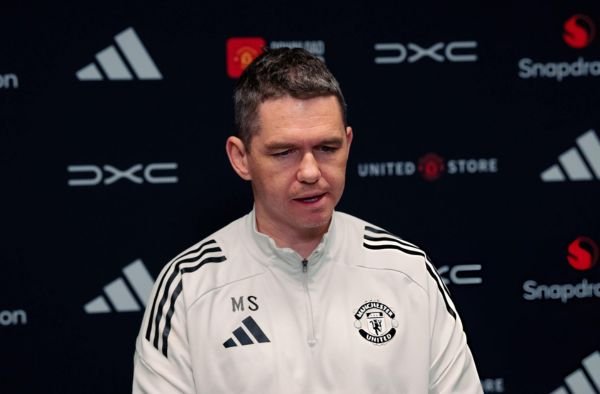
What do we know so far about the Exit?
Skinner had one year left on his contract after signing a new deal in 2024 when they had won the FA Cup, which was their first silverware in the top flight.
The termination of Skinner’s contract is a mutual understanding between him and the club.
On the field:
Under his tenure, the team reached 3 FA Cup finals and 1 League Cup Final.
Man United also secured their highest finish (2nd in 2022-23) under Skinner, and reached the Women’s Champions League quarter-finals.
What’s Behind the Exit?
Investments have always been a sensitive topic for the women’s team ever since INEOS and Sir Jim Ratcliffe took over the club in December 2023.
Ratcliffe made his position clear on the team in June 2024, when he told Bloomberg, “We haven’t gone into that level of detail with the women’s football team yet. We’ve been pretty much focused on how do we resolve the first-team issues, in that environment, and that’s been pretty full time for the first six months.”
Since then, Ratcliffe has only made it clear time and again how the women’s team is not a priority for them.
In contrast with Ratcliffe’s beliefs, Skinner consistently pushed for greater financial backing. As recently as April, he was calling for more investment into the women’s team if they were going to compete with the best.
“I’m absolutely passionate about what we do. But we have to do some changes in the summer,” he said. “We have to make some changes to make sure that we can compete with what’s clearly a financial market at times.
“And we want to do it our own way; we’ve said that, and we’re clear on that. But we have to make sure we write those smart assignments to keep pushing this team forward.”
Though now it appears that the demands were not met, and maybe that’s the cause alongside other issues for the abrupt tenure end.
Changing Directions:
With Skinner now out of the role, the picture for the club might be changing. When Ratcliffe and INEOS came in, the goal was to win the league by 2028.
However, the club is deciding to focus more on developing their own players. Man United believes that investing in their academy will give higher returns rather than higher investment in the transfer market, which they currently believe is unsustainable.
What’s Beyond these Problems?
It seems the club does not build on success. Even before Ratcliffe came in, players have often been sold to direct rivals.
The latest example would be Melvine Malard, who was sold to Chelsea. Before her, it was Alessia Russo to Arsenal and Mary Earps to Paris Saint-Germain.
Leah Galton and Millie Turner have also left the club, and only Ella Toone remains.
Apart from all this, so far United has made only two signings, with defender Andrea Medina and goalkeeper Janina Leitzig.
Compared to Arsenal, Manchester City, and Chelsea, and even London City Lionesses, Man United have not kept up with the growing investments.
Playing Style:
Apart from the financial problems, the team wasn’t always the most consistent. Pace and intensity were not often seen across 90 minutes, which allowed other teams back into the game.
After the League Cup final against Chelsea, Skinner called the goals conceded “rubbish”. A late slip in concentration against Bayern in the Champions League quarter-finals saw them score twice from set-pieces and win the tie, undoing much of United’s work up to that point.
While some fans will be pleased to see Skinner leave, they won’t be happy watching their club slip further down the table. He was made the scapegoat for the frustration fans felt; however, now that he is gone, the focus shifts to Sir Jim Ratcliffe and INEOS.
While clubs like Arsenal, Chelsea, Man City, or even London City Lionesses continue to strengthen their squads, United’s decision to concentrate more on domestic talent could expose the club to greater risks. A new manager might introduce fresh tactics, but without adequate financial backing, their options will remain quite limited.

