

Lucy Bronze has built much of her career around moving towards the next challenge. Manchester City, Lyon, Barcelona and Chelsea have all been chapters in a journey defined by ambition, trophies and a willingness to leave when the time felt right. So when the England defender chose to extend her Chelsea contract for another year, it represented something unusual. For perhaps the first time in her decorated career, Bronze looked at an ending and decided that staying was the better challenge.
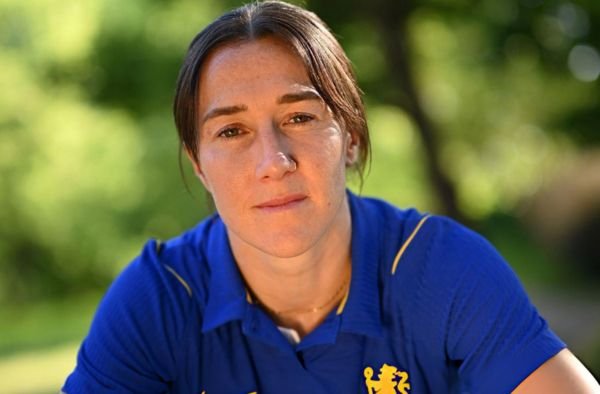
“Where do you go? Where do you improve? Where do you win? The options are endless, really,” Bronze said. “You watch people make a wrong step. I’m always very clear on the decisions I make – I’m very headstrong. I feel at home in the area and I’m so settled. Even if it isn’t potentially the perfect thing in the moment, I will make it the best that it can be.”
Bronze’s decision comes after a season that was far from the standard Chelsea have established in recent years. The London club had entered the 2025-26 campaign as six-time defending Women’s Super League champions and fresh from an unbeaten domestic league campaign. Instead, Chelsea finished third, while Arsenal eliminated them in the Champions League quarter-finals. Their only major trophy came in the League Cup.
For a player accustomed to collecting silverware, it was an unfamiliar outcome. Yet that may have made the decision to stay more compelling rather than less. Bronze has never lacked options. The 34-year-old has played for some of the biggest clubs in European football and has won domestic titles in England, France and Spain, as well as the UEFA Women’s Champions League with Lyon and Barcelona.
The Football Association lists her as one of England’s most consistent performers since making her senior debut in 2013. Her international career has been equally decorated. Bronze has been part of England’s rise from major-tournament contenders to European champions, helping the Lionesses win Euro 2022 and retain the title at Euro 2025.
The latter campaign was particularly remarkable. Bronze started every match despite suffering a fractured tibia shortly before the tournament, playing through the physical demands of a competition England eventually won.
Now, instead of searching for another club and another environment, she has chosen to remain in west London. “I will make the most of the opportunity, whether that’s becoming a better player, winning trophies, learning languages,” Bronze said. “Now I’m one of the oldest in the team and there’s a lot of young players, so I’ve found a really good role in a club that I’m comfortable with.”
That final point could prove crucial. Bronze is no longer simply the explosive full-back who first established herself at the highest level. She is now one of the experienced figures in a Chelsea dressing room containing a new generation of players. The role has changed from being the emerging star to being one of the players expected to help shape those coming behind her.
The decision also fits the broader evolution of Bronze’s career. She has already won every major club honour available to her and has been recognised individually at the highest level. She won the BBC Women’s Footballer of the Year twice and was UEFA Women’s Player of the Year in 2019. But there remains one prize that has escaped her. Bronze was part of England’s run to the final in 2023, when the Lionesses lost 1-0 to Spain in Sydney.
The defeat came after England had reached the semi-finals in 2019, meaning Bronze has experienced both the deep disappointment and extraordinary highs of international tournament football. Brazil will host the next Women’s World Cup in 2027, giving Bronze one more opportunity to chase the trophy she has wanted throughout her international career.
“Everybody knows that playing for England means the world to me,” Bronze said. “Every experience I’ve had at the World Cup has just been phenomenal – it’s been the best moments of my career. I just want to win it with England.” That ambition remains central to her future, but Bronze’s summer away from competitive football has also provided a different perspective.
She visited Bogotá, Colombia, where she spent time with refugees and young footballers. She recalled meeting a girl who played with boys on a difficult local pitch and giving her a shirt belonging to Chelsea defender and US international Naomi Girma.
“I did a whole day with refugees there,” she said of the Bogota visit. “These kids just make the most of everything. We had to get permission to be on the streets and there was a girl there who plays on this team with all the boys on this terrible little pitch in the middle of the city with all sorts going on around. I was able to give her [Chelsea defender] Naomi Girma’s shirt – one of the captains of the USA. I showed her pictures of Naomi wearing it and said that her parents were also refugees. It was amazing.”
The experience left Bronze wanting to do more. “I felt like I didn’t give enough.” It is another indication of the stage Bronze now occupies in her career. She is no longer measured only by what she does between the touchlines. Her influence extends into the next generation and into the communities she encounters. But football remains the unfinished business.
England’s qualification route for the 2027 World Cup will determine whether Bronze gets another shot at the biggest prize in international football. If the Lionesses make it to Brazil, the veteran defender will arrive with more than a decade of international experience and a trophy cabinet that already contains almost everything else.
Her decision to remain at Chelsea therefore looks less like a departure from the pattern of her career and more like an evolution of it. Bronze has spent years asking where the next challenge lies. Now she believes it is at home. Chelsea have a point to prove after an unusually disappointing campaign. Bronze has another season to influence a younger squad, chase more trophies and prepare for what could be her final World Cup.

