

The biggest change in German women’s football will not be decided by a goal, a trophy or a transfer. It will be decided in the boardroom. On Friday, the German Football Association (DFB) formally approved the transfer of responsibility for the country’s top women’s league to the 14 Bundesliga clubs, marking a significant shift in how the Frauen-Bundesliga will be organised, operated and marketed.
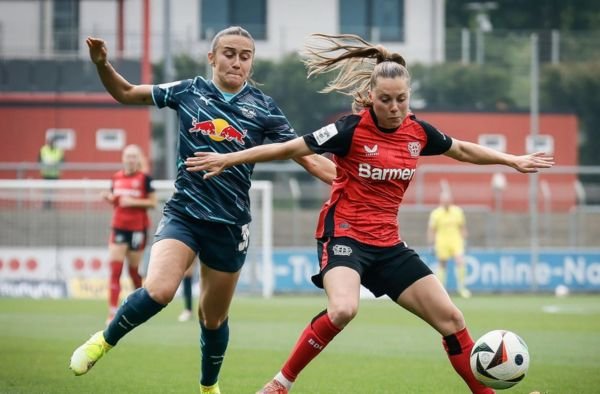
The decision, approved unanimously at an extraordinary DFB Bundestag, will see the newly established Frauen-Bundesliga FBL e.V. take charge of the organisation, administration and commercialisation of the top flight from July 1, 2027. The transition follows months of disagreement between the clubs and the DFB over how the league should be run and who should have greater control over its commercial future.
The move represents the clearest attempt yet by Germany’s leading women’s clubs to take greater ownership of their competition. The clubs had previously made clear that they wanted to manage and promote the league without direct DFB participation, raising broader questions about governance, commercial independence and the direction of women’s football in Germany. The final agreement, however, is not a complete separation from the DFB. Instead, it creates a new relationship between the national governing body and the independent league structure.
Under the agreement, which will run from July 2027 until June 2034, the FBL will assume responsibility for the top division while the second tier remains under the DFB. The new arrangement also retains a strong link between the league and Germany’s national teams, with clubs continuing to release players for international duty and support national-team commercial activities. In return, the DFB will pay the FBL €1.4 million annually for the release of players to the national teams. In years featuring a Women’s European Championship or Women’s World Cup, that payment will rise by €200,000.
The league will also receive 50 per cent of any potential financial surplus generated by the final tournaments involving the senior women’s national team. “International competition has become more intense; others are investing heavily. Our shared aim must be to firmly establish women’s football at the very top,” DFB President Bernd Neuendorf told the meeting. “It is a significant decision on the direction we are taking and an important step forward. The future of football will be more female,” he added.
For the clubs, the agreement offers greater control over one of the most important areas of modern sport: commercial growth. The league will be responsible for its own competition operations and marketing, giving the clubs a more direct role in determining how the Frauen-Bundesliga is presented to broadcasters, sponsors, fans and international audiences. “The foundations have been laid for us to further develop the Women’s Bundesliga both in sporting and economic terms. The responsibility now lies in our hands,” said FBL president Katharina Kiel.
The financial framework also includes significant commitments towards player development. According to the DFB, clubs with certified performance centres in women’s and girls’ football will receive at least €100,000 annually per club for youth development, while a further €500,000 each year will support the development of young players through appearances in the Frauen-Bundesliga.
The timing is particularly important. The Frauen-Bundesliga has grown to 14 clubs, with the expansion bringing a longer 26-matchday season. The league includes some of the biggest names in European women’s football, including Bayern Munich, VfL Wolfsburg and Eintracht Frankfurt. The separation also follows an earlier attempt to create a joint venture between the DFB and the clubs.
In September 2025, both sides had discussed a structure that would have brought the federation and a club-created league association together. That proposal ultimately broke down, with the FBL clubs opting for a more independent model. The difference now is that both parties have reached an agreement that provides a defined financial and administrative framework.
This is more than an administrative reshuffle. It is a test of whether women’s football can build a commercially stronger future by giving its clubs greater ownership of the product they create. The DFB’s decision to approve the agreement unanimously removes the immediate uncertainty surrounding the league’s future structure. But independence will also bring responsibility. The clubs will now have to convert greater control into stronger broadcasting, sponsorship, attendance, digital engagement and international reach.
The financial scale of the challenge remains substantial. The women’s Bundesliga does not operate on the commercial level of the men’s competition, whose domestic media rights alone generate more than €1 billion per season. That contrast underlines both the distance still to travel and the opportunity available to the women’s game. The DFB has also retained responsibility for the second division, the national teams, the DFB Women’s Cup and wider women’s and girls’ football structures.
The new model therefore creates autonomy at the top while keeping the broader ecosystem connected. For German women’s football, the next chapter will now be judged not by the politics behind the split, but by what the new structure delivers on the pitch and beyond it. The clubs have asked for greater control. From July 2027, they will have it. The real challenge begins then.

