

India’s badminton campaign in the Asian Games ended without an individual medal on Sunday, with PV Sindhu and Unnati Hooda producing spirited quarterfinal efforts before bowing out against two of the sport’s biggest names. For Sindhu, the defeat was particularly hard to absorb after a punishing schedule that saw her play three singles matches in less than 24 hours.
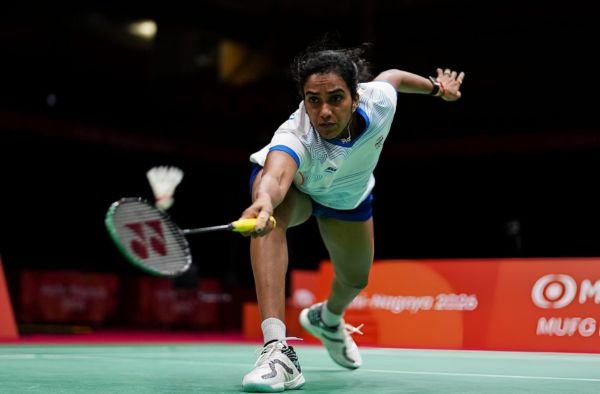
At the Ichinomiya Gymnasium Hall, Sindhu looked in control when she raced to a 21-11 opening-game win against Tokyo Olympic champion Chen Yu Fei. But the Chinese shuttler gradually turned the contest around, winning the second game 21-18 before pulling away decisively in the decider to complete a 11-21, 21-18, 21-10 victory. For the two-time Olympic medallist, the defeat brought an end to another Asian Games singles campaign and India’s hopes of an individual women’s singles medal. Sindhu had entered the contest with a 7-9 head-to-head record against Chen and had beaten the Chinese star on her way to the Japan Open Super 750 title in July.
The Indian began sharply, moving Chen around the court and dictating the early exchanges. She led 11-8 at the interval and stretched the advantage to 18-11 before closing out the opening game. The second game, however, was a different contest. Chen established an early 5-2 lead and later moved 9-5 ahead, but Sindhu fought back to level at 9-9. The two remained locked in a physical battle through 12-12 and 16-18, with the rallies growing longer and more demanding. Chen eventually created two game points and forced a decider. That was where the accumulated fatigue began to show.
Chen raced to a 4-0 lead and maintained a four-point cushion at the changeover. After the interval, she won 10 of the next 11 points to close out the match. “I think I should have finished it off in the second set itself but I couldn’t. Overall it was not that an easy game or I would get easy points. There were really long rallies,” Sindhu said after the match. “It’s a bit hurtful but I need to recover from this. It would have been good if I would have gone to the semifinals. Unfortunate but never mind, these things keep happening. It’s important to get back stronger.”
Sindhu’s frustration was also directed towards the scheduling. Having played her second match well past midnight, she returned to the court the following afternoon for her quarterfinal. “Not really, because the scheduling was not really well organised is what I feel,” Sindhu said when asked whether she had previously experienced such a schedule at a major championship. “We literally slept really late and then coming back in the morning (on Sunday), playing two matches in a day.
Recovery is the most important priority.” Her next generation counterpart, 19-year-old Unnati Hooda, came equally close to producing a major upset. The teenager recovered from losing the opening game to three-time world champion Akane Yamaguchi, but eventually went down 16-21, 21-14, 17-21. Yamaguchi controlled the first game, opening an 11-4 advantage after an eight-point burst. Hooda responded brilliantly in the second, fighting back from 3-6 down and eventually winning eight consecutive points to force a decider.
The final game remained tight at 5-5 before Yamaguchi edged ahead. Hooda continued to extend rallies with high tosses and attacking strokes, but the Japanese player held her nerve. Even when Hooda fought back to stay within touching distance, Yamaguchi moved from 16-16 to 18-16 and eventually earned three match points before closing out the contest.
The exits of Sindhu and Hooda were followed by defeats for India’s doubles combinations. Treesa Jolly and Gayatri Gopichand, fresh from winning a maiden World Championships bronze, lost 18-21, 9-21 to Malaysia’s Pearly Tan and Thinaah Muralitharan. In mixed doubles, Dhruv Kapila and Tanisha Crasto pushed world No. 1 pair Feng Yan Zhe and Huang Dongping to a deciding game before losing 14-21, 21-18, 18-21.
Tanisha summed up the mood after their defeat. “It’s disappointing not to win a medal but we are proud of the effort both of us have made. We fought till the last point,” she said. “It is one of the best we played against the Chinese. We have made a lot of improvement. There is a lot of hunger and lot more confidence.”
India’s badminton story in Nagoya is not simply about medals missed. It is about the fine margins between competing and converting. Three years after winning three badminton medals in Hangzhou, India leave the individual events without a podium finish, despite having four quarterfinalists. The scheduling controversy adds another layer, particularly in Sindhu’s case, but the results also underline how difficult it remains to break through against the established Asian powers when matches reach their decisive stages.
Sindhu, meanwhile, refused to close the door on another Asian Games appearance. “If I have it in me, definitely yes. I just need to stay injury-free. It’s just, what’s next? That’s very important. Step-by-step is important.” For now, the veteran’s focus remains on continuing her career rather than looking too far ahead. “I have it in me the passion and the love towards sport. That keeps me going irrespective of how many medals I’ve got. I think that’s important.”
India’s men’s team bronze remains the country’s sole badminton medal from the 2026 Games. The contrast with Hangzhou, where India won three medals including Satwiksairaj Rankireddy and Chirag Shetty’s historic men’s doubles gold, makes the individual exit particularly significant. The medals may have escaped the individual shuttlers in Nagoya, but Hooda’s quarterfinal fight and Sindhu’s opening-game brilliance offered reminders that India’s next challenge is not simply reaching the latter stages. It is finding a way to stay there when the biggest moments arrive.

