

For years, New Delhi has been the natural home of India’s biggest badminton events. But sometimes, moving a tournament away from its traditional setting can be more than a logistical compromise. It can be an opportunity to widen the map of Indian sport.
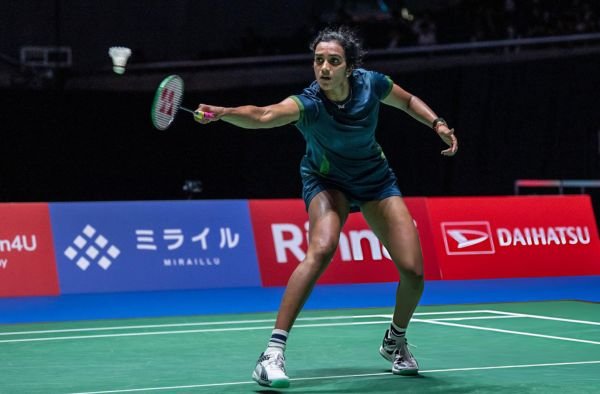
That is precisely what the Badminton Association of India has created with its decision to move the 2028 India Open from the national capital to Guwahati. The 2028 edition of the prestigious BWF World Tour event will be staged in the last week of January in Guwahati, Assam, after its dates clash with Republic Day security arrangements in New Delhi. The move will be temporary, with the tournament expected to return to the capital in 2029.
Badminton Association of India secretary general Sanjay Mishra confirmed the decision after India’s successful hosting of the 2026 BWF World Championships in New Delhi. “The 2028 India Open will be held in the last week of January and due to the tournament dates clashing with Republic Day security arrangements in the National capital, we felt that only for that year, we should shift the tournament to Guwahati. It will return to New Delhi in 2029.”
The BAI should not treat Guwahati as merely a substitute venue. It should treat 2028 as a test case for taking elite badminton deeper into India. The Republic Day clash may have forced the decision, but the opportunity is much larger. If the tournament delivers a strong spectator experience, commercial response and local engagement in Assam, there is no reason for the benefits of hosting top-level badminton to stop when the India Open returns to Delhi.
The India Open has become one of the most important fixtures on the international badminton calendar. Since becoming a BWF Super 750 event in 2018, the tournament has attracted some of the world’s leading players and has become a major annual showcase for Indian badminton.
Moving such a tournament is therefore not a small administrative decision. It involves players, broadcasters, sponsors, international officials, training facilities, accommodation, transport and thousands of spectators. The fact that BAI is planning the relocation two years in advance indicates that this is being treated as a serious operational exercise rather than a short-term workaround and Guwahati is not an unreasonable choice.
Assam has increasingly established itself as one of India’s important sporting centres, particularly in badminton and football. The state has hosted major national and international sporting events, while the presence of the National Centre of Excellence for Badminton at the Biju Patnaik Indoor Stadium complex in Guwahati has strengthened the city’s credentials as a badminton destination.
More importantly, the Northeast has often asked for greater access to India’s biggest sporting properties. The region has consistently produced athletes across disciplines, yet major international events have traditionally been concentrated in India’s larger metropolitan centres. Bringing the India Open to Guwahati offers an opportunity to change that pattern. For young badminton players in Assam and neighbouring states, watching a BWF World Tour tournament in their own city is fundamentally different from watching it on television.
India’s badminton growth over the past decade has been built partly on visibility. The rise of players such as PV Sindhu, Saina Nehwal, Kidambi Srikanth and Lakshya Sen has created an aspirational pathway for a new generation. The country has also built an increasingly sophisticated badminton ecosystem through academies, professional coaching and domestic competitions. The India Open moving to Guwahati can add another layer to that ecosystem. But the move also comes at an interesting time for the international badminton calendar.
BWF secretary general Thomas Lund acknowledged that scheduling major tournaments has become increasingly complicated because of the demands placed on the international and domestic calendars. “There’s obviously a lot of logistical things when you do these things, and we have obviously been in close dialogue around the whole calendar,” Thomas told reporters. “Coming into 2027, it’s quite a bit of quite short space and for now it hasn’t been possible to totally move around, move out of the first quarter,” he said.
That is the reality of modern international sport. The calendar is no longer simply a list of tournaments. It is a complex ecosystem involving player workload, travel, domestic competitions, broadcast commitments and global events. Thomas also pointed to the pressure created by the domestic calendar. “Right now it hasn’t been possible due to domestic load to actually totally move around in the calendar, but something we are looking at.”
“But we have actually looked into a schedule that has been improved and will be improved further down the road,” Thomas Lund added. For India, that scheduling complexity makes the 2028 decision particularly significant. The country is now capable of hosting some of badminton’s biggest events, but hosting them sustainably requires flexibility. Delhi cannot always be the answer. Nor should it have to be.
The Republic Day period illustrates why. New Delhi’s security requirements around January 26 are immense. A global sporting event involving international athletes, officials and spectators requires a completely different logistical environment. Attempting to force the India Open into the capital during that period could create unnecessary pressure on both organisers and authorities. A tournament of this scale should not simply arrive in Guwahati, occupy an arena for a week and leave. The India Open should become a week-long badminton movement rather than simply a week-long tournament.
And if the response is strong, it could also challenge one of the oldest assumptions in Indian sport: that the biggest events need to be permanently anchored in Delhi, Mumbai or Bengaluru. India’s sporting ambitions are becoming increasingly national in scale. The infrastructure is spreading, athletes are emerging from smaller cities and states, and audiences are becoming more geographically diverse. The 2028 India Open can be part of that evolution.
But Guwahati should use 2028 to make the case that it deserves more than a one-year invitation. The BAI may have been forced to move the India Open because of a calendar conflict. It now has the chance to turn that inconvenience into an investment in the future of Indian badminton. Sometimes the best way to strengthen a tournament’s home is to give another city the opportunity to host it.

