

India’s P.V. Sindhu saw her Arctic Open 2026 campaign come to an end after a spirited fight against Thailand’s Ratchanok Intanon in the women’s singles quarterfinals on Friday, October 9. The two-time Olympic medallist went down 21-11, 19-21, 21-18 against the top seed in a contest lasting one hour and two minutes, with Intanon’s composure in the closing stages proving decisive.
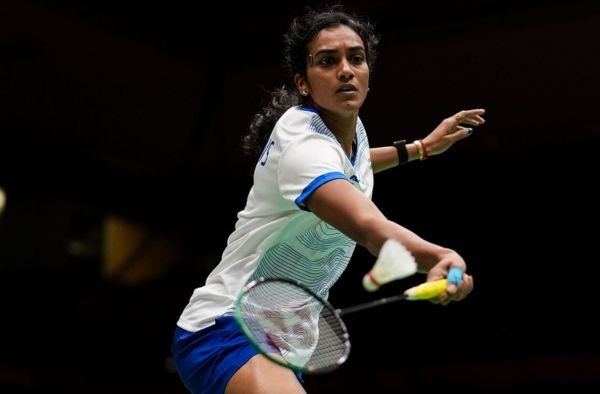
The defeat was a setback for Sindhu, who arrived in Finland after a landmark triumph at the Japan Open in July, where she became the first Indian to win the women’s singles title. However, her run at the Arctic Open highlighted the fine margins separating success and defeat at the highest level, as she recovered from a disappointing opening game to push the former world champion into a deciding game.
Sindhu fights back after losing the opening game. Intanon established control early in the opening game, racing to a 5-1 lead and putting Sindhu under pressure from the outset. The Indian gradually found her rhythm and reduced the deficit to 11-8 at the interval, raising hopes of a comeback. However, the Thai shuttler regained control after the break, winning 10 of the next 13 points to close out the game 21-11. Sindhu struggled to contain Intanon’s momentum, leaving herself with the challenge of recovering against an opponent known for her tactical awareness and ability to dictate rallies.
The second game, however, brought a significant change in the contest. Sindhu improved her response and began competing more effectively, keeping the rallies alive and refusing to allow Intanon to establish the same comfortable advantage. The Indian held the upper hand at the interval and moved ahead 17-14 as she looked to force a decider. Intanon responded with a five-point run to turn the game around, placing Sindhu under renewed pressure at a crucial stage.
With the match threatening to slip away, Sindhu produced an important late surge. She won four consecutive points to overturn the deficit and claim the second game 21-19, taking the match into a deciding third game. The comeback underlined Sindhu’s resilience and determination, particularly after the one-sided opening game. Yet, the momentum she had built would be tested once again in the decider.
Intanon holds her nerve in the decider. The deciding game developed into a closely fought contest, with neither player able to establish a decisive advantage. Sindhu matched Intanon point for point, demonstrating the fighting spirit that has kept her competitive on the international circuit. With the score level at 17-17, the match entered its decisive phase. Intanon raised her level at the right moment, stringing together three consecutive points to earn match point. Although Sindhu continued to fight, the Thai shuttler converted her second opportunity to seal a 21-18 victory and book her place in the semifinals.
The result extended Intanon’s winning streak against Sindhu to six matches and improved her head-to-head advantage to 10-4, according to reports published after the quarterfinal. For Sindhu, the loss was particularly disappointing given her recent success in Japan. Her Japan Open victory in July, secured with a straight-games win over Japan’s Akane Yamaguchi, had marked a historic achievement for Indian badminton. The Arctic Open quarterfinal, however, demonstrated that sustaining that momentum against elite opposition remains a demanding challenge.
India’s challenge ends in Vantaa. Sindhu’s exit was followed by another setback for India in the men’s doubles quarterfinals. Krishna Prasad Garaga and Pruthvi Krishnamurthy Roy lost 21-13, 21-14 to Denmark’s Christian Faust Kjær and Rasmus Kjær, bringing their campaign to a close. The Indian pair could not find a way past the Danish combination, which controlled the contest in straight games. With their defeat, India’s campaign at the Arctic Open 2026 came to an end. The Arctic Open, a BWF World Tour Super 500 event held in Vantaa, Finland, featured leading international players competing across all five disciplines.
Intanon’s progression to the semifinals kept her title hopes alive, while Sindhu was left to reflect on a narrow defeat after fighting her way back into the contest. Sindhu’s comeback is encouraging, but consistency remains key. P.V. Sindhu’s Arctic Open exit offers a mixed assessment of her current form. Her ability to recover from an 11-21 opening-game loss and force a decider reflects her resilience and competitive temperament. However, losing the final game after reaching 17-17 also highlights the importance of execution under pressure.
Following her historic Japan Open triumph, Sindhu will be keen to build consistency across tournaments rather than rely on isolated title-winning performances. Against an opponent of Intanon’s calibre, small tactical and execution errors can determine the outcome. For Indian badminton, the result reinforces the need to maintain momentum throughout the international season. Sindhu remains one of the country’s most accomplished players, but converting competitive performances into victories against top-ranked opponents will be crucial as she continues her campaign on the world stage.

