

India’s Asian Games title defence begins with a familiar expectation but an unfamiliar opponent. Fresh from winning a record-extending eighth Women’s Asia Cup title, Harmanpreet Kaur’s side will open its campaign against hosts Japan in a straight knockout quarter-final at Korogi Sports Park in Aichi on Friday. The match gives India little room for error.
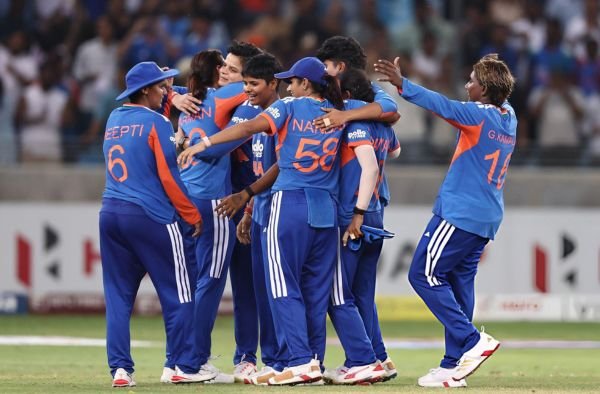
Unlike a league-stage campaign where teams can recover from an early setback, the women’s cricket competition at the Aichi-Nagoya Asian Games follows a knockout format. A defeat against Japan would bring India’s gold-medal defence to an immediate end. The winner, meanwhile, will advance to the semi-finals on September 20.
India enters the contest carrying considerable momentum. Just days before arriving in Japan, the team defeated defending champions Sri Lanka by 72 runs in the Women’s Asia Cup final in Dubai to lift the continental title for a record eighth time.
India went unbeaten throughout the tournament, making the triumph an important statement ahead of another major Asian competition. But the challenge in Aichi is different. India has never faced Japan in women’s T20I cricket, making Friday’s quarter-final their first meeting in the format. Japan, ranked 39th in women’s T20Is compared with India’s third-place ranking, will enter as the underdogs but will have the advantage of playing on home soil.
Harmanpreet’s side has depth across departments. Harmanpreet Kaur will lead the Indian side, with Smriti Mandhana serving as vice-captain. The leadership duo arrives in Japan after a productive Asia Cup campaign, where India combined aggressive batting with a varied bowling attack. Mandhana enters the Games having recently surpassed Mithali Raj to become the leading run-scorer in women’s international cricket. Her form at the top of the order will be central to India’s approach, particularly alongside Shafali Verma, who was named Player of the Series at the Asia Cup after a series of influential performances.
The bowling department offers India another major advantage. Deepti Sharma remains one of the most experienced players in the squad and has been among India’s most reliable all-rounders in the shortest format. Sree Charani also arrives with confidence after playing a key role in India’s Asia Cup triumph. In the final against Sri Lanka, Charani delivered a decisive spell while India’s opening pair of Mandhana and Shafali set up the contest with a century partnership. India eventually posted 183 for five before restricting Sri Lanka to 111, completing a 72-run victory.
The squad also includes wicketkeeper-batter Richa Ghosh, Renuka Singh, Radha Yadav, Arundhati Reddy, Shreyanka Patil and emerging players such as Kranti Gaud, Nandani Sharma and G Kamalini. Japan’s home advantage adds an intriguing layer. For Japan, the quarter-final represents one of the biggest occasions in its women’s cricket history.
Japan qualified automatically as hosts and is competing in the Asian Games women’s cricket tournament for the third time. The team has also been involved in a broader push to develop cricket domestically, with the Japan Cricket Association working to expand the sport’s profile in a country traditionally dominated by baseball and football. Captain Mai Yanagida will lead Japan against a side that has considerably more experience at the international level. Japan’s recent results, however, show that the hosts are continuing to develop, and the opportunity to face India on home soil gives them a major stage to test themselves.
India’s biggest challenge may not be Japan itself, but the pressure attached to being the defending champions. The Asian Games campaign begins immediately in the knockout stage, meaning there is no settling-in period for Harmanpreet’s side. The team arrives with the confidence of an Asia Cup triumph, but that success also raises expectations. The contrast between the two sides is significant. India comes into the contest ranked third in women’s T20Is, while Japan is 39th.
Yet rankings will have little value once the first ball is bowled. Japan has home support, familiarity with the conditions and nothing to lose, while India carries the responsibility of defending its gold medal. India won the women’s cricket gold at the previous Asian Games and is now attempting to retain it. The road starts with Japan, and with the tournament structured as a straight knockout from the quarter-finals, India’s campaign could move rapidly from Asia Cup celebrations to another medal chase.
The first hurdle comes Friday at 10:30 AM IST. For India, the objective is straightforward: start the title defence with a win and keep the road to another Asian Games gold firmly open.
