

A new chapter begins for Indian women’s football as the country’s youngest talents step onto the continental stage with belief, preparation, and a point to prove. Led by head coach Pamela Conti, the India U-17 women’s team enters the AFC U-17 Women’s Asian Cup determined to shift the narrative after a challenging few months for the senior and U-20 sides.
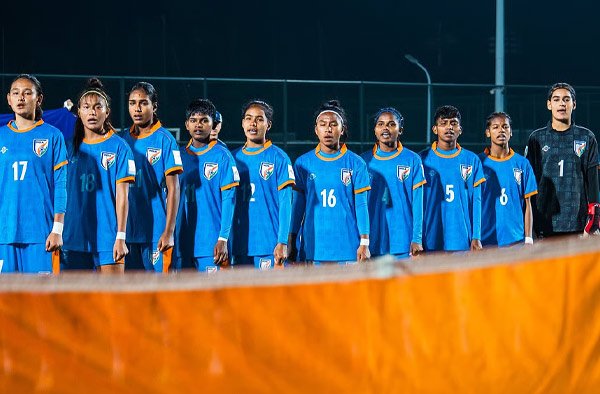
Indian women’s football started 2026 with optimism as three national teams prepared for their respective Asian Cups. However, results have not followed expectations. The senior team exited the group stage without a win, and the U-20 side, despite securing a victory against Chinese Taipei, also failed to progress. Against this backdrop, the U-17 squad arrives in Suzhou, China, carrying both the lessons of recent setbacks and the opportunity to rebuild confidence on the international stage. Despite the external noise, Conti has been clear about her approach. For her, pressure has no place in a dressing room filled with teenagers experiencing their first major tournament.
“I don’t like to talk about pressure, especially at this age,” Conti told the media during an exclusive interaction. The players should go into the tournament giving 100 per cent, but without pressure. They need to enjoy football. From my side, they will not feel any pressure. I will carry that responsibility myself, although as a coach I don’t suffer too much from it,” she added.
That mindset reflects Conti’s own journey in football. A former Italy international with 90 caps and 30 goals, she has spent her life immersed in the sport, from playing at top clubs across Europe and the United States to transitioning into coaching. Her experience, including guiding Venezuela’s women’s teams, has shaped a philosophy rooted in development, freedom, and long-term growth.
“I have just known football in my life,” she said, adding, “My father and two brothers were professional players, and we used to discuss football all the time. And then by the time I was 16, I left them to pursue my career.”
Under her leadership, India’s U-17 side has shown promise. Earlier this year, they lifted the SAFF U-19 Women’s Championship, a result that hinted at their potential. Yet, the jump to continental competition brings a significantly higher level of intensity. Drawn alongside powerhouses like Japan and Australia, India faces a stern test in the group stage.
The players themselves are embracing the moment. Defender Abhista Basnett highlighted the significance of the occasion, especially given the long gap since India last featured at this level.
“It feels different because this is our first time at the Asian Cup. It’s been 21 years for India, so it’s a new feeling. We are excited because we are playing against top teams not just in Asia, but in the world.”
Midfielder Julan Nongmaithem echoed that sentiment, underlining the months of preparation that have gone into this campaign. “We have been preparing for this for a long time, and now, finally, the day has come. We have to prove why we trained so hard.”
Preparation has included exposure tours and competitive friendlies, including a challenging series against Russia where India faced physically stronger opposition. While the results were not favorable, Conti believes those matches offered valuable insights into the demands of elite football. “This difference was quite noticeable physically. Despite that, we managed to maintain a good level for 90 minutes in terms of physical, technical, and tactical performance,” she said.
“What we need to improve is our lack of experience. At this level, if you make one mistake, these big teams can score two goals. As I’ve told the players many times in the dressing room, the first and last minutes are the most difficult, also because our concentration at this age is not yet at the required level,” Conti added.
Tactically, the team is expected to line up in a 4-3-3 system, though Conti insists that structure is secondary to understanding the fundamentals of the game.
“The most important thing is not just a style or philosophy. We play 4-3-3. But for me, it’s just a number. At this age, the players should make sure they know the principles of football,” she explained. Beyond the tournament, Conti also emphasized the need for structural improvements in Indian women’s football, particularly a longer domestic season to ensure consistent development.m “The (domestic) league, if you play just three or four months, and then you rest for six or seven months, it’s impossible to be competitive,” Conti said, adding that, “Look at women’s football like a product and invest money with the aim of selling it to the media and fans.”
As India begins its campaign, expectations remain measured. Yet, within this young squad lies an opportunity to spark a new direction for the sport in the country. With nothing to lose and valuable experience to gain, the Young Tigresses now have their stage to write a fresh story in Indian football.

