

The opening of the National Women’s Soccer League‘s (NWSL) free agency period has sparked one of the busiest transfer windows in league history, with several marquee players now able to negotiate their futures. Among the biggest names available is Portland Thorns star Sophia Wilson, whose contract situation has become one of the league’s most closely watched storylines as clubs prepare to take advantage of new financial rules designed to retain elite talent.
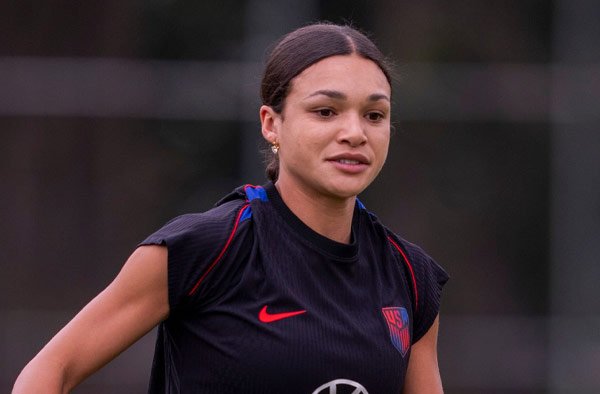
Portland, however, is determined to ensure its franchise forward remains in Oregon for years to come. Club president of soccer operations and general manager Jeff Agoos confirmed that the Thorns have spent months negotiating with Wilson and have already tabled what he described as a highly competitive long-term proposal.
“We’ve been working with (Wilson) for the better part of five or more months to try and get a deal done where she’s committed to Portland for the long term,” Agoos told The Athletic. “Our objective clearly is to re-sign Sophia.”
Wilson has been one of the faces of the NWSL since entering the league, establishing herself as one of the world’s premier forwards through her explosive pace, finishing ability and consistent goalscoring. The United States international previously signed a landmark contract extension ahead of the 2025 season that included an option year and reportedly made her the first NWSL player to earn more than seven figures annually. Since then, however, the financial landscape of the league has evolved dramatically.
Under the league’s latest Collective Bargaining Agreement, the NWSL salary cap will continue rising steadily over the coming years and is expected to exceed $5 million by 2030. Even more significantly, the league introduced the High Impact Player (HIP) Rule, which officially came into effect on July 1 alongside the opening of free agency.
The regulation allows clubs to pay select star players up to an additional $1 million outside the salary cap, providing teams with greater flexibility to retain elite talent while remaining competitive. The rule was initially introduced following the Washington Spirit’s efforts to retain U.S. international Trinity Rodman and is widely viewed as one of the league’s biggest structural changes in recent seasons.
For Portland, Wilson’s value extends far beyond her performances on the pitch. Agoos acknowledged that the striker’s personal circumstances make negotiations unique. Wilson welcomed daughter Gianna with her husband, Arizona Cardinals wide receiver Michael Wilson, in September 2025, meaning family considerations are playing an important role in determining her future.
“We’re doing everything we can to put together a package that speaks to the importance of Sophia and what she means to the team, both on and off the field,” Agoos said. “We don’t think that this is a competition, understanding where other teams are, where her value is. We’ve made her a really aggressive offer.”
Although there is currently no deadline for negotiations, Portland remains optimistic about reaching an agreement while allowing Wilson the time needed to make the right decision for herself and her family. While several clubs are expected to monitor the situation closely, Wilson has frequently been linked with expansion side Denver Summit FC because of her Colorado roots. Nevertheless, there have been no significant indications that another NWSL club has emerged as a frontrunner for her signature since the transfer window opened.
Wilson headlines an extensive list of Portland players entering free agency, but she is far from the only priority. The Thorns are also working to extend the contracts of Canadian international midfielder Jessie Fleming and promising young forward Pietra Tordin, who holds a player option for the 2027 season. Meanwhile, Portland declined contract options for forward Mimi Alidou, midfielder Deyna Castellanos and defender Isabella Obaze, making them unrestricted free agents.
Defender Mallie McKenzie, midfielders Renee Lyles and Jennie Immethun, along with forward Alexa Spaanstra, who is currently on loan with Utah, are also available. In total, Portland has nine players entering free agency, one of the larger groups in the league, although Houston Dash and Orlando Pride face even more extensive roster decisions.
Agoos explained that the club’s technical staff has spent several months carefully assessing both immediate needs and long-term planning. “Over the last three or four months, we’ve really been working hard with our technical staff, player personnel, our technical department to understand directionally what we think is the right thing for the organization, how players fit into the identity, how players fit in the long-term strategy,” Agoos said Wednesday.
Those decisions come while Portland remains firmly in the championship race. The Thorns currently sit third in the NWSL standings, just one point behind league leaders San Diego Wave and narrowly trailing Utah Royals on goal difference following the league’s June international break. “We really want to push to win a championship, but we also want to make sure that we have the opportunity to be a championship-caliber team year over year,” Agoos said.
Retaining younger talent has become increasingly expensive following the elimination of the NWSL College Draft, which has shifted greater bargaining power toward emerging players entering the professional ranks. As a result, prospects such as 22-year-old Pietra Tordin are now commanding significantly stronger contracts much earlier in their careers.
Agoos believes the investment is worthwhile. “We see a huge ceiling for Pietra,” Agoos said of the young forward, who has already contributed three goals and four assists this season. “Candidly, I’m a little surprised she hasn’t made it to the senior national team yet, but I think that’s just a matter of time. So we certainly understand the ceiling that Pietra has here with the Thorns, and like Sophia, we’re actively trying to get a deal done to keep her here in Portland for the long term.”
The recently introduced High Impact Player Rule should help clubs balance those financial commitments. “I think (the rule) is a positive step,” Agoos said. “It’s evolution and not revolution. The league is moving along the lines of being able to compete with the rest of the world, and the HIP rule really just allows the opportunity to do that.”
Portland is simultaneously navigating a period of transition following the retirements of club legends Christine Sinclair, Becky Sauerbrunn and Meghan Klingenberg, while also adjusting after former captain Sam Coffey’s move to Manchester City. Despite those departures, head coach Robert Vilahamn has guided a youthful squad into title contention.
“The Thorns of 2024 and the Thorns of 2026 are very different teams,” Agoos said. “It’s a much younger team. We know the league is more physical, we know it’s trending to more youth … so we’re trying to not only manage those sorts of trends, but to get in front of them as we think about what will happen in the future (with) league rules or trends that will follow in the next two to five years.”
With the secondary transfer window set to open on July 14, Portland expects another busy phase of recruitment. The club will soon unveil its new state-of-the-art training facility, shared with its sister WNBA franchise, the Portland Fire, further strengthening its long-term infrastructure. Still, Agoos believes facilities and history alone are not enough to guarantee sustained success.
“There’s a legacy here; there’s no doubt about it,” he said. “You cannot rest on legacy. You have to continue to be ahead of the curve. You have to continue to make sure both the present and future are taken care of. While we understand the privilege and pressures of legacy, there’s also a real goal to continue that success year over year.”

