

Palak Kohli’s classification journey, from SU5 at the Tokyo Paralympics to SL4 in Paris, has come under scrutiny after an anonymous complaint raised questions over disability documents, classification records and the checks surrounding them. The allegations have also brought renewed attention to how India’s para-sport ecosystem verifies classifications before athletes reach the biggest stage.
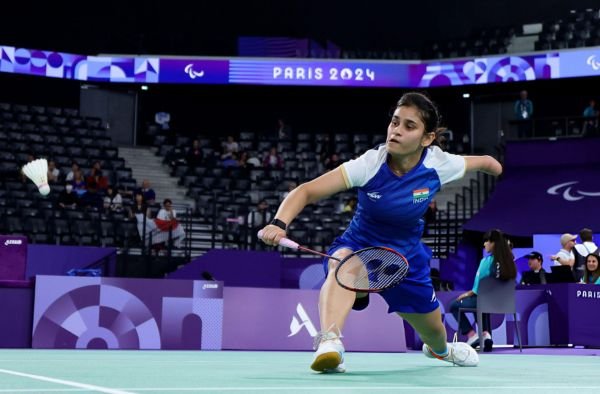
For an athlete who competed in three events at the Tokyo Paralympics and reached the quarterfinals of the women’s singles, Palak Kohli’s rise has been one of the notable stories in Indian para-badminton. But five years after her Paralympic debut, questions surrounding her disability documentation have put the spotlight on an issue that extends beyond one athlete: whether the systems governing classification are robust enough to withstand scrutiny.
An email sent last month to the Sports Ministry, Sports Authority of India and Paralympic Committee of India alleged discrepancies in documents relating to Kohli’s disability classification. The complaint, made anonymously, questions a disability certificate dated January 13, 2021, which allegedly recorded a 70% locomotor disability relating to her leg.
Kohli’s first disability certificate, issued in June 2017 when she was 14, reportedly recorded a 70% permanent locomotor disability affecting her left arm. The later document, according to the complaint, referred to a 70% disability “in relation to her leg” without specifying which leg and did not refer to the earlier upper-limb disability.
The timing has become a central part of the allegations. The certificate was issued months before the Tokyo Paralympics, where Kohli competed in the SU5 classification, a category for athletes with upper-limb impairments. The official Paralympic results confirm that Kohli competed in women’s singles SU5 in Tokyo, alongside women’s doubles and mixed doubles in the combined SL3-SU5 events. The complaint also raises questions about the supporting medical documentation, alleging that the diagnosis sheet did not contain sufficient clinical observations or identify the doctors involved in the assessment.
Those concerns matter because disability certification in India is designed to involve medical assessment rather than simply an administrative declaration. The government’s current UDID process states that specialist doctors assess the disability before a Medical Board reviews the findings and determines the type and percentage of disability.
The controversy becomes more complicated when Kohli’s international classification history is considered. After undergoing leg surgery, Kohli moved from SU5 to SL4 and competed in the women’s singles SL4 event at the Paris Paralympics. Her official Paris results show that she defeated France’s Milena Surreau in the group stage before losing 2-1 to Indonesia’s Leani Ratri Oktila and subsequently falling to Khalimatus Sadiyah in the quarterfinal. The complaint questions whether her movement on court in Paris was consistent with the impairment associated with the SL4 classification.
However, such judgments cannot be reliably made simply by watching match footage. Para-sport classification is based on sport-specific functional assessment, and the Badminton World Federation has its own classification regulations governing para-badminton. That distinction is crucial. Classification is not intended to measure disability solely in medical terms. It determines how an impairment affects an athlete’s ability to perform within a particular sport.
The BWF has declined to comment specifically on Kohli’s classification, stating, “We will not be commenting on any player’s classification details,” leaving the governing body’s assessment process outside the public domain.
Kohli herself has disputed the allegation that she possessed a separate 2021 disability certificate, saying, “The certificate and the card are made together. It was made in 2023. The certificate and the card don’t come separately in different years,” while adding, “I’m not sure if my father would know more about when the first disability certificate was made, because I was very small at the time. I made another one, I think, in 2023,” Her long-time coach Gaurav Khanna also rejected the suggestion that the documents necessarily indicated an irregularity.
“This is a technical matter. I am not the correct person. But to my knowledge, it is not like that. If it is there, like for example, locomotive disability is a vague term,” he said. He added, “There was also a problem in her leg after the (Tokyo) Paralympics. There was also a lot of exertion in the Paralympics because she qualified in three events. We consulted with doctors and finally got her treatment done in Lucknow,”
When asked specifically about the alleged January 2021 certificate, Khanna said, “No, no. It won’t be like that. You must have misunderstood something else. I don’t know. Actually, I have not seen the documents.” The timing of Kohli’s current classification status adds another layer. She was ruled out of the 2026 BWF World Para Badminton Championships after being listed for review, and following a classification review in Brazil, her latest status was listed as CNC, or Classification Not Completed, on July 13, 2026.
The issue therefore extends beyond an individual athlete. It raises a larger question for Indian para-sport: when classification determines eligibility, competitive categories and access to international competition, who ensures that every medical document is complete, consistent and independently verifiable?
Kohli’s achievements remain part of the record. She was among India’s youngest athletes at Tokyo, competed across three events and reached the singles quarterfinals. At Paris 2024, she again reached the singles quarterfinals in SL4. But classification exists to protect competitive fairness as much as it exists to enable participation. The allegations against Kohli remain allegations, not established findings. Any conclusion about the validity of her certificates or classification should therefore come from the competent medical and sporting authorities after a documented review.
For Indian para-badminton, however, the questions are already on the table. And as the sport continues to grow, the credibility of its classification system will be just as important as the medals won on court.
(Inputs sourced from The Bridge)

