

The most important part of Reebok’s bet on Angel Reese was not the shoe deal. It was the decision to believe in women’s sport before everyone else did.
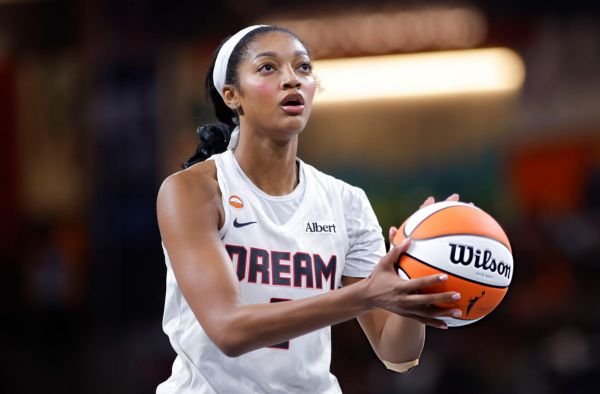
For India, where women’s cricket has already demonstrated its commercial potential and hockey continues to search for sustained visibility, the lesson is straightforward: investment should follow opportunity, not outdated assumptions. In October 2023, Angel Reese had not played a single WNBA game. Yet Reebok chose to make her one of the most significant bets in the company’s basketball revival. Nearly three years later, that decision looks less like a gamble and more like an early reading of where sport was heading.
Authentic Brands Group chairman Jamie Salter recalled how Shaquille O’Neal pushed the company towards women’s basketball. “He came back and said, ‘I got an idea… I want to focus on women, we’re going to go into women’s basketball, WNBA.’ And I’m telling you, Jamie, there’s going to be a surge,” Salter said on the Boardroom show. “You just got to trust me on this. This is three years ago – people weren’t really talking about it.”
The player O’Neal wanted was Reese. “He says, ‘We’re going to sign this player, her name’s Angel Reese.’ And I’m telling you, this is going to be very, very important to Reebok’s future and to the game of basketball.” That philosophy has relevance far beyond the WNBA. The commercial argument for investing in women’s sport is no longer hypothetical. It is being demonstrated by leagues, broadcasters and sponsors across the world.
India’s women’s cricket is perhaps the clearest example. The Women’s Premier League has rapidly become a major commercial property. The BCCI sold the WPL’s global media rights for the 2023-2027 cycle for ₹951 crore, equivalent to ₹7.09 crore per match.
The board continues to actively commercialise the competition, inviting bids for official partner rights in 2025 and continuing to develop its digital and sponsorship infrastructure. The Indian women’s national team has also moved beyond being marketed simply as a developing side. In July 2026, the BCCI highlighted India’s historic Test victory at Lord’s, another indication of the growing sporting and commercial significance of the team.
There is another lesson in New Zealand. In 2022, New Zealand Cricket reached a landmark agreement ensuring the White Ferns and Black Caps received the same match fees across formats. The agreement also increased the number of women’s contracts and opportunities for emerging players.
That is what sustainable investment looks like. It is not simply putting a logo beside a women’s team. It is creating an ecosystem where participation, visibility, remuneration and commercial value reinforce one another.
India’s other sports need the same thinking. Hockey is an obvious case. India has a deep emotional relationship with the sport, but women’s hockey still struggles to command the same commercial attention as cricket. Yet the opportunity is there. The FIH signed a four-year media rights agreement with Viacom18 covering its major events in India, including the 2026 Hockey World Cup, with matches available through JioCinema and Sports18. The federation specifically pointed to the success of India’s men’s and women’s teams as an opportunity to grow the sport’s popularity.
Women’s hockey, badminton, athletics, wrestling and football all possess athletes capable of becoming household names. What they often lack is the sustained storytelling, marketing investment and commercial infrastructure that allows recognition to translate into revenue.
Reese’s story demonstrates the value of getting there early. “I really do think Shaq changed the WNBA, because the money that was being paid to the WNBA players was kind of not fair,” Salter said. “Women in sport today, three years ago, they’re making substantially a lot more money. And I think Shaq has a lot to do with that.” The important phrase is three years ago.
Someone had to believe before the numbers became undeniable. For Indian sport, that is the opportunity now. The next generation of women’s stars should not have to wait until their audiences are massive before brands decide they are worth backing. Investment itself can help create that audience. Cricket has shown what happens when the ecosystem is built properly. New Zealand has shown that equality can be embedded into the professional structure. Hockey is showing that better broadcast access can widen the funnel.
The next step is to stop asking whether women’s sport is commercially viable. The better question is: how much bigger could it become if the investment arrived before the breakthrough?

