

For P.T. Usha, Indian sport has never been an idea viewed from a distance. It has been a life lived on the track, in training grounds, at international arenas and, now, inside the rooms where decisions about the country’s sporting future are made.
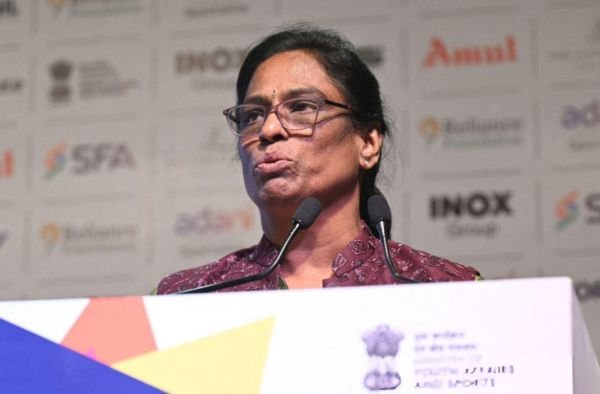
From the red laterite tracks of Payyoli to the Rajya Sabha and the presidency of the Indian Olympic Association, Usha’s journey represents a rare transition from athlete to policymaker. That history gives her perspective a weight that is difficult to replicate. She knows what it means to chase fractions of a second, to compete without the infrastructure now taken for granted and to build opportunities for the next generation. In December 2022, she became the first woman to be elected president of the IOA, while also serving as a nominated member of the Rajya Sabha.
Her central argument is straightforward: Indian sport must ultimately be built around the athlete. “My experience as an athlete influences every aspect of my work as an administrator because athletes understand the system from the inside. We know the emotional and physical demands of high-performance sport. We understand what it means to train with limited resources, to compete under pressure, and to overcome setbacks.”
That athlete-first approach is increasingly relevant as India attempts to move beyond isolated medal successes towards a sustainable sporting ecosystem. The country has made visible progress in badminton, shooting, wrestling, boxing, athletics, hockey and para sports, while athletes from smaller cities and rural regions continue to break through.
But the next stage of India’s sporting development will require more than individual champions. It will require systems capable of producing them repeatedly. India’s sporting conversation has changed considerably over the last decade. The emphasis is no longer limited to medals at major competitions. Sports science, nutrition, physiotherapy, recovery, international exposure and data-led performance analysis have become increasingly important parts of elite preparation.
Usha believes that shift is already making a difference. “The improvement reflects the broader transformation that Indian sport has undergone over the last decade. Earlier, many niche sports struggled because athletes lacked proper exposure, funding, coaching, and competition opportunities. Today, the ecosystem is far more structured and professional.” That transformation, however, remains uneven.
Athletics may be developing stronger pathways, while winter sports, for example, continue to operate within a far smaller ecosystem. India’s participation at the 2026 Winter Olympics consisted of two athletes, highlighting the distance still to be covered in disciplines requiring specialised facilities, equipment and year-round training.
“Winter sports development is very different from most other disciplines because it depends heavily on climate, infrastructure, and long-term specialization.” The challenge is therefore not simply discovering talent in places such as Jammu and Kashmir, Himachal Pradesh and Uttarakhand. It is creating a pipeline that can take that talent from local participation to international competition.
Perhaps the biggest test facing Indian sport is whether policy can finally translate into consistent implementation. The National Sports Policy 2025 replaced the 2001 policy and sets out an ambitious roadmap covering grassroots development, athlete support, sports science, infrastructure, governance and measurable targets. The policy also explicitly links sporting development with India’s ambition to become a leading sporting nation and strengthen its position ahead of the 2036 Olympic ambition.
“The biggest difference today is the seriousness with which sport is being viewed nationally.” That seriousness is encouraging, but it also creates a higher burden of accountability. Policies are ultimately judged not by the ambition of their language but by what changes on the ground. A national framework that promises better infrastructure means little to an athlete if a training facility remains inaccessible. A promise of sports science means little if expertise is concentrated in a handful of elite centres.
The new policy does provide for a national monitoring framework with benchmarks, key performance indicators and time-bound targets. The real question now is whether those mechanisms will be enforced consistently across India’s enormous sporting landscape.
The same tension exists around India’s ambition to host the Olympics in 2036. Usha’s optimism is understandable. India has a growing sporting economy, improving infrastructure and a generation of athletes competing successfully across disciplines. Ahmedabad has also emerged as a major focus of India’s Olympic planning, with significant investment in sports infrastructure.
“I believe this is the right time because India today is in a very different position compared to previous decades.” Yet hosting the Olympics cannot simply be treated as a celebration of national ambition. It has to be a long-term infrastructure and legacy project. Stadiums, athlete villages, transport systems, training centres and accommodation must have a purpose beyond a three-week event. “Hosting the Olympics is one of the biggest responsibilities any country can undertake.” That may be the most important distinction between wanting the Olympics and being ready for them.
There is also a broader question about equality within Indian sport. Para-athletes have transformed the country’s perception of disability sport, particularly after India’s 29-medal haul at the Paris 2024 Paralympics. Their success has made the argument for equal access to facilities, coaching, funding and recognition impossible to ignore.
“Our para-athletes have made the entire nation proud through their extraordinary performances and resilience. Their achievements have inspired millions of people across the country, and they absolutely deserve equal recognition, opportunity, and respect.” The same principle applies across disciplines. If Indian sport is to become genuinely multi-sport, excellence cannot depend on which sport attracts the largest audience or the greatest commercial interest.
Usha’s own career makes that argument particularly powerful. She grew up far from India’s major sporting centres, became one of the country’s most celebrated athletes and later established the Usha School of Athletics to create opportunities for young talent. Her journey, therefore, is more than a story of sporting success. It is a case study in what happens when an athlete moves from chasing the stopwatch to challenging the system behind it. “I believe India is steadily moving toward becoming a true multi-sport nation, although we are still in an important phase of development.”
India has the talent. It has increasingly sophisticated infrastructure, greater investment and a sporting culture that is expanding beyond cricket. The next challenge is consistency. The country does not merely need more champions. It needs a system in which champions are no longer exceptions. For P.T. Usha, the race has simply changed. The finish line is no longer a medal or a record. It is whether the athlete who comes next has a better starting point than the athlete who came before.

