

The roar of Formula One cars could once again return to Indian tarmac, but this time the focus is on solving the issues that brought the country’s first stint on the F1 calendar to an early end. The Sports Ministry has constituted a 10-member Task Force to examine the policy, taxation, infrastructure and operational requirements for developing motorsports in India, with the feasibility of hosting a Formula One Grand Prix in 2028 specifically included in its mandate.
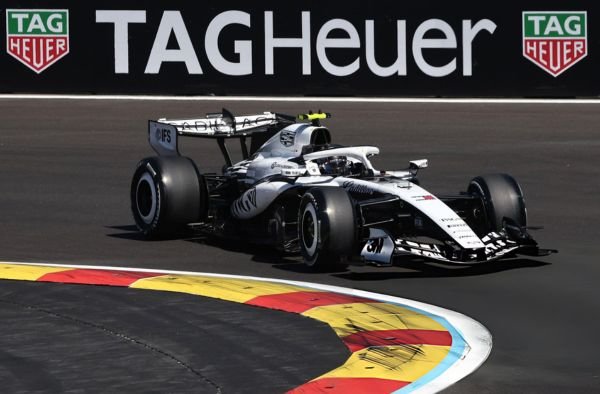
The move marks a more structured attempt to revive India’s association with Formula One after the country hosted three Grands Prix at the Buddh International Circuit in Greater Noida between 2011 and 2013. The Indian Grand Prix was subsequently dropped from the calendar, with taxation and regulatory complications among the issues surrounding its departure.
The new Task Force will be headed by NITI Aayog Programme Director Yugal Kishore Joshi. Its membership is expected to bring together representatives from government, motorsport administration and the country’s existing racing infrastructure, including officials associated with the Buddh International Circuit and Madras International Circuit, representatives from Uttar Pradesh and Maharashtra, a representative of the Federation of Motor Sports Clubs of India and a technical expert.
Sports Minister Mansukh Mandaviya said the panel’s immediate challenge would be to address the structural issues that affected India’s previous Formula One project. “While the main objective of the Task Force will be to make a comprehensive assessment of the existing motorsports ecosystem in the country, its main challenge would be to find ways to resolve the taxation-related issues that led to Formula One’s past departures from the country,” sports minister Mansukh Madaviya said here on Tuesday.
The Task Force’s terms of reference go beyond Formula One. It will identify policy interventions required for the sustainable development of motorsports, examine infrastructure and operational requirements, and assess the economic, tourism and investment benefits associated with hosting major international sporting events.
The panel will also explore the feasibility of an F1 Grand Prix in 2028, making the proposed return a medium-term objective rather than an immediate commitment. That distinction is important. The constitution of the Task Force does not mean that a 2028 Indian Grand Prix has been confirmed. Instead, the government has commissioned an assessment of whether the necessary conditions can be created for a return. India’s previous Formula One chapter demonstrated both the appeal and complexity of hosting the championship.
The inaugural Indian Grand Prix was held at Buddh International Circuit in October 2011 and attracted a global audience, with Sebastian Vettel winning the first two editions and Sebastian Vettel also taking the final Indian Grand Prix in 2013. The event disappeared from the F1 calendar after three editions. The renewed push also comes as the Sports Ministry pursues a broader strategy aimed at strengthening India’s ability to host international sporting events. Earlier this year, the ministry advised National Sports Federations to establish dedicated committees dealing with international relations and sports manufacturing, including coordination around bids to host international events in India.
The government has also placed greater emphasis on infrastructure, scientific training, governance and international exposure as part of its wider sporting roadmap. At the National Sports Federation Conclave 2026, Mandaviya highlighted stronger sporting infrastructure, private-sector participation and improved competition exposure as elements of India’s long-term sporting development. For motorsport, the task is particularly complicated because an F1 weekend requires considerably more than a racing circuit.
The infrastructure around the venue, transport arrangements, hospitality, accommodation, safety systems, international logistics and commercial framework all need to operate at a global standard. The presence of both Buddh International Circuit and Madras International Circuit representatives on the Task Force could provide the government with direct input from India’s established racing venues as it evaluates the country’s existing capacity.
The most important development is not the 2028 date itself, but the decision to examine why India’s first Formula One project failed and whether those obstacles can now be removed. India has already demonstrated that it can build a circuit capable of hosting Formula One. The bigger question is whether the country can create a sustainable ecosystem around a Grand Prix that works for the government, organisers, teams, sponsors and the wider motorsport community.
Taxation has emerged as a central issue because the previous Indian Grand Prix faced disputes over the treatment of Formula One as an entertainment event and the resulting tax implications. The new Task Force has been specifically asked to examine such policy barriers rather than simply focus on the sporting spectacle. The economic case will also be part of the assessment. A modern Grand Prix can generate activity across tourism, hospitality, transportation, advertising and investment, but establishing the scale of those benefits in the Indian context will require detailed evaluation.
For now, the chequered flag remains some distance away. But with a 10-member panel tasked with examining the roadblocks, infrastructure and potential economic impact, India’s F1 comeback has moved from nostalgia about the Buddh years to a formal policy exercise. Whether that eventually results in lights going out in India in 2028 will depend on what the Task Force finds and, more importantly, what follows from its recommendations.

