

Vinesh Phogat‘s latest attempt to return to the international wrestling stage has hit another roadblock, but Thursday’s Delhi High Court order left behind a question that stretches far beyond one wrestler and one selection trial: can India’s sporting system make room for women returning from motherhood without compromising the principle of equal selection?
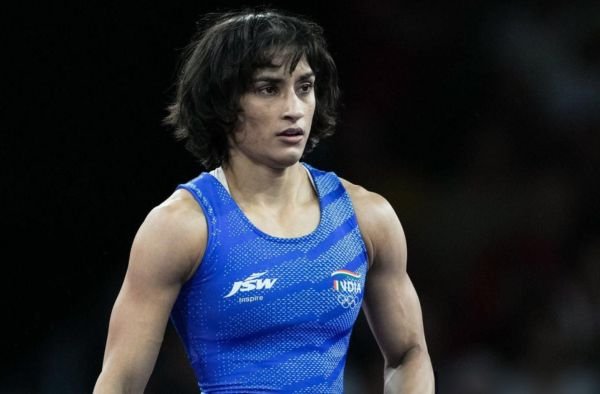
The Delhi High Court on Thursday refused to grant Phogat an interim exemption that would have allowed her to compete in the Wrestling Federation of India’s selection trials for the 2026 Senior World Wrestling Championships. The trials are scheduled for September 14 at New Delhi’s Indira Gandhi Stadium, while the World Championships will be held in Astana, Kazakhstan, from October 24 to November 1.
Justice Swarana Kanta Sharma declined to suspend the eligibility conditions laid down by the WFI in its September 7 circular. The court noted that the criteria applied uniformly to athletes and said allowing Phogat an individual exemption at the interim stage could result in unequal treatment for wrestlers who were not before the court.
The decision came after Phogat challenged the selection framework, arguing that it effectively shut her out of the pathway because she had been away from competition during a period that included pregnancy, childbirth and recovery. Phogat became a mother in July 2025 and had been away from competitive wrestling since December 2024. Her argument was that the selection system did not provide an alternative route for an athlete whose absence from qualifying competitions was connected to maternity.
The WFI, however, maintained that Phogat had not been permanently barred from returning to competition. Its position was that she could compete at domestic events, establish her credentials again and work her way back into the selection process. During the court proceedings, WFI’s counsel argued, “She is very much welcome to win medals and then climb back up from the state-level, then national-level championships. She has not won medals in many years.”
For Phogat’s camp, that route was not realistic within the current calendar. Her lawyers argued that waiting for another cycle could leave the 31-year-old wrestler out of international competition for an extended period. Her counsel described the situation as a “death knell” for her career and argued that she needed at least the opportunity to prove her fitness and competitiveness on the mat.
The dispute is not entirely new. Earlier this year, Phogat was involved in another legal battle over eligibility for the Asian Games selection trials. The Delhi High Court had allowed her to participate, despite the WFI’s objections. She subsequently competed in the trials but lost to Meenakshi in the 53kg semi-final. The latest case has therefore become another chapter in the increasingly complicated relationship between Phogat and the federation, with selection regulations, disciplinary proceedings and her return from maternity all converging.
Yet the court’s observations indicate that the wider issue remains alive. While refusing immediate relief, the High Court acknowledged that pregnancy, childbirth and postpartum recovery present circumstances that cannot simply be treated like an ordinary sporting absence. The court has indicated that it will examine the broader question of how motherhood and a professional sporting career can be balanced, and has called for consideration of a structured framework for women athletes returning after maternity.
That distinction is significant. The court did not declare the WFI’s policy invalid, nor did it rule that Phogat is permanently excluded from international wrestling. Instead, it separated the immediate request for an exemption from the larger question of whether the existing framework adequately accounts for women athletes returning after childbirth.
For Phogat, however, the sporting clock continues to move. With the September 14 trials approaching, Thursday’s order means she will not be able to use this particular route to qualify for the World Championships. Her competitive future now depends on the outcome of the larger proceedings and the opportunities available to her under the federation’s existing framework.
The most important takeaway from the Vinesh Phogat case may not be whether one athlete gets into one selection trial. It is whether Indian sport has a credible pathway for elite women who temporarily step away because of pregnancy and motherhood. Selection must remain merit-based, but merit cannot always be measured through the same calendar for every athlete.
Phogat’s case exposes the gap between equality on paper and equity in practice. The High Court’s call for a structured framework could eventually prove more consequential than the immediate verdict, particularly for the generation of Indian women athletes who want both a sporting career and a family.
For Phogat, the fight that began on the wrestling mat has once again moved into a courtroom. And while the court has closed the door on this particular World Championships trial, it has left another door open: the possibility of changing how Indian sport treats athletes when they return after becoming mothers.
