

A new chapter in Indian women’s football is set to unfold as the India women’s national under-20 football team return to the continental stage after a 20-year absence, opening their AFC U-20 Women’s Asian Cup 2026 campaign against a formidable Japanese side.
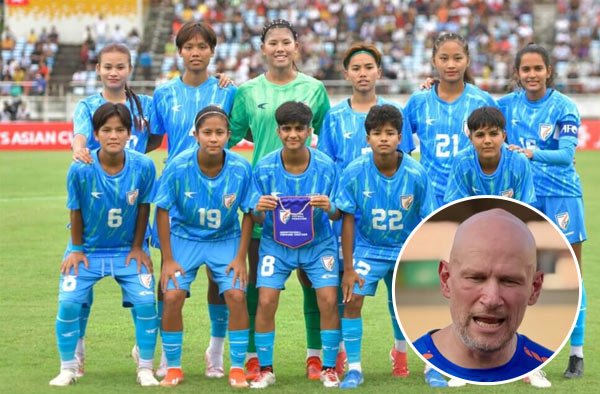
For India, this tournament is more than just participation, it marks a long-awaited comeback and an opportunity to measure their growth against Asia’s elite. The Young Tigresses enter the competition with renewed belief, aiming not just to compete but to challenge expectations.
Drawn into a highly competitive Group C, India face a daunting task. Alongside Japan, they will take on Australia on April 5 and Chinese Taipei on April 8. With only the top two teams from each group, along with the two best third-placed sides, progressing to the quarter-finals, every match carries significant weight.
The stakes are even higher considering what lies ahead. The four semi-finalists will secure qualification for the FIFA U-20 Women’s World Cup 2026, adding an extra layer of motivation for all participating teams.
Heading into the tournament, India’s approach reflects a balance of realism and ambition. Head coach Joakim Alexandersson acknowledged the challenge while maintaining belief in his squad’s potential.
“We are very much aware that we are new to this scene right now with the India team. We know we are facing tough opponents and we have respect for them,” said Joakim Alexandersson.
“But also, we have a mindset that we want to make it through this group and qualify for the World Cup. That would be fantastic for the whole country,” he added.
India’s preparation for the tournament has been extensive and carefully structured. The squad has spent the past few months building cohesion and match readiness through international exposure and focused training programs. Friendly fixtures in Kazakhstan, a month-long training camp in Sweden, and additional matches against visiting teams like Uzbekistan have all contributed to shaping a more competitive unit.
“We have been together continuously for three months,” Alexandersson said. “Before that, we had friendly games in Kazakhstan. We have been to Sweden for a one-month camp, and we invited Uzbekistan to India as well.
“So the preparation has been good. I think we are ready for this tournament in a good way. Since the qualifiers in Myanmar, we have had some very focused work. We have evolved considerably, technically, tactically, and also mentally as a group. We are confident that our preparation has put us in the best place possible,” he explained.
Despite the optimism, the opening challenge could hardly be tougher. Standing across from India is Japan women’s national under-20 football team, one of the most dominant forces in youth women’s football. A record six-time champion at this level, Japan enters the tournament as one of the favourites, backed by a legacy of technical excellence and consistency.
The Young Nadeshiko’s pedigree extends beyond Asia, they were crowned world champions in 2018, underlining their strength on the global stage. Their current squad continues that tradition, combining discipline, tactical intelligence, and attacking flair.
For India, the clash against Japan represents both a challenge and an opportunity. While the odds may favour the experienced Japanese side, tournaments like these often serve as platforms for emerging teams to announce themselves.
As the Young Tigresses step onto the pitch, they carry not just their aspirations but also the hopes of a growing football ecosystem back home. A strong performance in this tournament could mark the beginning of a new era for Indian women’s football—one built on belief, preparation, and the courage to compete at the highest level.

