

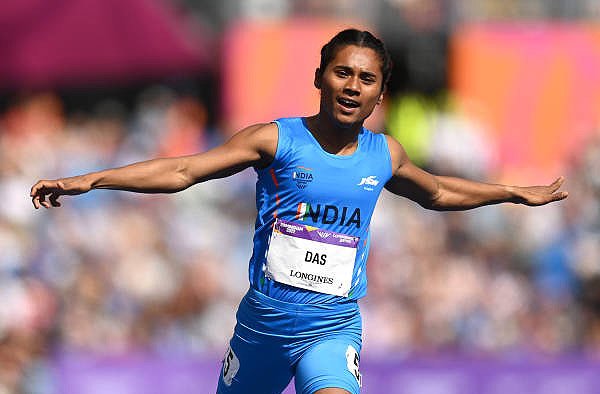
All eyes will be on India’s women athletes as the Indian Athletics Series 3 unfolds at the Jawaharlal Nehru Stadium in New Delhi, bringing together a compelling mix of established stars, comeback stories, and emerging talent ready to make their mark. At the heart of the narrative lies the much-anticipated return of Hima Das, whose presence adds both excitement and emotional weight to the competition.
Set against the backdrop of a newly laid Mondo track, globally recognised for its speed and athlete-friendly design- the meet promises high-quality performances and the potential for personal bests. The surface, known for its superior shock absorption and energy return, is expected to give athletes the confidence to push their limits early in the season.
For Hima Das, this event is far more than a routine appearance, it marks a significant comeback after nearly two years away from competitive racing. The 26-year-old last featured at the National Inter-State Championships in June 2024, and her return now signals a fresh chapter in her career.
Having entered both the 200m and 400m events, Hima will be closely watched not just for results, but for rhythm, endurance, and race sharpness. Her journey back to the track reflects resilience, patience, and determination- qualities that have defined her career since her breakthrough on the international stage.
Her return also holds broader significance for Indian athletics. As one of the country’s most recognisable and inspiring athletes, Hima’s presence elevates the competition and brings renewed attention to women’s sprinting in India. The New Delhi meet offers her a platform to assess her fitness, rebuild confidence, and gradually re-establish herself among the elite.
The road back, however, will not be without challenges. The women’s sprint events feature a strong and competitive lineup, ensuring that Hima will have to fight for every stride. Athletes like Sri Jyothika Dandi and Aishwarya Mishra are expected to provide stiff competition in the 400m, both having shown steady progress and consistency in recent seasons. Adding further depth to the field is seasoned campaigner MR Poovamma, whose experience and tactical awareness make her a formidable presence.
This blend of youth and experience sets the stage for tightly contested races, where strategy, pacing, and execution will be just as crucial as raw speed. For younger athletes, competing alongside a name like Hima Das offers invaluable exposure, while for Hima, it presents an opportunity to measure herself against the current competitive landscape.
While the track events carry significant attention, the women’s field events promise equally exciting narratives. In the high jump, Pooja Singh will be one of the athletes to watch. As an Asian-level performer, she represents the next generation of Indian field athletes pushing boundaries on the continental stage.
The long jump competition is set to feature an intriguing contest between Shaili Singh and Mubassina Mohammed. Both athletes, training under the guidance of the Anju Bobby George Foundation in Bengaluru, have shown immense promise and are seen as future flag-bearers for India in the discipline.
Their rivalry adds a competitive edge to the event, while also highlighting the growing ecosystem of structured training and mentorship in Indian athletics. The Indian Athletics Series has steadily evolved into an important fixture in the domestic calendar. Beyond medals and podium finishes, it serves as a critical platform for athletes to:
For many women athletes, including Hima Das, this meet acts as a stepping stone toward major competitions such as the Asian Championships and World Athletics events. It also plays a vital role in bridging the gap between domestic and international competition. At the same time, younger athletes benefit immensely from the exposure, learning to adapt to pressure, refine their technique, and build confidence against top-tier competition.
The introduction of the Mondo track at the Jawaharlal Nehru Stadium is a significant development for Indian athletics. Such world-class infrastructure not only enhances performance but also aligns domestic competitions with global standards. For sprinters and jumpers, the surface offers the perfect balance of speed and safety, enabling athletes to chase faster timings and improved distances. Over time, facilities like these are expected to contribute to raising the overall standard of Indian athletics.
As the Indian Athletics Series 3 unfolds, the women’s events encapsulate everything that makes sport compelling- comebacks, rivalries, ambition, and the emergence of new talent. While Hima Das’ return will undoubtedly remain the headline story, the performances of rising athletes across track and field will also shape the narrative of the meet. Together, they represent a transition phase in Indian women’s athletics, where experience meets youthful energy.

