

Indian sport is set to enter uncharted territory this week as New Delhi prepares to host the Asian Senior Fencing Championships 2026, a landmark event that promises to elevate the profile of fencing across the country while providing Indian athletes with a rare opportunity to compete against the continent’s best on home soil.
Scheduled from June 19 to June 24 at the prestigious Bharat Mandapam, the championship represents the first time India has been entrusted with hosting Asia’s premier fencing competition. The event is widely regarded as the most important annual tournament in the Asia-Oceania region and is expected to attract some of the biggest names in world fencing, including reigning Olympic champions and top-ranked international stars.
For Indian fencing, the championship is far more than a six-day competition. It marks a significant step in the sport’s growth journey and reflects the increasing recognition India has earned within the international fencing community over the past decade.
The tournament carries enormous competitive importance. Apart from crowning continental champions, the event serves as a crucial qualification pathway for the 2026 Asian Games and offers valuable world ranking points. These rankings will play a major role in shaping qualification opportunities and seeding positions as athletes begin their road towards the Los Angeles 2028 Olympic Games.
Adding further significance to the occasion, India will also host the 39th General Assembly of the Fencing Confederation of Asia (FCA), bringing together senior administrators and delegates from across the continent for the first time. “Hosting the Senior Asian Fencing Championships for the first time is a watershed moment that will permanently redefine the trajectory of Indian sports. We are not just welcoming the world’s absolute elite to New Delhi; we are laying down the foundational path for the Los Angeles 2028 Olympic cycle right here on our home mat.
I am equally thrilled and excited to host 42 delegate members from across our member countries to the 39th FCA General Assembly, which is being hosted for the first time in India. Our athletes have proven they can win medals at the continental level, and this tournament provides unprecedented exposure to world-class pressure under the eyes of their home fans. Furthermore, by introducing cutting-edge technologies like the AI Video Referral System, India is leading the global sporting landscape into a new tech-driven era. We are confident this event will inspire a generation and establish India as a premier destination for global fencing.”
The championship will showcase some of the most accomplished fencers in the world. Among the headline attractions is Hong Kong’s Cheung Ka Long, a two-time Olympic Individual Foil gold medallist who has become one of the sport’s most recognisable figures. South Korea’s Oh Sang-uk, the reigning Olympic sabre champion, is also expected to compete, alongside Japan’s Olympic gold medallist Yamada Masaru in the épée category.
More than 30 nations are set to participate, including traditional fencing powerhouses such as China, South Korea, Japan and Hong Kong. Their presence guarantees a world-class level of competition and offers Indian athletes a valuable benchmark against the very best in Asia. For Indian fans, however, much of the attention will centre on the host nation’s squad, particularly the women who have played a major role in raising the sport’s profile in recent years.
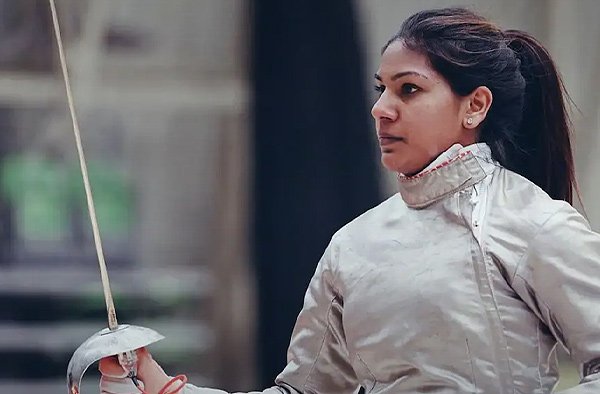
Leading the Indian challenge is Bhavani Devi, the trailblazer who became the first Indian fencer to qualify for the Olympic Games when she earned a place at Tokyo 2020. Her historic bronze medal at the 2023 Asian Championships remains one of the most significant achievements in Indian fencing history and demonstrated that Indian athletes can compete successfully against the continent’s elite. Bhavani’s journey has inspired a new generation of young girls to take up fencing, helping expand participation in a sport that was once largely unknown to the wider Indian sporting audience. Her presence at the championships is expected to be one of the tournament’s biggest attractions.
India’s women’s squad also features rising épée star Tanishka Khatri, who has steadily emerged as one of the country’s most promising young talents. Her performances at junior and senior international events have highlighted her ability to challenge established opponents, making her one of India’s strongest medal prospects.
The Indian contingent will compete across the sport’s three disciplines: foil, épée and sabre. Each weapon demands a unique tactical approach. Foil rewards precision and targets only the torso, épée allows attacks anywhere on the body, while sabre is known for its speed and permits scoring with both the edge and tip of the blade above the waist. A total of 12 competitions will be contested across men’s and women’s individual and team events, with 48 medals on offer throughout the championship.
Beyond the action on the pistes, New Delhi is also set to become a testing ground for innovation in sports officiating. In a first for international fencing, organisers have introduced an AI-powered Video Referral System, designed to assist referees with decision-making during high-pressure bouts. Earlier this month, officials and technical experts participated in specialised workshops aimed at preparing for the system’s debut. The move positions India at the forefront of technological experimentation in fencing and could potentially influence how officiating evolves in future international competitions.
As the countdown to the opening bout continues, the Asian Senior Fencing Championships 2026 promises to be more than just another sporting event. It represents a defining moment for Indian fencing, a showcase for Asia’s finest athletes, and an opportunity for homegrown stars such as Bhavani Devi and Tanishka Khatri to inspire the next generation in front of a home crowd.
For six days, New Delhi will become the centre of Asian fencing, and Indian sport will have a chance to demonstrate both its competitive ambitions and its growing stature on the global stage.

