

In elite sport, victories are often decided by fractions of a second or a single tactical decision. Yet sometimes, an athlete’s biggest setback arrives long before the competition begins. Not because of an injury, poor form or defeat on the mat, but because of paperwork, compliance and accountability. The provisional suspension of Commonwealth Games silver medallist Tulika Maan is a reminder that modern sport is judged not only by performance, but also by adherence to the anti-doping system that exists beyond the arena.
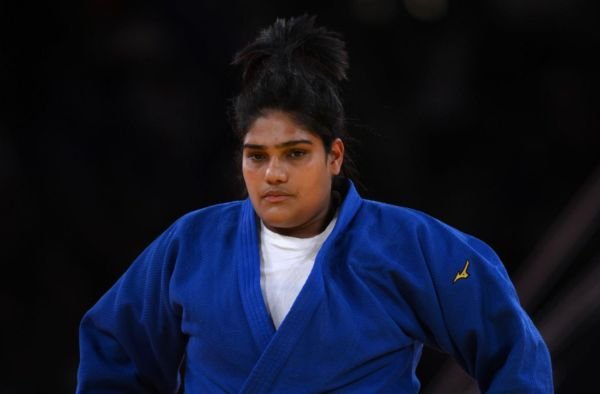
Just days before India’s judo campaign at the Glasgow Commonwealth Games, one of its strongest medal contenders was withdrawn from the squad after the National Anti-Doping Agency (NADA) provisionally suspended her for three whereabouts failures within a 12-month period. The development means Maan, who won silver in the women’s +78kg category at the Birmingham 2022 Commonwealth Games, will not get the opportunity to defend her medal and now faces the possibility of a two-year ban under the World Anti-Doping Agency (WADA) Code.
“She has committed three whereabouts failures in a 12-month period and NADA has sent notice to her. So, she will be withdrawn from the team,” a judo coach told PTI on conditions of anonymity.
The timing could scarcely have been worse. Maan entered Glasgow as one of India’s most experienced judokas, having represented the country at the Paris 2024 Olympics and competed at the World Championships. Her presence was expected to anchor India’s hopes in a discipline that delivered three medals at the Birmingham Games. Instead, the country’s medal aspirations have taken a significant blow before its judokas even stepped onto the flight to Scotland.
What makes the case particularly significant is that it does not involve a positive test for a prohibited substance. Instead, it revolves around the “whereabouts” system, one of the least understood yet most important pillars of the global anti-doping framework.
Under WADA regulations, elite athletes included in the Registered Testing Pool are required to provide detailed information about where they will be each day. This includes their overnight address, training venues, regular activities and, crucially, a daily 60-minute time slot during which they must be available for surprise out-of-competition testing. Three filing failures, missed tests or a combination of both within a rolling 12-month period constitute an anti-doping rule violation, carrying sanctions similar to those imposed for certain doping offences.
To many outside elite sport, the punishment may appear harsh. After all, failing to update one’s location is not the same as consuming a banned substance. Yet the whereabouts system exists because surprise testing is one of the most effective tools against sophisticated doping programmes. If athletes could not be located outside competition, anti-doping authorities would lose their ability to conduct truly unannounced testing. The system, therefore, is designed to protect clean sport by ensuring that no athlete can evade scrutiny simply by being unavailable.
This does not automatically imply guilt in the traditional sense. A whereabouts violation is an administrative breach rather than proof of performance-enhancing drug use. Nevertheless, anti-doping authorities treat repeated failures seriously because the integrity of testing depends on athletes remaining traceable throughout the year.
For India, the optics are equally concerning because Maan’s withdrawal came only a day after fellow judoka Arun Kumar was ruled out of the Games following an out-of-competition positive test for an anabolic steroid. Two anti-doping related withdrawals in successive days have left the Indian judo contingent weakened and have inevitably shifted attention away from sporting preparations to questions surrounding compliance and athlete education.
The issue extends beyond judo. Indian sport has invested heavily over the past decade in high-performance programmes, scientific coaching and international exposure. Athletes today receive greater financial assistance, world-class training facilities and access to global competitions than previous generations. However, the administrative demands placed upon elite athletes have also grown. Compliance with anti-doping regulations is now as integral to elite sport as physical preparation itself.
That raises an uncomfortable but necessary question. Are athletes receiving adequate education and logistical support to manage increasingly complex anti-doping obligations? While responsibility ultimately rests with competitors, national federations and support staff also have a role in ensuring that compliance systems become routine rather than burdensome. Tulika Maan’s suspension remains provisional, and the disciplinary process will follow its course. She will have the opportunity to present her case before the relevant authorities. Until then, it would be premature to draw conclusions beyond the facts currently available.
What is certain, however, is that India’s Glasgow campaign has already lost one of its biggest medal hopes. More importantly, the episode reinforces a lesson that every elite athlete must now accept. In modern sport, excellence is measured not only by what happens under the lights of competition, but also by the discipline shown away from them. Championships are won on the mat, but credibility is protected every single day, including during the one hour when an athlete is simply expected to be where they said they would be.

