

Every generation of Indian sport eventually finds a young athlete who changes the conversation. Not simply by winning matches, but by making excellence seem inevitable. For Indian squash, that athlete is Anahat Singh.
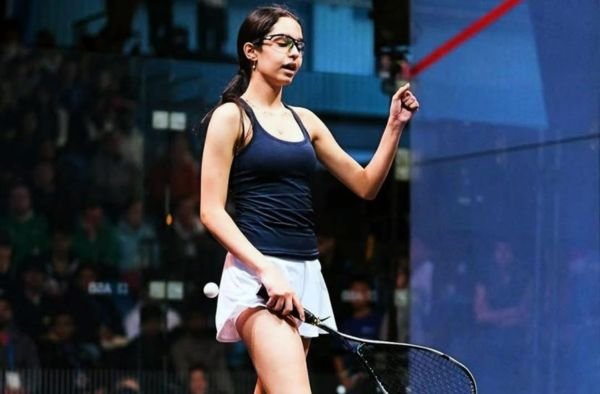
At just 17, she has become the first Indian in 21 years to reach the final of the World Junior Squash Championships, ending a wait that dates back to Joshna Chinappa’s landmark appearance in 2005. The achievement alone deserves celebration. But viewed through a wider lens, Anahat’s remarkable run in Ontario, Canada, represents something even more significant. It is a sign that Indian squash is preparing for its next era, led by a teenager already competing with the confidence of an established professional.
Her semifinal victory over Egypt’s Barb Sameh was not merely another win. It was a statement.
Seeded No. 1 at the tournament, Anahat defeated Sameh 11-3, 8-11, 11-4, 11-6 to book her place in the championship match. After dominating the opening game, she briefly surrendered momentum in the second before responding with the composure expected of far more experienced players. The final two games reflected her maturity, tactical discipline and ability to absorb pressure when it mattered most. The victory also improved on last year’s campaign, where she finished with a bronze medal after reaching the semifinals.
For Indian squash, the result carries historic weight. Joshna Chinappa’s run to the World Junior final in 2005 inspired an entire generation of players and was followed by India’s golden period in squash. Champions such as Dipika Pallikal, Saurav Ghosal and Mahesh Mangaonkar helped establish India as one of Asia’s strongest squash nations, while Chinappa herself went on to become one of the country’s most decorated players. Two decades later, Anahat has become the first Indian to reach that stage again, suggesting the cycle of excellence is beginning anew.
Born in Delhi, Anahat first attracted national attention as a child prodigy before rapidly climbing through junior rankings. She represented India at the 2022 Commonwealth Games at just 14 years of age, becoming one of the youngest athletes in the Indian contingent. Although medals proved elusive in Birmingham, the experience accelerated her development, exposing her to the intensity of elite international competition long before most players reach the senior circuit.
Since then, her progress has been extraordinary. Anahat has collected multiple Asian Junior titles, won several PSA Challenger events and steadily climbed the professional rankings. She entered the World Junior Championships as the tournament’s top seed and arrived in Ontario with growing expectations after consistently producing high-quality performances on both the junior and professional tours. Her current position among the world’s top 20 on the PSA rankings is remarkable for a player still eligible for junior competition, reflecting her ability to compete successfully against experienced professionals.
The semifinal itself demonstrated why so many believe she represents the future of Indian squash.
Egypt has dominated world squash for nearly two decades, producing a remarkable succession of world champions in both the men’s and women’s games. Defeating an Egyptian opponent in a World Junior Championship semifinal therefore carries particular significance. Barb Sameh had already tested Anahat earlier this year at the British Junior Open, where the Indian emerged victorious after another close contest.
That previous encounter prepared her well for the rematch. “I’m really happy. I played Barb a few months ago at the British Junior Open and it was a close match like this, so I knew I’d have to play really well,” Anahat said after securing her place in the final. The quote captures the mindset that has distinguished her throughout the tournament. Rather than relying solely on natural talent, she has combined preparation with tactical awareness, recognising the adjustments required against familiar opponents.
Perhaps the most impressive aspect of Anahat’s development is her composure. Junior championships often reward aggressive shot-making and fearless attacking play, but Anahat has shown qualities that translate equally well to the senior game. Her court movement remains economical, her decision-making rarely appears rushed and her ability to recover after losing momentum reflects growing mental resilience. Those characteristics have become increasingly valuable in modern squash, where rallies demand both physical endurance and tactical patience.
Her success also arrives at an important moment for Indian squash. The sport is preparing for its Olympic debut at Los Angeles 2028, a milestone that promises greater visibility and investment worldwide. For India, having a young player already challenging for global junior honours provides enormous encouragement. Athletes like Anahat will have several years to develop before squash makes its Olympic appearance, potentially placing India in contention on the sport’s biggest stage.
Yet perhaps the greatest significance of this tournament lies beyond medals and rankings.
Indian squash has always relied on pioneers. Dipika Pallikal broke barriers by becoming the first Indian woman to break into the world’s top 10. Joshna Chinappa became India’s first Commonwealth Games singles medallist. Saurav Ghosal reached the highest men’s ranking in the country’s history and inspired a generation of male players.
A World Junior title would make her the first Indian ever to win the prestigious championship, adding another milestone to the sport’s history. Even before the final, however, her campaign has already achieved something equally valuable. It has reminded Indian sport that the next generation is not waiting quietly in the wings. It is already competing with the world’s best.
The championship match in Ontario is undoubtedly the biggest of Anahat Singh’s young career. Victory would place her among the greatest junior players Indian squash has ever produced. Defeat would still leave behind an achievement unmatched for more than two decades.

