

Every sporting nation has disciplines that instantly evoke memories of medals. For India at the Commonwealth Games, weightlifting, boxing and wrestling have traditionally occupied that space. Track cycling belongs to a different category. It is a sport where India has invested heavily, improved steadily and earned international respect, yet the Commonwealth Games podium has remained frustratingly out of reach.
Glasgow 2026 offers another opportunity to change that narrative. India has named a seven-member contingent across track cycling and para track cycling for the Commonwealth Games, with six riders competing on the velodrome and para cyclist Lisha Das representing the country in the para events. While medals remain an ambitious target against some of the world’s strongest cycling nations, the squad represents the continued rise of Indian cycling and the belief that the gap is steadily narrowing.
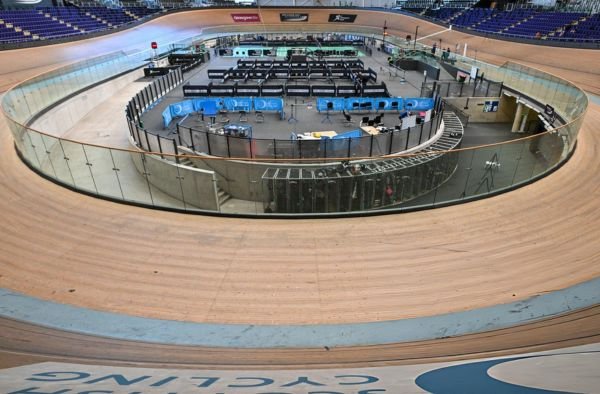
The competition will take place at the iconic Sir Chris Hoy Velodrome between July 30 and August 2. Unlike previous Commonwealth Games, Glasgow will feature only track cycling, with road and mountain biking omitted from the programme. That places the spotlight firmly on the fast-paced, tactical and technically demanding races inside the velodrome, where races are often decided by fractions of a second.
India’s squad combines experience with youthful ambition.
Leading the men’s challenge are David Beckham Elkatohchoongo and Ronaldo Singh Laitonjam, two cyclists whose names often attract curiosity before their performances command attention. Beyond the famous football-inspired names lies a pair of riders who have become central figures in India’s sprint cycling programme.
David Beckham Elkatohchoongo has emerged as one of India’s most promising track cyclists. Hailing from the Andaman and Nicobar Islands, he overcame personal tragedy at a young age before discovering cycling in Delhi. His breakthrough came at the 2023 Asian Games, where he became the first Indian cyclist to reach the quarterfinals of a sprint event, underlining India’s growing competitiveness on the international stage. He also holds the national record in the 200-metre flying time trial, a benchmark that reflects his explosive speed. Glasgow marks his second Commonwealth Games appearance after making his debut in Birmingham four years ago.
Alongside him is Ronaldo Singh Laitonjam, another key member of India’s sprint programme. The Manipur rider has consistently represented India at Asian and world-level competitions and continues to be one of the country’s leading hopes in sprint events. His experience on the international circuit makes him an important figure as India seeks to push deeper into knockout rounds against cycling powerhouses such as England, Australia and New Zealand.
The Indian contingent is completed by Dinesh Kumar, Jemsh Singh Keithellakram, Rojit Singh Yanglem and Harshveer Singh Sekhon, all of whom will feature across endurance and pursuit events. Dinesh, in particular, has emerged as one of India’s most promising endurance specialists and will compete in the individual pursuit, an event that demands both sustained power and tactical precision over four kilometres.
Representing India in para track cycling is Lisha Das, whose inclusion reflects the country’s growing commitment to para sport alongside its mainstream cycling programme. Her participation adds another dimension to India’s campaign and highlights the expanding opportunities for para athletes at the Commonwealth Games.
Track cycling remains one of the most technically advanced sports in the Commonwealth Games. Success depends not only on athletic ability but also on equipment, race strategy, aerodynamics and years of specialised training. Nations like Great Britain, Australia and New Zealand possess deep talent pools and Olympic medallists across multiple disciplines, making every qualifying round intensely competitive.
Yet India has reasons for optimism. Over the last decade, the country has invested significantly in cycling infrastructure, including world-class velodromes and high-performance training programmes. Exposure to international competitions has steadily improved, while Indian riders have begun producing performances that were once considered unattainable. Quarterfinal appearances, national records and stronger finishes at Asian competitions indicate that the gap with the world’s best is gradually closing.
That progress may not always translate immediately into medals, but it has fundamentally changed expectations. The memories of Birmingham 2022 remain fresh. India fielded 13 track cyclists but returned without a medal. Rather than discouraging the programme, that campaign became an important learning experience. Glasgow presents another chance to convert those lessons into stronger performances, with a smaller yet more focused squad aiming to advance further in multiple events.
Perhaps the greatest significance of this team lies beyond the medal table. Cycling has never enjoyed the same visibility in India as cricket, athletics or boxing. Yet every international appearance helps broaden the sport’s reach and inspires young riders from regions that are increasingly producing national talent, particularly Manipur, Punjab and the Andaman and Nicobar Islands.
For Indian cycling, Glasgow is not merely another Commonwealth Games. It is another milestone in a long-term journey. The riders entering the Sir Chris Hoy Velodrome know the odds they face. They also know that meaningful progress is often measured not only in medals but in qualification rounds crossed, national records broken and belief strengthened.
A podium finish would be historic. But even if that breakthrough remains just out of reach, every lap completed in Glasgow will move Indian track cycling one step closer to the destination it has been chasing for years.

