

When bird droppings interrupt a badminton match, a monkey wanders into the stands and players publicly question hygiene and air quality, the conversation inevitably shifts away from rallies and rankings. That was precisely what happened during the India Open in January, when one of India’s marquee badminton tournaments found itself making international headlines for reasons no organiser would want.
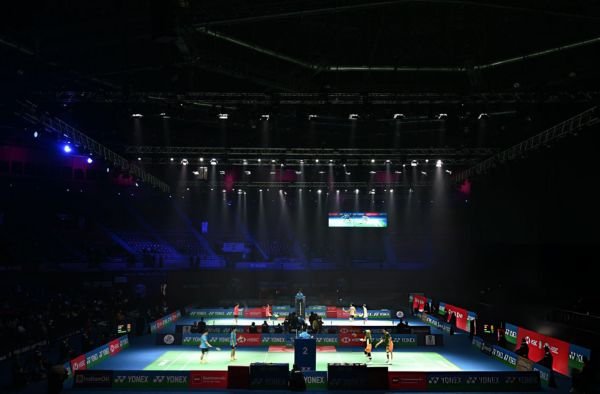
Seven months later, the response has been anything but cosmetic. As New Delhi prepares to host the BWF World Championships from August 17 to 23, organisers have undertaken an extensive overhaul of the Indira Gandhi Indoor Stadium, determined to ensure that the memories of the India Open remain a lesson rather than a legacy. The transformation goes well beyond fresh paint and polished floors. It reflects an understanding that hosting a world championship demands the same precision behind the scenes that athletes display on the court.
The most talked about changes are perhaps the most unusual. A non-toxic slippery gel has been applied to discourage pigeons from perching inside the arena. Specialised sound machines imported from the United States mimic the calls of predatory birds to keep pigeons away naturally. Reinforced glass entry systems have been installed to minimise disruptions and prevent unauthorised access during matches.
“We will equip the whole arena with 24/7 security, and the glass gates will make sure that there are no distractions when the event is going on. We are using a slippery, non-toxic bird deterrent gel. We also have sound machines to keep the pigeons away,” Badminton Association of India secretary Sanjay Mishra said.
The measures may sound unconventional, but they underline a broader truth. In modern international sport, details matter. Television audiences judge a host nation not only through medal tallies but through every camera angle, every interruption, every athlete’s experience and every operational decision. A single incident can overshadow months of planning.
The India Open became an uncomfortable reminder of that reality. Play was halted because of bird droppings falling on court. A monkey was spotted inside the venue. Danish player Mia Blichfeldt criticised the unhygienic practice facilities, while fellow Dane Anders Antonsen withdrew, citing concerns over Delhi’s air pollution. The Badminton World Federation itself acknowledged issues relating to cleanliness, hygiene and animal control, although it continued to back New Delhi as the venue for the World Championships.
Those incidents threatened to damage India’s growing reputation as a destination capable of hosting world-class sporting events. Fortunately, they also sparked swift introspection. The stadium, originally built for the 1982 Asian Games and renovated ahead of the 2010 Commonwealth Games, has undergone significant refurbishment.
New seating, upgraded wooden flooring, enhanced lighting systems, waterproofing of the roof, improved signage, landscaped surroundings and renovated washrooms are all part of the final preparations. More than 100 skilled workers, alongside engineers and architects from the Central Public Works Department, have been working to complete the project before the tournament begins.
Lighting has received particular attention after feedback from broadcasters and viewers during the India Open. “The BAI received feedback from TV viewers during the India Open about the need to improve lighting on the courts. BAI has hired experts who work at the Indonesian Open and Indonesia Masters to make sure the lighting is perfect,” Selvaramesh Supramaniam, BWF Events Director (Tournament Operations), said.
The BWF has monitored preparations closely, carrying out multiple inspections throughout the year. “We visited the stadium in January, February, April, June and then in the last couple of days. A lot of work has been done. We are happy, but we still need to keep checking for the next few days on the cleaning that’s being done,” Supramaniam said.
His early observations are encouraging. “The last three days that I’ve been there, I haven’t seen any pigeons. I don’t know whether that’s because there are a lot of people or the gel is actually doing its job. I have not seen any monkeys, either. From what I heard, they rounded up 60-odd dogs. There are still some, but they are confident they will be able to round them up as well.”
Perhaps the most reassuring aspect of India’s response is that organisers appear to have embraced criticism rather than dismissed it.
“The India Open was a learning experience for us. We have worked on every issue that came up last time,” Mishra said. That willingness to acknowledge shortcomings is essential if India hopes to establish itself as a regular destination for the world’s biggest sporting events.
Over the last decade, the country has steadily expanded its hosting portfolio, from cricket World Cups to Formula E, international hockey tournaments and now one of badminton’s most prestigious competitions. Each successful event strengthens India’s credibility. Each operational lapse risks undermining years of progress.
The timing also matters. The World Championships return to India after 17 years and will feature more than 400 players competing for badminton’s most coveted individual title outside the Olympic Games. Among the headline attractions will be India’s two-time Olympic medallist PV Sindhu, while defending champions Shi Yu Qi and Akane Yamaguchi are expected to headline a world-class field.
The challenge for organisers is therefore larger than ensuring smooth logistics for one week. This championship is an audition for India’s future ambitions in international sport.
If the focus remains solely on spectacular rallies, dramatic upsets and packed stands, organisers will have succeeded. Good hosting is often invisible. Fans should remember breathtaking badminton, not bird deterrent gel. Athletes should discuss competition, not cleanliness. Television viewers should notice the quality of the sport, not flaws in the venue.
That is ultimately the standard every major sporting nation strives to meet. India now has the chance to demonstrate that it belongs in that company.

