
Indian women’s hockey is entering one of its most important phases in years. On the field, there is optimism, a new generation of players and a captain in Salima Tete who believes India can win the World Cup. Off it, however, a bitter dispute involving former captain Asunta Lakra has raised uncomfortable questions about how the sport’s governing structures handle complaints, accountability and due process.
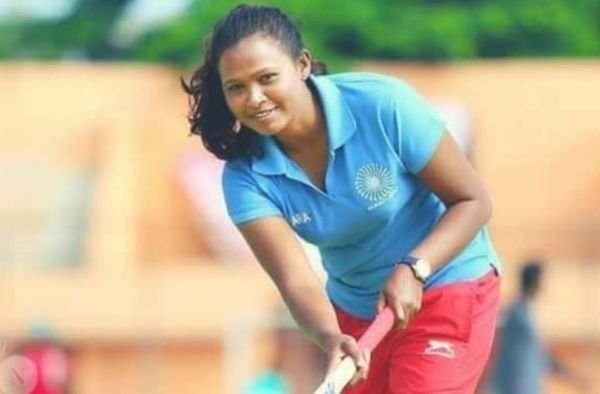
The timing could hardly be more significant. India head into the FIH Women’s Hockey World Cup in the Netherlands and Belgium after winning the 2026 FIH Nations Cup in New Zealand, a result that restored the team’s place in the Pro League and strengthened confidence ahead of the World Cup.
Tete has spoken openly about the ambition to go all the way, saying, “This time, the FIH Hockey World Cup will be ours. We will play smart, attacking hockey and bring back a medal. I have full belief in my team. We have the ability to do it.” Yet while the current team prepares for its biggest assignment, Indian hockey is simultaneously dealing with a dispute that goes to the heart of institutional trust.
Former India captain Asunta Lakra has challenged the maintainability of ethics proceedings initiated against her by Hockey India following complaints filed by former international Albela Rani Toppo. In her nine-page preliminary response, Lakra denied the allegations and described them as “false, baseless, malicious, motivated and defamatory.”
“I deny each and every allegation, insinuation and imputation levelled against me in the said complaints, whether express or implied, as if the same were set out herein separately and traversed seriatim. The allegations are false, baseless, malicious, motivated, defamatory and are a complete distortion of facts,” she said in her reply. Lakra has not merely disputed the allegations. She has questioned the very jurisdiction and constitution of the body examining them.
Her response was filed “without prejudice” and “without submitting to the jurisdiction of the Ethics Committee”. She has argued that under Hockey India’s bye-laws and Code of Ethics, the committee can act only following a written reference from the Hockey India president.
“Both the complaints in question are, on their own face, addressed to the Secretary General, Hockey India, and not to the President, Hockey India. Under the scheme of the Bye-Laws of Hockey India adopted on 20th June, 2026 and the Code of Ethics framed thereunder, the Ethics Committee is not a body of original or suo-motu jurisdiction. It is a body of referred jurisdiction,” she said.
“Until such a written reference is made by the President, the Ethics Committee is not, and cannot be, seized of the complaint, and no inquiry can be commenced,” she added.
There is also a question over the committee’s composition. Hockey India’s own committees page currently lists Justice (Retd.) Raghvendra Kumar as chairman and Judge (Retd.) Yogendra Singh as its legal member, with the Ethics Committee’s quorum listed as two.
Lakra has nevertheless sought clarity on the body’s constitution and authority, arguing that she is entitled to know who exactly is empowered to examine the allegations against her.
“I am entitled to know the identity and composition of the body proposing to inquire into my conduct,” she said. Her objection is particularly significant because this dispute does not exist in isolation. In July, the Sports Ministry directed the Indian Olympic Association to constitute an independent committee to examine Lakra’s allegations of sexual harassment and institutional intimidation.
The move followed a request from Hockey India president Dilip Tirkey, who had himself expressed concerns about the impartiality of an internal inquiry because the allegations involved the federation’s secretary general, Bhola Nath Singh.
That development makes the present controversy more than an internal disagreement between former hockey players and administrators. It raises a fundamental question: can sporting institutions credibly police themselves when the allegations involve people within their own power structures?
Lakra has also sought copies of the relevant bye-laws, the Code of Ethics, procedural rules, meeting minutes and the complete complaints with their annexures. She says the material supplied to her was incomplete and illegible. “The copies of the complaints transmitted to me are incomplete and, in material parts, illegible. No annexures, enclosures or supporting documents have been furnished. A reply on merits to allegations of this nature cannot be framed without the underlying material,” she said.
She has asked for four weeks to respond after receiving the requested documents and has urged the committee not to draw an adverse inference or proceed ex parte. “I further reserve my right to initiate such civil and criminal proceedings against those responsible for making, procuring, publishing and circulating the false and defamatory allegations against me which have cost grave injury to my reputation built over ‘a lifetime of service to Indian hockey.'”
The allegations remain allegations, and the claims made by both sides must ultimately be tested through a fair and properly constituted process. That distinction is essential. But precisely because Indian women’s hockey is trying to build a culture of professionalism and empowerment, the process itself matters. Tete’s leadership represents the future of Indian women’s hockey. Lakra belongs to a generation that helped create the platform on which that future stands. The sport cannot afford to celebrate one while allowing questions about the other to linger without transparent answers.
India’s World Cup campaign may be decided by goals, defensive structures and penalty corners. But the credibility of Indian hockey will be judged elsewhere too: by whether its institutions can demonstrate that accountability applies beyond the playing field.

