

India’s cricketing ambitions are increasingly being built away from the noise of the stadium. Inside the BCCI Centre of Excellence in Bengaluru, the emphasis is on what happens before a player walks onto the field: how an injury is diagnosed, how workloads are measured, how fitness is tested and, increasingly, how data can determine whether a cricketer is genuinely ready to compete. For years, the National Cricket Academy was largely associated with rehabilitation.
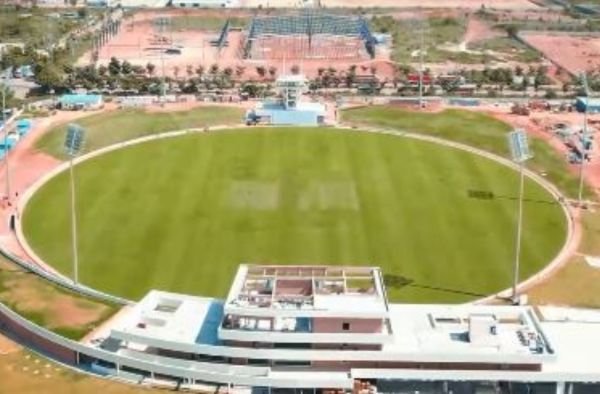
A cricketer got injured, travelled to Bengaluru, completed recovery and attempted to make a comeback. The new Centre of Excellence represents a considerably broader ambition. It is being positioned as the nerve centre of India’s high-performance system, bringing cricket coaching, sports science, sports medicine, strength and conditioning, performance analysis and technology under one roof. More importantly, its remit extends across the pathway, from age-group cricket and domestic players to India A and the senior men’s and women’s teams.
That shift could prove more consequential than any individual piece of infrastructure. During a recent media interaction at the CoE, BCCI Head of Cricket VVS Laxman and Honorary Secretary Devajit Saikia offered an insight into how the organisation is attempting to move from reactive injury management towards a more integrated performance model. The philosophy begins with a simple premise: returning from injury is not the same as being ready to play.
“The process starts with diagnosing the injury and finishes with a player being declared fit after the two RTP matches we have,” Laxman said. The return-to-play programme is therefore structured in stages. Medical and physiotherapy intervention comes first, followed by strength and conditioning, cricket-specific skills and progressively higher workloads. Players must eventually demonstrate that they have reached the benchmarks required to withstand competitive cricket.
“And then we build up the load. And then we play two RTP matches before we declare the player fit,” Laxman said. The final decision is data-led rather than dictated purely by a calendar. “Until and unless the benchmark is met, or in fact got better, we don’t release. So that’s the benchmark we use to declare a player fit,” he said.
That approach has already been visible in BCCI’s handling of injured players. In December 2024, for instance, the board explained that Mohammed Shami’s return was being assessed through controlled exposure to bowling loads after his knee showed swelling following increased workload. The medical team ultimately decided that he needed more time before being considered for Test selection.
The episode illustrates the larger philosophy Laxman described: recovery is not simply about whether a player feels better. It is about whether the body is prepared for the specific demands of the format and role.
The modern Indian cricketer operates in an increasingly crowded calendar, with international cricket, domestic competitions and franchise tournaments demanding different physical outputs. For fast bowlers, the issue is particularly acute because the body has to repeatedly absorb high loads. Yet Laxman’s message was counterintuitive. “Our learning is that stress injuries or injuries happen not because a fast bowler is bowling too much. It happens that the fast bowler is not bowling enough,” he said.
The CoE therefore attempts to establish an individual workload range rather than applying one universal number. “There’s a sweet spot we have for each and every fast bowler across the contracted, the targeted and the Under-19s, and there’s a weekly monitoring of that load.”
This is where technology becomes more than a buzzword. “Everything is there on the AMS. Every session of the player is there on the AMS,” Laxman said. “Wherever the player is, whatever he’s doing, it’s documented.” The BCCI’s recruitment documents indicate just how extensively it intends to integrate this information. A 2026 job description for a performance analyst at the CoE says the role involves combining match data, rehabilitation information, strength and conditioning inputs, GPS platforms, wearable data and video analytics to inform player and management decisions.
The organisation has also been expanding specialist roles. In February 2026, the BCCI advertised positions including batting coaches, fast-bowling coaches, fielding coaches and a performance analyst, with responsibilities spanning senior national teams, India A and age-group cricket. That matters because India’s high-performance pathway cannot be built only around established international players. The most important test of the CoE may ultimately be whether this system works consistently across men’s and women’s cricket.
The BCCI’s own recruitment structure increasingly reflects that expectation. A recent job description for a Strength and Conditioning Coach for Team India Senior Women explicitly places the role within the CoE’s Sports Science and Medicine team, with responsibility for injury prevention, injury management and player support. The CoE has also already been part of India’s women’s cricket preparation. During the 2025 Women’s Cricket World Cup, India played a warm-up match against New Zealand at the BCCI Centre of Excellence 1 ground in Bengaluru.
That is significant because the women’s calendar is no longer a peripheral programme. The domestic structure now includes extensive senior and age-group competitions, while international cricket and franchise opportunities have expanded the demands placed on female cricketers. The BCCI’s 2026-27 domestic calendar is scheduled to feature 1,788 matches across men’s and women’s cricket, including senior, U23, U19 and U16 men’s competitions and senior, U23, U19 and U15 women’s tournaments.
A genuine high-performance system therefore has to identify and manage players long before they reach the senior India dressing room. There is an important philosophical point behind Laxman’s comments. “There’s no doubt that the modern generation of players has to play a lot more cricket than I used to play the game, obviously with the addition of T20 and the three formats,” he said. “But when someone is playing at the elite level, you’re supposed to give more than 100%. If you’re not, then you’re not doing justice to the role or for what purpose you’re selected in the team.”
The answer, he argued, is not to eliminate risk altogether. “Even though you do that, playing at the highest level, you can get injured. So if you’re thinking about not getting injured, then you’re not playing to the best of your ability.” He added: “One thing which should be addressed is how you see injury. Do you see injury as a negative thing? Or do you think injury is part and parcel?” That perspective is particularly relevant for allrounders, who effectively carry the workload of two disciplines. “Being an all-rounder, obviously there is a lot of workload on him and how he becomes fitter – not only when he is playing various tournaments but also when he is not part of any tournaments.”
The CoE is increasingly being used to develop coaches, educate support staff and create common standards across Indian cricket. The BCCI has advertised dedicated cricket education positions, describing the CoE as central to building a national coach education system for coaches, athletes, state academies and high-performance programmes. That could be its most valuable long-term contribution. A fast bowler returning from injury is one immediate problem. Teaching hundreds of coaches and support staff how to recognise, monitor and prevent those injuries is a systemic solution. The same logic applies to performance analysis, batting, fielding, biomechanics and strength conditioning.
Laxman described the ultimate objective through the language of standards. “Trophies are a by-product of what systems and processes you set,” he said. “Those systems and processes are something which is in your control.” That is perhaps the clearest way to understand the CoE. India does not need another building that houses injured cricketers. It needs an ecosystem that produces better-prepared cricketers, better-informed coaches and better decisions.
The real measure of the Bengaluru facility will therefore not be how impressive it looks or how many stars pass through its gates. It will be whether a young fast bowler can enter the system at 16 and emerge at international level with a better understanding of his body. Whether a young woman cricketer receives the same depth of sports science support as her male counterpart. Whether an injured player returns not merely because a deadline has arrived, but because the evidence says she or he is ready. That is the difference between a rehabilitation centre and a high-performance system.
And if the BCCI gets that distinction right, the Centre of Excellence could end up shaping Indian cricket long after the current generation has left the field.

