

East Bengal’s women have already made history on the field. Now, they are set to make it off it. After powering through the AFC Women’s Champions League preliminary stage in Malaysia with three successive victories, the IWL champions have secured a place in the 2026/27 group stage and will become the first Indian club to host the group stage of the continent’s premier women’s club competition. The landmark moment will arrive in November, when East Bengal welcomes two other teams to India for a four-team centralised group. The draw for the group stage will take place on September 3 at the AFC House in Kuala Lumpur, with 12 clubs divided into three groups of four.
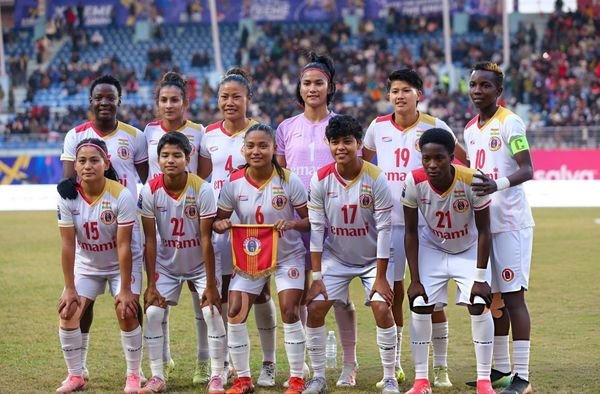
For East Bengal, the journey to this stage has been emphatic. The Indian champions opened their preliminary campaign with a 4-0 victory over Bangladesh’s Rajshahi Stars before producing an extraordinary 12-0 demolition of Guam’s Rovers FC. They then faced their toughest test against Malaysia’s Sabah FA and came through with a 2-0 victory, finishing top of Group A with maximum points. The final result against Sabah was particularly significant. Second-half goals from Olivia Anokye and Soumya Guguloth settled a closely fought contest at Likas Stadium and confirmed East Bengal’s passage into the main competition.
The bigger story, however, is what East Bengal’s qualification represents for Indian women’s football. The club is now preparing to move from being a participant to becoming a host, giving Indian supporters an opportunity to watch some of Asia’s strongest women’s clubs compete on home soil. The 12-team group-stage field includes defending champions Naegohyang Women’s FC of DPR Korea, Australian club Melbourne City, South Korea’s Hwacheon KSPO WFC, Japan’s INAC Kobe Leonessa, China’s Beijing Jingtan Football Club and Vietnam’s Ho Chi Minh City Women’s FC. East Bengal, Iran’s Bam Khatoon FC and Philippines side Kaya FC-Iloilo are among the teams that came through the preliminary stage.
The draw has been structured across four pots. East Bengal are placed in Pot 3 as the host, alongside Bam Khatoon and Kaya FC-Iloilo. Pot 1 contains defending champions Naegohyang, Melbourne City and Hwacheon KSPO, while INAC Kobe Leonessa, Beijing Jingtan and Ho Chi Minh City form Pot 2. Pot 4 features 4.25 Sports Club of DPR Korea, Uzbekistan’s PFC Nasaf and Myanmar’s Ayeyawady FC Women.
The AFC will enforce country protection during the draw, ensuring that Naegohyang Women’s FC and 4.25 Sports Club cannot be placed in the same group. The group stage will be played as a single round-robin competition, with each team facing the other three sides once. The three group winners, three runners-up and the two best-ranked third-placed teams will advance to the knockout stage. That makes every match crucial for East Bengal. Hosting the group provides the advantage of familiar surroundings and home support, but it also brings additional pressure against opponents with considerably greater experience of Asian club football.
The tournament’s format will then move towards the knockout stage in December, with the quarter-final draw taking place before the last-eight ties in March 2027. The three group winners and the best-ranked runner-up will host the four quarter-finals, which will be played as single-leg fixtures. For East Bengal, therefore, November represents more than another continental campaign. It is an opportunity to establish the club as a serious force in Asian women’s football while giving the Indian Women’s League champions a platform against the continent’s elite.
The preliminary stage showed that East Bengal can dominate when given space to attack. The 12-0 win over Rovers demonstrated their attacking depth, while the victory over Sabah showed they can also handle pressure when the contest becomes tighter. Now comes the real examination. East Bengal have earned the right to host Asia. In November, they will have to prove they belong among its best.

