

The quarterfinal stage proved to be the ceiling for India’s badminton campaign at the 2026 Asian Games, as PV Sindhu, Unnati Hooda and both remaining doubles combinations suffered defeats on Sunday.
With all four Indian entries eliminated before the semifinals, India failed to secure an individual badminton medal at the Asian Games for the first time since the 2014 edition in Incheon. The disappointment was particularly significant given the depth of India’s contingent and the experience within it. Sindhu, a two-time Olympic medallist and two-time Asian Games medallist, had carried much of the expectations in the women’s singles draw. Yet, despite taking the opening game against China’s Chen Yu Fei, she could not sustain the momentum, eventually losing 21-11, 18-21, 10-21 in a contest that lasted 75 minutes.
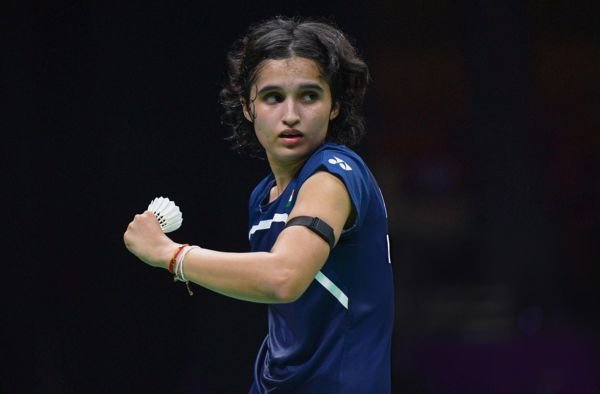
Sindhu’s early advantage had briefly suggested that India could have its first individual semifinalist of the campaign. Chen, however, gradually found her rhythm and turned the contest around, denying the Indian veteran a route into the final four. Earlier, Unnati Hooda had pushed Japan’s three-time world champion Akane Yamaguchi deep into another demanding quarterfinal. The 18-year-old Indian recovered after losing the opening game 16-21, winning the second 21-14 to force a decider.
Yamaguchi eventually held her nerve to close out the match 21-17 after 66 minutes. Hooda’s run had nevertheless been one of the brighter aspects of India’s individual campaign. She had entered the quarterfinals after producing a notable upset earlier in the tournament, defeating world No. 6 Wong Ling Ching, before running into one of the most experienced players in the women’s game. The doubles courts also delivered no respite. World Championships bronze medallists Treesa Jolly and Gayatri Gopichand were beaten 18-21, 9-21 by Malaysia’s Pearly Tan and Thinaah Muralitharan.
The Indian pair struggled to impose themselves against the Malaysian combination, which entered the contest ranked among the world’s top five. In mixed doubles, Dhruv Kapila and Tanisha Crasto fought their way back after losing the opening game against China’s Feng Yan Zhe and Huang Dongping. The Chinese world No. 1 pair, however, recovered to win 21-14, 18-21, 21-18 and bring the Indian challenge to an end.
The result represents a sharp contrast with India’s previous two Asian Games campaigns. At Hangzhou in 2023, India collected three badminton medals, including the men’s team silver, Satwiksairaj Rankireddy and Chirag Shetty’s men’s doubles gold, and HS Prannoy’s men’s singles bronze. This time, the men’s team bronze, secured after a semifinal defeat to China, remains India’s only badminton medal. India’s individual medal drought is also a reversal of the progress seen since Incheon.
Sindhu won silver in 2018, Saina Nehwal took bronze at the same Games, while Prannoy added a men’s singles bronze in 2022. The quarterfinal barrier exposes a bigger challenge. India’s Asian Games badminton campaign cannot be judged solely by the absence of individual medals. Four Indian entries reached the quarterfinals, but none managed to convert those opportunities into semifinal berths. The defeats also came against established international opposition, highlighting the narrow margins at the top level.
For Sindhu, the result marks another Asian Games campaign without a singles medal. For Hooda, it represents valuable experience against one of the sport’s most decorated players. For India’s next generation, however, the bigger challenge will be turning quarterfinal appearances into sustained deep runs at major championships. With the Los Angeles 2028 Olympics approaching, the Asian Games exit provides a significant benchmark for where Indian badminton’s singles and doubles programmes need improvement.

