

Elena Rybakina‘s first tournament as world No. 1 has ended with another setback, this time away from the court. The Kazakh star has withdrawn from the 2026 Wuhan Open because of injury, the tournament confirmed, just days after she suffered a stunning second-round defeat to world No. 118 Alina Charaeva at the China Open in Beijing. The timing is significant. Rybakina arrived in Beijing having recently returned to the top of the WTA rankings after winning the US Open, but her stay in the Chinese capital lasted only one match as world No. 1.
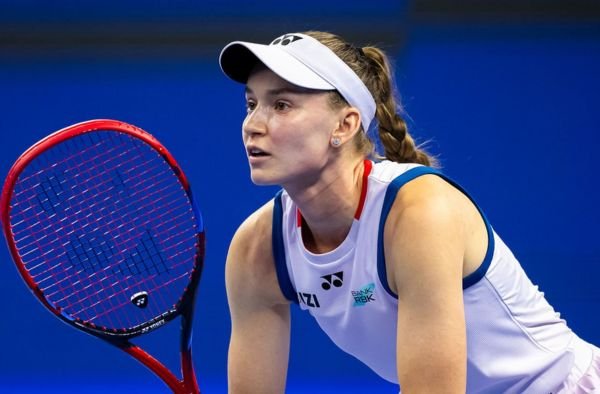
Now, she will also miss Wuhan, scheduled for October 12 to 18, as she takes time to recover. “I’m very sorry to the fans who were looking forward to seeing me play,” Rybakina said in the Instagram story. “I’ll take some time to rest and recover. Thank you for your understanding and continued support. See you next year.” Her withdrawal removes another major name from a Wuhan field that has already suffered several high-profile absences. Amanda Anisimova, Madison Keys, Emma Navarro and Karolina Pliskova are also among the players who have withdrawn ahead of the tournament.
From world No. 1 to injury concern. Rybakina’s current situation is particularly notable because of the extraordinary few months she has just experienced. The 27-year-old arrived at the US Open carrying questions over her fitness and consistency, but produced one of the most significant performances of her career in New York. She won her third Grand Slam singles title, defeating Aryna Sabalenka in the final, and subsequently returned to the top of the WTA rankings. Her US Open triumph also made her the first player to qualify for the 2026 WTA Finals, underlining the consistency of her season despite the physical challenges she has faced.
But the body has continued to be a concern. Rybakina has dealt with a lingering lower-leg and foot problem in recent months. The issue forced her to retire from her Cincinnati quarter-final against Iga Swiatek, raising concerns about whether she would be able to maintain her schedule through the final stretch of the season. She recovered in time to compete at the US Open and went on to lift the trophy.
The China Open, however, exposed another vulnerability. Charaeva delivers the shock in Beijing. Rybakina’s first match as world No. 1 ended in dramatic fashion. Facing Russian qualifier Alina Charaeva, ranked 118th in the world, Rybakina won the opening set but was unable to close out the contest. Charaeva fought back to win 3-6, 6-4, 6-3, completing one of the biggest upsets of the China Open. For Rybakina, it was a particularly frustrating defeat because the tournament represented her first appearance since reclaiming the No. 1 ranking.
Charaeva’s victory also continued the remarkable unpredictability of the Beijing tournament. The tournament lost its top seed in the second round and then saw second seed Aryna Sabalenka eliminated in the third round by Czech player Nikola Bartunkova. The exits of Rybakina and Sabalenka have dramatically opened up the women’s draw.
Rybakina’s absence will be felt particularly strongly in Wuhan. The Wuhan Open is one of the most important events on the WTA calendar and is a WTA 1000 tournament, carrying 1,000 ranking points for the champion. The 2026 edition is scheduled to run from October 12 to 18 and is the final WTA Tour 1000 tournament of the season. Rybakina has history at the event. Last year, she reached the quarter-finals in Wuhan, making her withdrawal an important change to the tournament’s competitive landscape. Her absence means another opportunity for the chasing pack to collect valuable ranking points during the crucial closing weeks of the season.
With the WTA Finals approaching, every result now carries additional significance. For Rybakina, however, ranking points may be secondary to recovery. The Kazakh has already experienced how quickly a demanding schedule can affect her physical condition. Her decision to withdraw from Wuhan suggests the priority is now to ensure that the injury does not become a longer-term problem. That could be especially important with the season-ending WTA Finals approaching. After winning the US Open and reclaiming the No. 1 ranking, Rybakina has little left to prove in terms of her ability to compete at the highest level.
The challenge now is making sure she can remain healthy enough to do it consistently. Her withdrawal also highlights one of the biggest challenges facing elite women’s tennis. The calendar demands players move rapidly from one tournament to another, often across continents and surfaces, with ranking battles continuing deep into the season. For players carrying physical issues, the decision to skip an event can sometimes be more valuable than the points available from playing it.
Rybakina’s absence is another blow to the tournament, but it also creates an opportunity. Young players and lower-ranked contenders will now see a more open draw, while established stars will have an opportunity to strengthen their position ahead of the WTA Finals. The tournament could also become another chapter in what has already been an unpredictable Asian swing. The China Open has seen both Rybakina and Sabalenka depart earlier than expected. Wuhan will now begin without one of the game’s biggest stars.
Elena Rybakina’s Wuhan withdrawal should not be viewed in isolation from her recent rise to the top of women’s tennis. This is a player who has just won her third Grand Slam title, reclaimed the world No. 1 ranking and qualified first for the WTA Finals. Yet within weeks, her season has moved from celebration to caution. The China Open defeat was a sporting setback. The Wuhan withdrawal is potentially a strategic decision. At this stage of her career, Rybakina does not need to prove that she belongs at the top. She needs to protect her ability to stay there. Her recurring lower-leg and foot issues make that balance even more important.
The final weeks of the WTA season often produce some of the most compelling tennis because ranking points, qualification places and year-end positions are all on the line. But Rybakina’s withdrawal is a reminder that none of those targets matter if the body does not cooperate. For Wuhan, her absence leaves the tournament more open. For Rybakina, it could be the right time to step away, recover properly and ensure that her remarkable US Open triumph does not come at the cost of a longer injury layoff.

