

The final numbers suggest a step backwards for India. The deeper story suggests something more complicated. India finished the 2026 Asian Games with 85 medals, comprising 21 gold, 27 silver and 37 bronze, finishing fourth in the continental standings. Three years earlier at Hangzhou, India had created history with 106 medals, including a record 28 golds. The 21-medal drop is therefore impossible to ignore. But the Aichi-Nagoya campaign cannot be judged solely by comparing the two totals.
India changed the distribution of its success. Some of the country’s traditional medal-winning sports declined sharply, while others produced historic breakthroughs. Most importantly, several of India’s biggest moments came from women athletes and teams. The question, therefore, is not simply how many medals did India lose from Hangzhou?
It is where did India gain, where did it slip, and what does that reveal about the country’s sporting trajectory? Athletics remained India’s biggest medal contributor, but gold disappeared. Athletics once again contributed the largest number of medals to India’s Asian Games campaign. India won 24 athletics medals in Aichi-Nagoya, compared with 29 at Hangzhou. However, the composition changed considerably. The tally fell from six gold, 14 silver and nine bronze medals in Hangzhou to one gold, nine silver and 14 bronze in 2026. The solitary gold came in the women’s 4x400m relay, where Kiran Pahal, Prachi Choudhary, Poovamma Raju and Vithya Ramraj delivered a memorable victory.
For Indian women, athletics still produced some of the Games’ strongest individual stories. Vithya Ramraj won three medals, including relay gold, mixed relay silver and individual bronze in the 400m hurdles. She also broke the long-standing national record associated with PT Usha, clocking 54.75 seconds. The numbers may show fewer medals than Hangzhou, but the women’s 4x400m victory demonstrated that India’s relay programme remains capable of challenging the continent’s strongest teams.
Shooting drops, but Neeru Dhanda creates history. Shooting was another major contributor at Hangzhou, when India won 22 medals, including seven golds. In Aichi-Nagoya, that total fell to 15 medals, comprising three gold, eight silver and four bronze. Yet the reduced tally came with one of India’s most significant individual breakthroughs. Neeru Dhanda won women’s trap gold, ending a 48-year wait for India in the individual trap event. She then partnered Kynan Chenai to mixed team trap gold, with the pair also setting a new Asian record.
That makes shooting’s story more complicated than a simple decline. The overall numbers went down, but individual breakthroughs continued. Archery was India’s model of consistency. If one sport demonstrated stability between the two editions, it was archery. India won nine medals at both Hangzhou and Aichi-Nagoya, with the same overall distribution of five gold, two silver and two bronze. But the quality of the breakthroughs in 2026 was arguably even greater. The women’s recurve team of Ankita Bhakat, Kirti and 17-year-old Kumkum Mohod defeated South Korea, ending the country’s extraordinary 28-year dominance in the event.
Kumkum then went on to win individual recurve gold, becoming the first Indian to win an Asian Games individual recurve gold. She also added a mixed team silver. For a sport that had already established India as a continental power, Aichi-Nagoya showed that the next generation is ready to take that dominance further. India moved from five medals at Hangzhou to six in Aichi-Nagoya, but the medal composition changed dramatically. Lovlina Borgohain won the women’s 75kg title, while Parveen Hooda claimed gold in the 65kg category. Ankush Panghal added the men’s 75kg gold. The women’s boxing campaign was particularly significant, with India topping the women’s boxing standings.
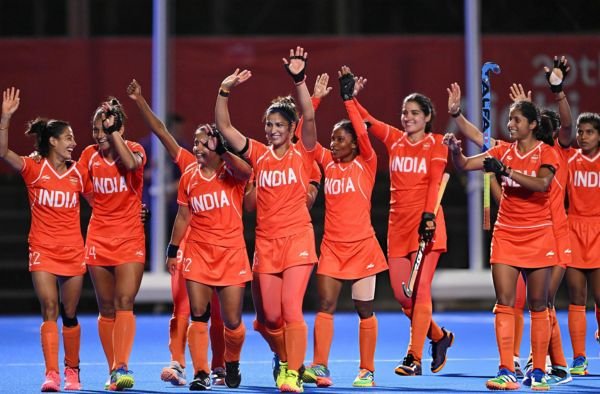
Lovlina also became only the second Indian woman after MC Mary Kom to win an Asian Games boxing gold. This was not simply an increase in medals. It was an increase in India’s ability to convert semifinal and final appearances into gold. India won two hockey medals at both editions, but the colour changed. At Hangzhou, India had one gold and one bronze. At Aichi-Nagoya, both medals were gold. The women’s hockey team ended a 44-year wait for Asian Games gold, while the men’s team successfully defended its title. The women’s triumph also secured qualification for the Los Angeles 2028 Olympics. For Indian women’s sport, it was one of the defining team achievements of the Games.
Golf takes a major step forward. Golf also improved its medal return. India had won one medal at Hangzhou, a silver. In Aichi-Nagoya, the tally increased to two medals, including gold and silver. The gold came through Pranavi Urs, who became the first Indian woman to win an individual Asian Games golf gold. She also contributed to India’s women’s team silver. That is another example of how the women’s contingent created history in a sport where India has traditionally had a smaller medal footprint.
Wrestling, squash and badminton tell different stories. Wrestling improved from six medals at Hangzhou to six again in Aichi-Nagoya, but the gold-medal count rose from zero to two. Sujeet Kalkal and Aman Sehrawat both won gold, giving Indian wrestling a much-needed boost. Squash remained steady at five medals, although its medal composition changed from two gold, one silver and two bronze to zero gold, two silver and three bronze. Badminton, meanwhile, suffered a significant fall, dropping from three medals at Hangzhou, including gold, silver and bronze, to just one bronze.
Rowing also declined sharply from five medals to one. India additionally collected medals in newer or less familiar disciplines, including kurash, mixed martial arts and soft tennis, while returning to the podium in weightlifting. Cricket and kabaddi remain reliable gold sources. Some sports showed almost no change. Cricket again produced two gold medals, with both the Indian women’s and men’s teams winning their respective tournaments. Kabaddi also retained its two-gold haul, with both the men’s and women’s teams finishing on top. India’s women’s kabaddi team defeated Iran 37-34 in the final, maintaining the country’s extraordinary record in the women’s event. India have won the women’s kabaddi gold at every Asian Games except the 2018 edition.
Sport-wise medal comparison
| Sport | Hangzhou 2023 | Aichi-Nagoya 2026 |
|---|---|---|
| Athletics | 29 (6G, 14S, 9B) | 24 (1G, 9S, 14B) |
| Shooting | 22 (7G, 9S, 6B) | 15 (3G, 8S, 4B) |
| Archery | 9 (5G, 2S, 2B) | 9 (5G, 2S, 2B) |
| Boxing | 5 (0G, 1S, 4B) | 6 (3G, 0S, 3B) |
| Wrestling | 6 (0G, 1S, 5B) | 6 (2G, 2S, 2B) |
| Squash | 5 (2G, 1S, 2B) | 5 (0G, 2S, 3B) |
| Sailing | 3 (0G, 1S, 2B) | 3 (0G, 1S, 2B) |
| Cricket | 2 (2G, 0S, 0B) | 2 (2G, 0S, 0B) |
| Golf | 1 (0G, 1S, 0B) | 2 (1G, 1S, 0B) |
| Hockey | 2 (1G, 0S, 1B) | 2 (2G, 0S, 0B) |
| Kabaddi | 2 (2G, 0S, 0B) | 2 (2G, 0S, 0B) |
| Badminton | 3 (1G, 1S, 1B) | 1 (0G, 0S, 1B) |
| Rowing | 5 (0G, 2S, 3B) | 1 (0G, 0S, 1B) |
The 85-medal finish should not be dismissed as a failure simply because it is 21 medals short of Hangzhou. At the same time, India cannot afford to ignore the decline. The clearest warning signs came in athletics, shooting, rowing and badminton, where the medal haul fell from the previous edition. The biggest positive was that India compensated for some of those losses through stronger gold-medal conversion in boxing, wrestling and hockey.
But the most encouraging trend was the performance of Indian women. Kumkum Mohod broke new ground in archery. Neeru Dhanda ended a decades-long wait in shooting. Pranavi Urs delivered a historic golf gold. Vithya Ramraj became one of the Games’ standout athletics performers. Lovlina Borgohain and Parveen Hooda led India’s boxing charge. The women’s hockey and kabaddi teams also delivered gold. That makes Aichi-Nagoya a Games of transition rather than simple decline.
India did not repeat Hangzhou’s record medal haul. But it uncovered new champions, strengthened several women’s programmes and demonstrated that its medal-winning base is becoming more diverse.

