

India’s historic success in the ODI format will count for little if the team cannot translate that momentum into consistent performances in T20 cricket, newly appointed captain Smriti Mandhana has cautioned ahead of her first assignment as full-time leader. With the inaugural ICC Women’s Champions Trophy 2027 approaching, Mandhana has identified the upcoming international fixtures as an important opportunity to establish the standards India will need to compete for another major title.
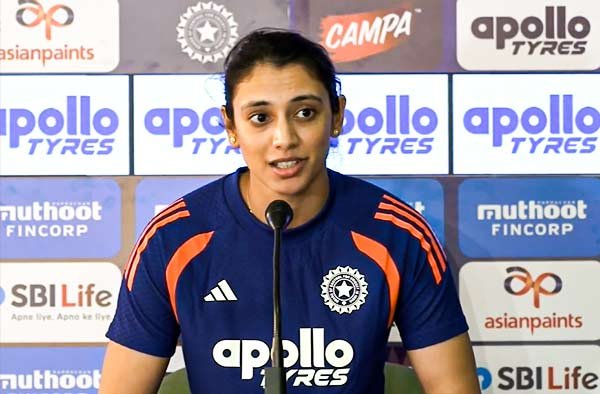
Mandhana will lead India in a three-match T20I series against Zimbabwe beginning on October 16 in Raipur, followed by three One-Day Internationals in Vadodara. The series marks the beginning of a new leadership chapter for the Indian women’s team after Harmanpreet Kaur stepped down from the captaincy. Speaking to reporters on Wednesday, Mandhana stressed that India must continue improving despite their recent achievements in international cricket. The team will use the six matches against Zimbabwe to assess combinations, provide opportunities to emerging players and sharpen its approach ahead of the next major assignment.
“The first bilateral (series) with Zimbabwe, I think, is very exciting. It is our first time playing with them,” Mandhana told reporters. “Sometimes, playing with Zimbabwe and all the Associate nations, it feels like you can learn a lot from them as well because they enjoy playing their cricket. “Sometimes, we get into a lot of things professionally. You can learn a lot from them. But again, we have six T20 matches before the Champions Trophy as an Indian team, so we will look to set standards as an Indian team (as to) how we approach the next three months leading up to the Champions Trophy,” Mandhana added.
The opening T20I against Zimbabwe will therefore carry significance beyond the result. For Mandhana, it represents the first opportunity to establish her leadership philosophy while beginning India’s preparations for a tournament that will bring together six of the world’s leading women’s cricket teams. While India’s ODI World Cup triumph has strengthened the team’s confidence, Mandhana acknowledged that the shortest format requires a different approach and greater consistency.
“We have won the World Cup in the last one-and-a-half years, but there were a few things which we needed to work on in the T20 format especially,” she said. “But I would say our strength has been the players who have come in. They have done extremely well. On the first day, I wouldn’t really want to talk about weaknesses in a way. “There are a lot of things we need to work on. We need a lot of things to get in place. But I think today is the day to talk about good and positive stuff,” Mandhana said. Her comments underline the distinction between India’s achievements in 50-over cricket and the demands of T20 internationals, where batting tempo, tactical flexibility and execution under pressure can determine outcomes in a matter of overs.
India will have further opportunities to prepare through their upcoming assignments, including a three-match T20I series against South Africa in December. The matches will provide another important test before the Champions Trophy begins in February.
Smriti Mandhana embraces new leadership responsibility. Mandhana’s appointment as India’s full-time white-ball captain marks a significant transition for the team. Having served as vice-captain for nearly a decade, she brings considerable experience of the leadership group, along with success as captain of Royal Challengers Bengaluru in the Women’s Premier League. “I have been the vice-captain for the last almost 10 years. So, I have been part of the leadership role, and I wouldn’t say it is an extremely new thing. But for sure, it is something to look forward to, and hopefully, I can do justice to the role,” Mandhana said. The Board of Control for Cricket in India confirmed her appointment on October 6, noting that she had previously led India in 18 T20Is and four ODIs.
Mandhana also expressed confidence in the younger players available for selection, pointing to Anushka Sharma, Niki Prasad and G Kamalini as exciting prospects. Jemimah Rodrigues, meanwhile, has been recovering from a hamstring injury. “Jemimah (Rodrigues) has been injured for the last two months. (But) I think we have got exciting players. Anushka (Sharma) and Niki (Prasad), who have done really well in India A, and of course G Kamalini, who was No. 3 in the Asian Games,” Mandhana said. “We have a lot of options, and I am really positive that they will do well,” she added.
The inaugural ICC Women’s Champions Trophy will take place in India from February 14 to 28, 2027, with matches scheduled at the Cricket Club of India in Mumbai and the Vadodara International Cricket Stadium. Australia, England, India, New Zealand, South Africa and Sri Lanka will compete in the six-team T20 tournament, with the top two sides advancing to the final. Mandhana also revealed that discussions with BCCI secretary Devajit Saikia, head coach Amol Muzumdar and Harmanpreet Kaur had focused on the direction of Indian cricket over the coming years. “We had a meeting a day before. The conversation was about how to take Indian cricket forward,” Mandhana replied when asked if she knew beforehand that she would be appointed captain. “… and what should be the approach for the next two to three years because we have a lot of major tournaments coming up,” she added.
A new captain, but the expectations remain high. Mandhana takes charge at a time when Indian women’s cricket has made significant strides, but the next challenge is to sustain that success across formats. The Zimbabwe series offers an early opportunity to assess the team’s T20I combinations, build confidence among younger players and establish a clear tactical direction. The Champions Trophy will bring together some of the strongest teams in women’s cricket, leaving India little room for inconsistency. Mandhana’s emphasis on improvement, rather than relying solely on past achievements, reflects an understanding that success in one format does not guarantee dominance in another.
The focus now shifts to execution. If India can use the upcoming fixtures to strengthen their approach and develop greater consistency, Mandhana’s first months as captain could lay the foundation for another successful campaign on home soil.
